Stakeholder Management
Master stakeholder relationships to build trust, resolve conflicts, and drive project success.
About this course
Stakeholder management is one of the most crucial yet underestimated skills in project and product work. Every initiative depends on people who fund, influence, approve, or are affected by decisions. Behind every roadmap or release lies a network of expectations, opinions, and motivations that can either accelerate success or quietly derail progress.
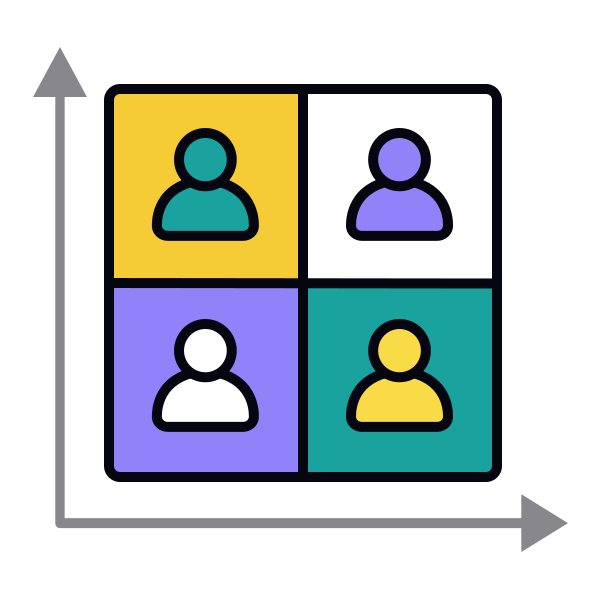
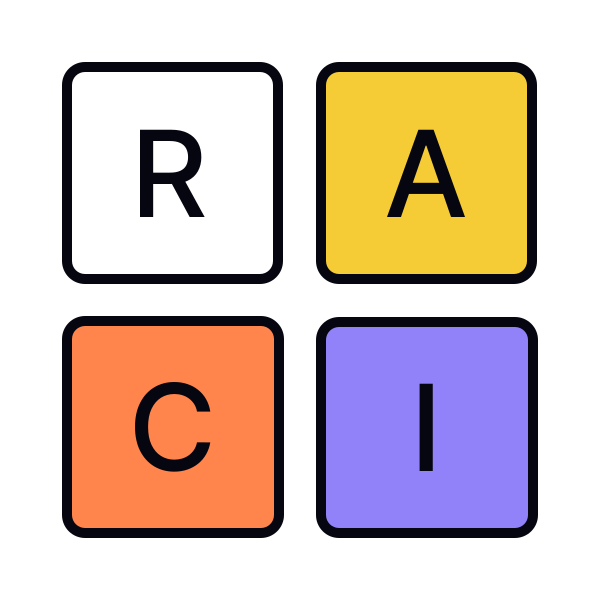
Successful collaboration begins with understanding that influence rarely follows formal hierarchies. Decisions arise from a mix of expertise, authority, and trust, often shaped by hidden relationships. Mapping these connections through registers, RACI roles, or influence and impact matrices brings structure to this complexity and helps reveal who truly drives outcomes.
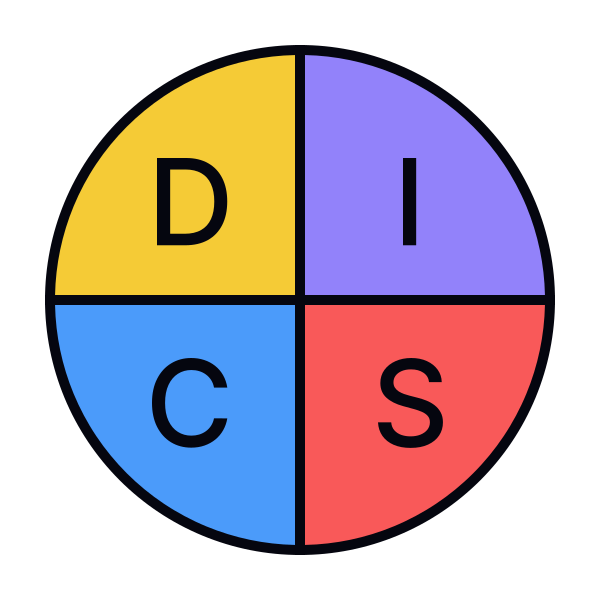
Human behavior adds another layer of nuance. Models such as SCARF and DISC show how needs for status, certainty, and belonging influence reactions to change. Communication patterns, transparency cycles, and trust loops explain why the same message may inspire one group and frustrate another. Recognizing these patterns turns ordinary conversations into opportunities for alignment.
Stakeholder management blends strategic thinking with empathy. It transforms tension into dialogue, confusion into clarity, and resistance into collaboration. More than a coordination skill, it builds relationships that sustain progress long after a project reaches completion, turning cooperation into a lasting advantage.
Details

Prerequisites
Skills you’ll gain with course:
Topics covered
Syllabus
Stakeholder identification



Level Test
Stakeholder analysis
Level Test
Conflict resolution

Level Test
Change management & collaboration



Level Test
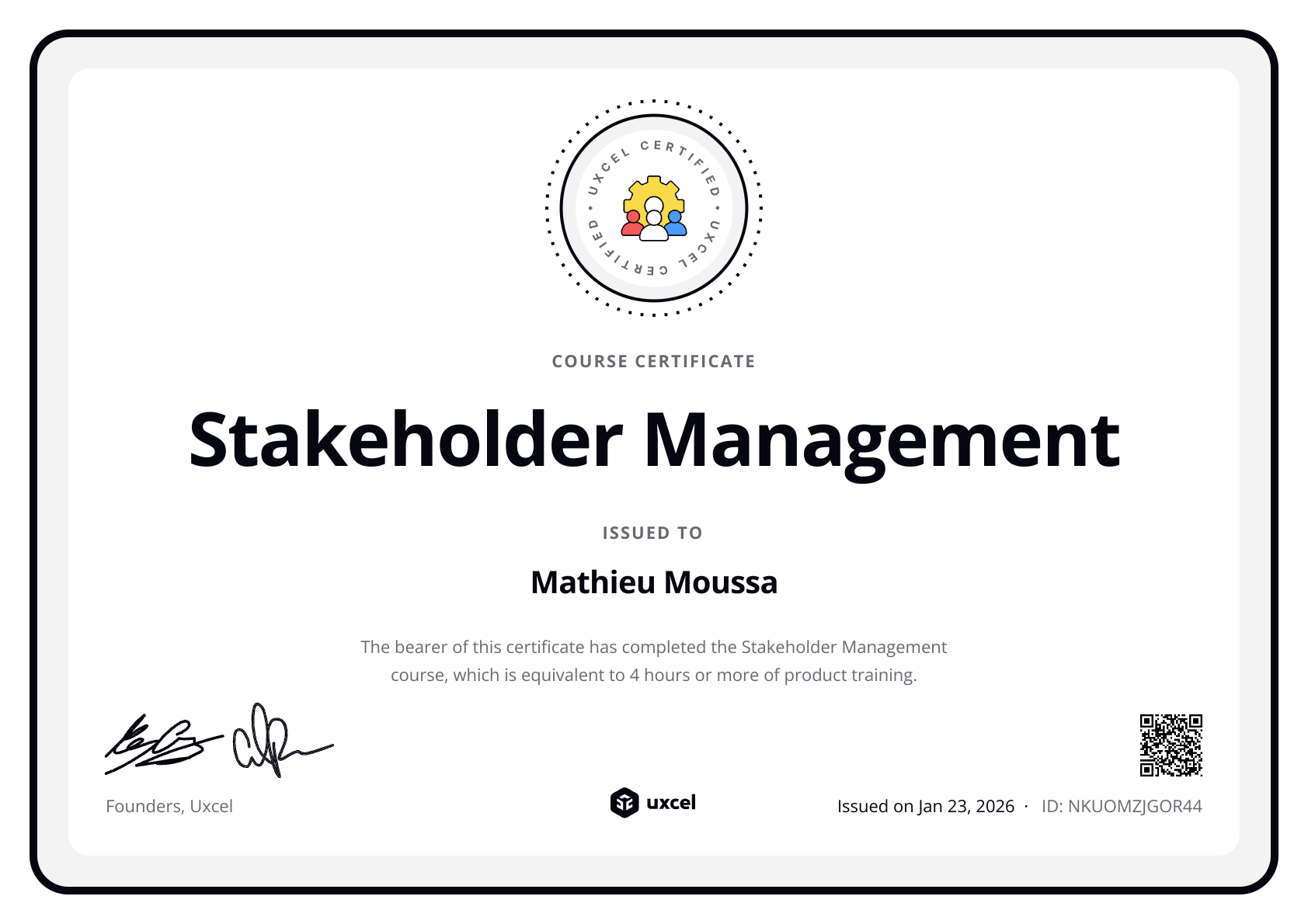
Earn a certificate of completion
Meet your course instructor
I’m a Product Design Lead with 15+ years of experience in UX design, product management, and design leadership. At CME, I built and scaled a 20+ person design unit, raising the company’s UX maturity on the Nielsen Norman Group scale.
I’ve led projects across fintech, education, and government, including digital wallets for leading banks and portal initiatives contributing to Saudi Arabia’s Vision 2030 transformation. Skilled in growing products and certified in design thinking (IDEOU), I focus on user-centered solutions that align human needs with organizational goals.
I’ve also mentored professionals who secured roles at companies like Visa and currently advise a couple of Microsoft employees on shaping their product validation and strategy approaches. These experiences reflect how my approach to design and product strategy resonates with people in demanding roles, and how I enjoy helping others succeed through design.
Loved by learners from world’s top companies





Related courses
Leadership Mastery


Cross-Functional Design & Product Teams

Mentorship Mastery

FAQs
Stakeholder management focuses on understanding and navigating the human side of projects. It brings together strategic frameworks and interpersonal awareness to help manage influence, communication, and alignment between everyone involved in an initiative.
The subject covers how to identify people who affect or are affected by a project, assess their interests, and build transparent relationships that support shared goals. Tools such as stakeholder registers, influence and impact matrices, and RACI charts help make complex networks of collaboration more visible.
Behavioral models like SCARF and DISC uncover what motivates people and how they respond to change. By combining these approaches, stakeholder management strengthens teamwork, reduces friction, and builds a foundation of trust that keeps projects moving forward.
Projects rarely fail because of technical mistakes. They fail because people misunderstand each other, priorities shift, or expectations are not managed early enough. Designers and product professionals often find themselves balancing business goals, user needs, and team realities. Understanding how to manage stakeholders brings clarity to that balance. It helps create a shared language between departments, encourages active listening, and ensures that design and product decisions gain the right support at the right time. The skill also builds confidence in presenting ideas, managing feedback, and resolving tension before it grows into conflict. In a field that depends on collaboration, stakeholder management is what turns creative ideas into outcomes that teams and organizations can stand behind.
A general understanding of how projects and teams operate provides a useful foundation. Familiarity with basic product management or UX principles helps in connecting stakeholder actions to broader project goals. Some experience with teamwork, client communication, or cross-functional collaboration also makes it easier to apply the ideas in practice. However, the course is designed for anyone curious about how relationships, influence, and communication shape successful outcomes.