Defining Stakeholder Roles and Influence
Recognize who holds influence in your project and how their roles shape outcomes.
Every project revolves around people, who make decisions, execute tasks, or feel the results of what’s built. Understanding who these people are and how their interests differ is the foundation of effective stakeholder management.
Stakeholders can be anyone with an interest in a project’s outcome, from team members and executives to users, suppliers, or even public authorities. Not all stakeholders carry the same weight. Some can directly drive or block decisions, while others simply need to stay informed. Knowing who falls into which group allows product managers to focus their attention where it matters most.
Learning to distinguish between internal and external stakeholders helps clarify where influence begins and how it flows across teams, departments, and organizations. Internal stakeholders bring operational insight but may be tied to company constraints. External ones offer user perspectives or funding power but see only the product’s surface.
Recognizing these dynamics helps avoid conflicts, anticipate reactions, and ensure everyone involved works toward the same outcome. By mapping influence, managers create transparency, build trust, and prevent surprises later in the project.
A stakeholder is anyone who can affect or is affected by a project’s outcome. This influence can come from decision power, hands-on involvement, or simply being impacted by the final results. Stakeholders might shape goals, provide resources, approve deliverables, or rely on what the project produces.
To recognize who qualifies, teams need to look at how much a person’s work, interests, or responsibilities interact with the project. Someone becomes a stakeholder when their success or challenges are linked to the progress or completion. Understanding this principle helps identify everyone whose expectations must be considered, even before detailed planning begins.[1]
Pro Tip: Ask who gains, loses, or changes something when the project succeeds or fails.
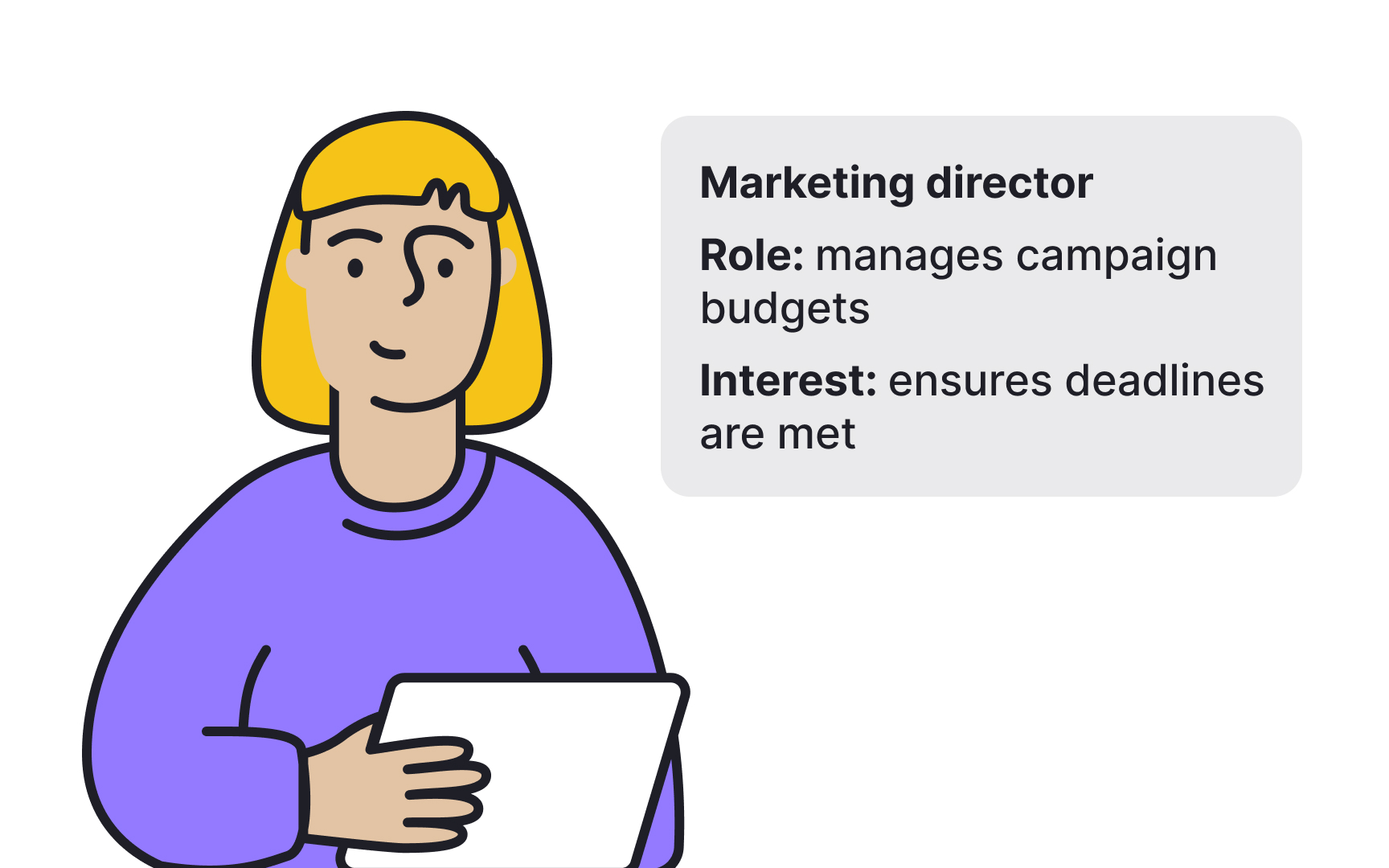
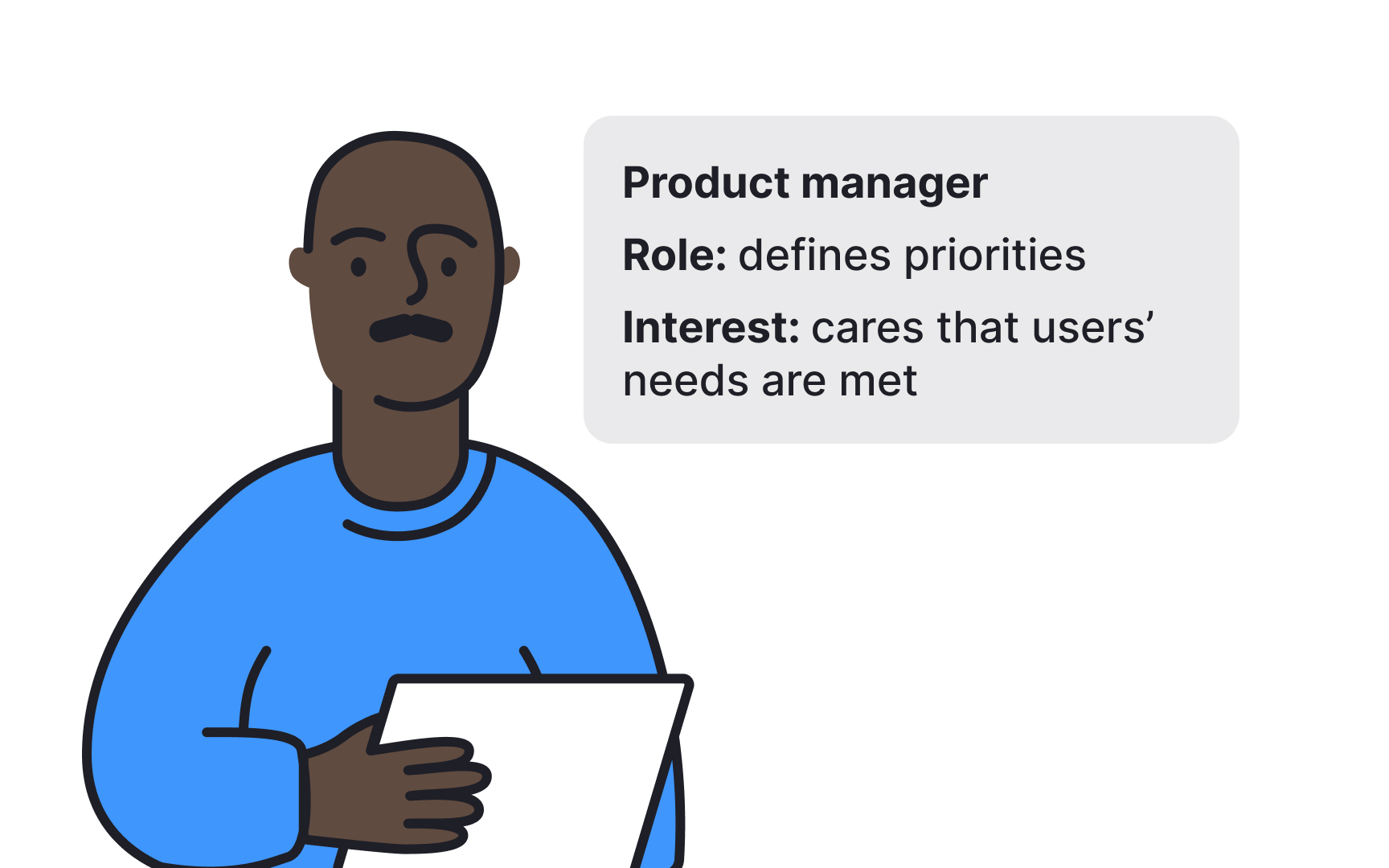
Each stakeholder connects to a project through two dimensions that define their involvement: role and interest. The role describes what a person is responsible for, how they contribute, or what decisions they make. The interest shows what motivates them, what results they care about, and how those results affect their own goals.
For example, a product manager may have the role of defining priorities and guiding development. Their interest is in creating a product that meets user needs and supports business success. A customer has no official project role but a high interest in how the final product improves their experience.
Understanding the difference between these two dimensions helps teams see why people react differently to the same event. A stakeholder with limited authority can still hold a strong influence if the project affects them directly. Someone with high authority may have less emotional investment in specific details. By separating what people do from what they care about, teams gain a more accurate picture of who needs to be involved and why.[2]
Pro Tip: Look beyond job titles. People’s motivation often reveals more about their influence than their position in the project.
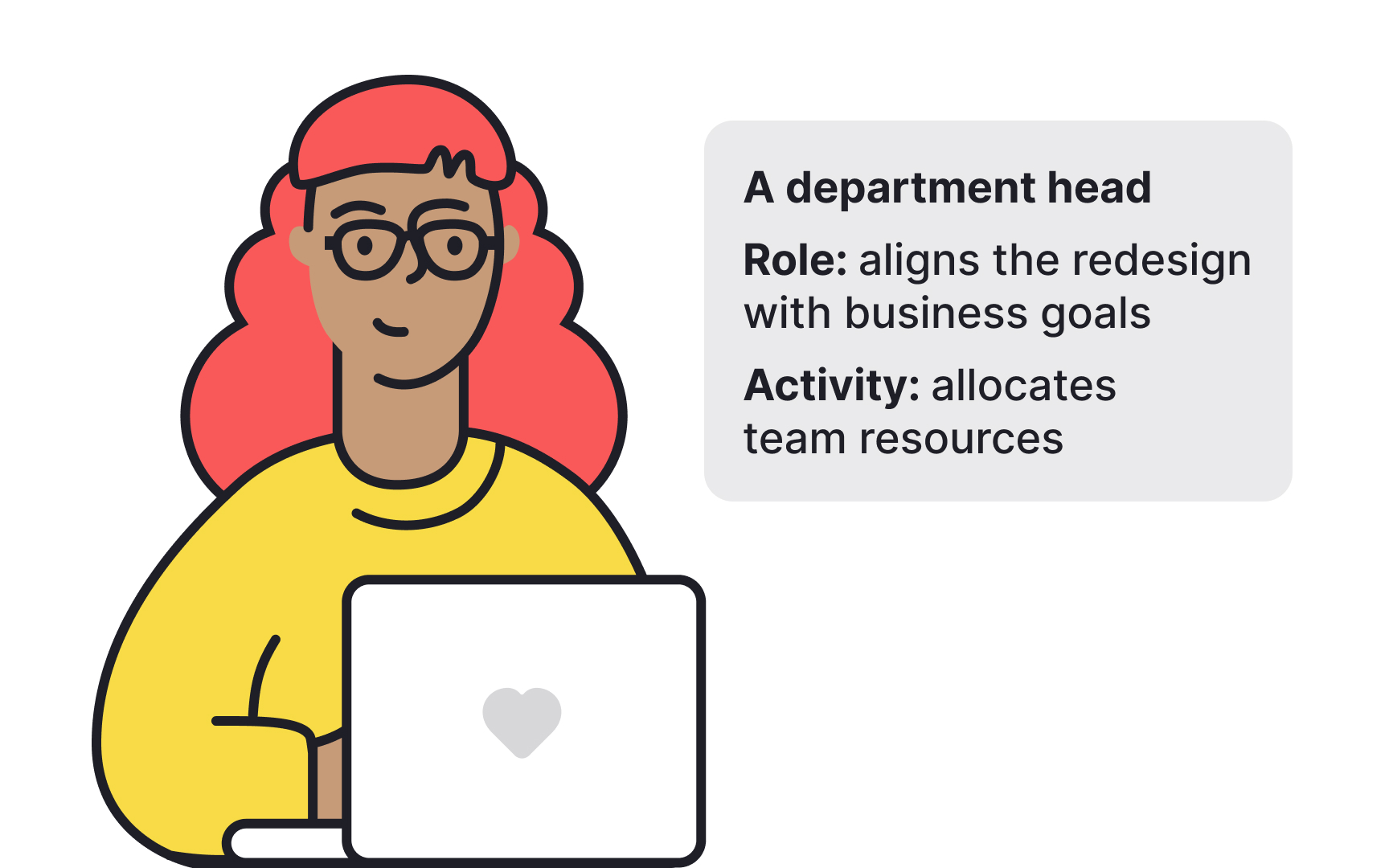
Stakeholders can be grouped by where they operate in relation to the organization. Internal stakeholders work within the company that owns or manages the project. They include people such as executives, department leads, project owners, designers, and engineers. Their influence usually comes from access to resources, knowledge of internal processes, and alignment with company goals.
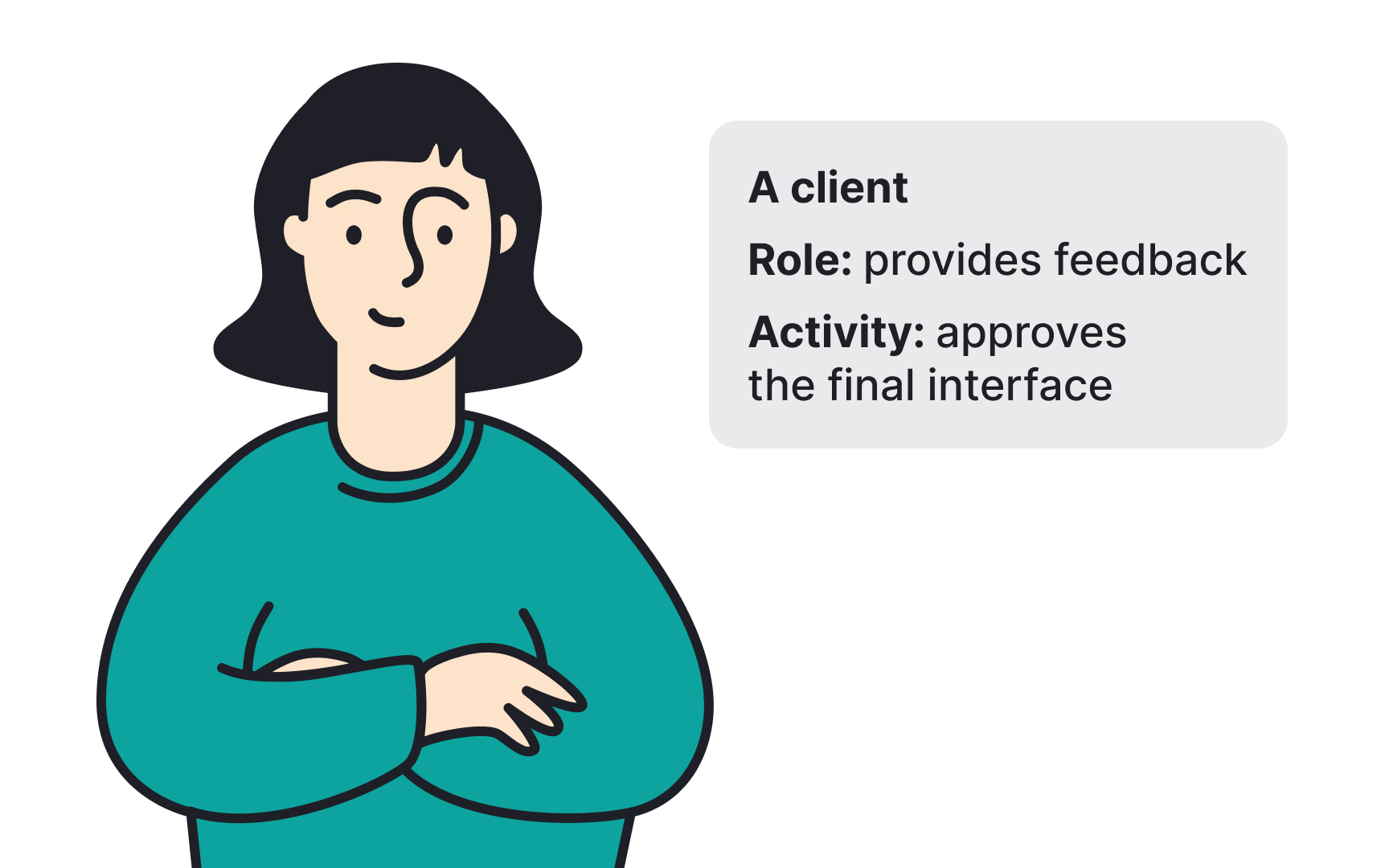
External stakeholders operate outside the organization. They can be clients, customers, suppliers, investors, funders, regulators, or community representatives. Their influence often comes from expectations, market power, or dependence on the project’s outcomes. Internal groups tend to focus on delivery and strategy, while external ones often evaluate impact, value, and compliance. Recognizing both views helps build a realistic picture of how different interests interact in a single project.
Pro Tip: Think of internal stakeholders as those who shape the project from the inside and external ones as those who feel its effects from the outside.
Not all stakeholders are involved in a project in the same way or to the same degree. Primary stakeholders are the people or groups who have a direct role in shaping decisions, providing input, and approving work. They often include project owners, senior managers, decision-makers, or key contributors whose actions strongly influence success. Their participation is continuous and essential from start to finish.
Secondary stakeholders, in contrast, have an indirect but still meaningful connection. They may include supporting departments, customer-service teams, end users, or partner organizations. While they are not involved every day, they are the ones teams should not forget at key moments such as discovery, launch, or periods of change. These groups are affected by the outcome or can offer insights that enrich decision-making. Their viewpoints can uncover risks, dependencies, or opportunities that core teams might miss.
Pro Tip: Include people who are impacted, even if they are not decision-makers. Their feedback often reveals what leadership misses.
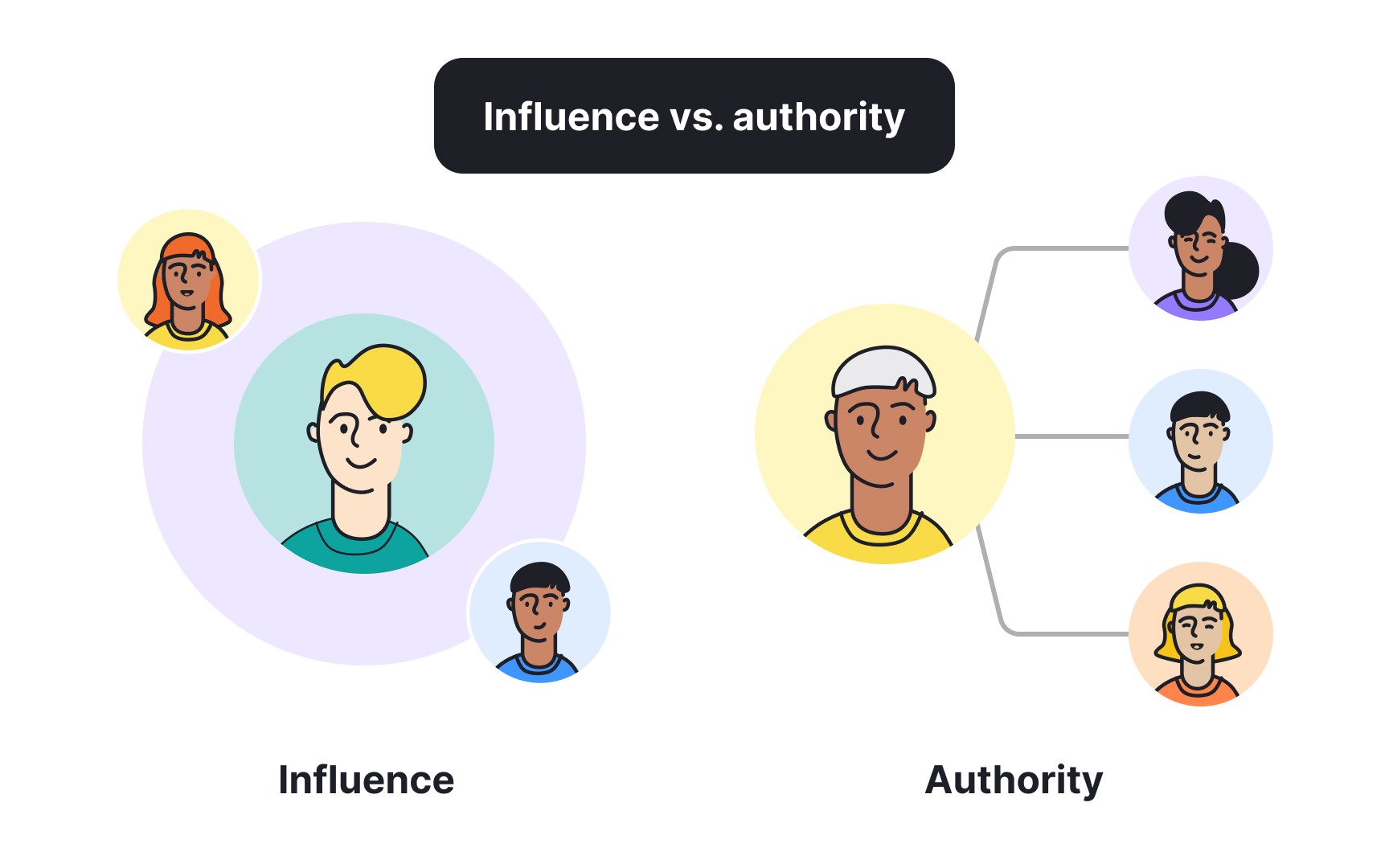
Authority is the power to make decisions. Influence is the power to shape those decisions.
These two forms of power often overlap, but they work in different ways. Authority comes from a formal role and the decision rights attached to it. Executives, project owners, and department heads hold authority because they can allocate resources, set priorities, or approve outcomes.
Influence, on the other hand, comes from expertise, trust, or communication skills. Someone without a senior title may still guide direction by shaping opinions, offering critical insight, or being the person others rely on for clarity.
Recognizing both types of power helps explain why some people drive change while others simply follow procedure. Authority gives control; influence gives persuasion. Effective
Pro Tip: Authority grants the right to decide. Influence earns the power to persuade. Both can shape a project in different ways.
Influence in an organization rarely moves in a straight line. Decisions pass through layers of hierarchy, but real impact often travels through relationships and collaboration. Formal structures, such as reporting lines and approval steps, define who controls key stages of a project. Informal networks, built on trust or experience, can redirect those same decisions behind the scenes.
A simple rule helps clarify the difference: when teams need a decision, they target the person with authority; when they need adoption, they target the people with influence.
Understanding these patterns makes it easier to predict how information and priorities move between levels. An executive may hold final authority, yet a specialist or team lead may shape what that decision becomes by gathering data, framing options, or offering the recommendation that leadership relies on.
After a major decision, it’s helpful to ask: Who gathered the data? Who framed the options? Who gave the recommendation? That’s where influence flowed. Mapping both the visible and informal paths of influence helps teams anticipate who needs to be aligned for the work to move forward smoothly.
Pro Tip: Map how decisions move from information to approval. The path often tells more than the hierarchy chart.
Authority defines who can approve or stop work. Impact shows who’s most affected when that decision becomes reality.
People with the power to make decisions are not always the ones who feel the consequences. Authority comes from the ability to approve budgets, assign work, or halt progress. Impact reflects how strongly the project’s outcomes influence someone’s goals, workload, or results.
For example, an executive may approve funding but experience little day-to-day change. Meanwhile, a customer-support lead or a user community may see their routines, tools, or responsibilities shift immediately once the project goes live.
Distinguishing between authority and impact helps prevent blind spots. When decisions rely only on high-level perspectives, teams risk overlooking practical challenges or user realities. Bringing in those who experience the impact firsthand creates a more accurate picture of risks, needs, and opportunities long before issues surface.
Pro Tip: Balance decision-makers with those who live with the results. Both perspectives protect a project from narrow thinking.
Stakeholders rarely act in isolation. Their influence depends on how they connect, share information, and rely on one another to achieve results. Internal departments coordinate through shared goals, while external partners, clients, or regulators contribute through agreements, expectations, or oversight. These links form a network that defines how easily collaboration happens and how quickly problems reach resolution.
When relationships are open and consistent, information flows smoothly and decisions are easier to align. Strong collaboration between product, design, and engineering teams, for example, helps identify risks early and keeps delivery predictable. In
Viewing relationships as part of stakeholder influence reveals that success often depends on how people cooperate, not only on how much power they hold.
Pro Tip: When you see recurring blockers, check if the people who depend on each other actually talk regularly or share the same tools.
Influence inside organizations moves both vertically and sideways. Hierarchy determines who approves budgets or sets goals, but much of the project’s real direction is shaped in the middle layers, where strategy meets execution. Middle managers interpret leadership goals and turn them into priorities for teams. Specialists and team leads then decide how those priorities take form in practice, often shaping outcomes more than expected.
Informal influence also crosses layers through expertise, credibility, and relationships. A senior engineer or experienced designer may have no formal authority but can still steer major decisions by being trusted across departments. These cross-level interactions can strengthen alignment when communication is transparent, but they can also create tension when expectations differ between strategic and operational levels.
Understanding how influence moves through both official and informal channels helps teams spot where coordination breaks down. When top-level intent does not match what happens on the ground, the issue usually lies in how influence is transferred, not in the plan itself.
Pro Tip: If leadership intent doesn’t translate into execution, check where influence is blocking or reshaping it.
References
- How Do I Identify Key Stakeholders? - Simply Stakeholders | Simply Stakeholders
Topics
From Course

Share


Similar lessons

Stakeholder Management

Stakeholder Communication