Common Causes and Early Signs of Conflict
Recognize where stakeholder conflicts originate and identify early signals before they escalate.
Conflict isn’t always a bad thing. When people care about a project, they bring their own ideas, values, and priorities, and sometimes those collide. What matters most is how early we notice the tension and how we respond to it.
Many conflicts begin quietly. A missed update, an unclear decision, or different expectations about outcomes can build frustration on one side and confusion on the other. Other times, bigger differences, like values, work styles, or communication habits, create invisible walls that slow collaboration.
Learning to read these signals helps prevent problems before they spread. Raised voices are rarely the first sign; it’s often subtle shifts like shorter replies, disengagement in meetings, or growing silence in shared channels. Understanding these cues and knowing the common causes behind them allows teams to act early, open dialogue, and protect relationships before trust starts to fade.
Conflict is an inseparable part of working with people. Projects bring together individuals with different goals, expertise, and experiences. When these perspectives meet, disagreements are bound to happen. This is not a sign of failure but a normal part of collaboration. Managed well, conflict helps teams surface hidden issues, test ideas, and strengthen decisions.
The first step is to see conflict not as something to avoid but as information. Each disagreement signals that people care about the project’s outcome. When addressed early and respectfully, these differences can lead to more thoughtful problem-solving and greater innovation. A healthy discussion can prevent small concerns from turning into resentment later on.
For teams managing stakeholders, this mindset shift is crucial. Instead of reacting defensively, it helps to stay curious and ask what each person’s concern reveals about the project. When handled constructively, conflict builds trust and clarity rather than breaking them.[1]
Pro Tip: Treat conflict as feedback, not failure. It often reveals where attention or clarity is most needed.
Most stakeholder conflicts do not appear suddenly. They usually grow from specific causes that can be recognized and managed early:
- Different goals. For example, an organization may aim to cut costs, while local partners focus on protecting community interests. Both goals are valid, but if they stay unspoken, tension builds.
- Competition for resources is another frequent source. Disputes over time, budget, or staff often create frustration, especially when priorities are unclear.
- Communication gaps. When updates are irregular or information is incomplete, assumptions fill the space, and misunderstandings multiply.
- Values or ways of working. People might disagree not only on what should be done but on what is considered right or fair.
Recognizing whether the issue is practical, relational, or value-based helps decide how to approach it. Awareness of these roots enables teams to solve real problems rather than surface arguments.[2]
Pro Tip: Identify if a disagreement is about goals, resources, communication, or values before deciding how to respond.
Not every conflict is about deadlines or budgets. Sometimes it’s about what people believe in. Values shape how stakeholders see the world and what they think is right. When those values clash, even small decisions can turn into tense discussions. For example, one group may care most about speed and efficiency, while another values transparency and inclusion. Both want the project to succeed, but they define success differently.
These disagreements can feel more personal because they touch emotions and principles. Trying to “win” usually makes things worse. Instead, it helps to slow down and talk about what matters to each side. Understanding where people come from doesn’t mean you have to agree with them, but it makes finding common ground easier.
When teams respect each other’s values, they can still collaborate even without full alignment. The goal is not to erase differences but to create space where those differences can be discussed openly and respectfully.
Pro Tip: When disagreement feels personal, look for the values behind it. Understanding those values often softens resistance.
Many conflicts start quietly through silence, missed updates, or unclear messages. When people don’t get the information they need, they start guessing. That’s how trust begins to fade. A short message taken the wrong way or a meeting summary that leaves questions unanswered can quickly create tension.
Clear, steady communication keeps everyone grounded. Simple habits like summarizing key decisions, sharing progress often, and checking that everyone understands can prevent misunderstandings before they grow. Listening matters just as much as talking. When people feel heard, they’re more open and cooperative.
Conflicts also flare up when decisions seem hidden or unexplained. Being transparent, even when news isn’t great, shows respect and builds credibility. Good communication doesn’t guarantee agreement, but it keeps people connected and turns potential frustration into shared understanding.
Pro Tip: Don’t let silence fill the gaps. Regular, clear updates keep trust alive and stop small doubts from turning into conflict.
Conflict rarely appears all at once. It usually develops through several stages. The Borealis model explains how a simple disagreement can grow if it is left unaddressed. At first, tension can be helpful. People still talk openly, share opinions, and try to solve the issue together. Communication stays respectful, and the team keeps its focus on the shared goal.
If the tension continues, the tone begins to change. Comments become more personal, and trust starts to weaken. Even people not directly involved might lose motivation or distance themselves. At this stage, discussions turn into arguments about who is right rather than what will help the project. In the most serious phase, emotions take over and people stop listening to each other completely.
Recognizing these levels early helps prevent escalation. You can often notice it when conversations become shorter, defensive, or filled with tension. Addressing the issue at that point is much easier than trying to fix relationships after they break.
Pro Tip: Step in when the tone changes from solving a problem to defending a position. That is the moment to calm things down.
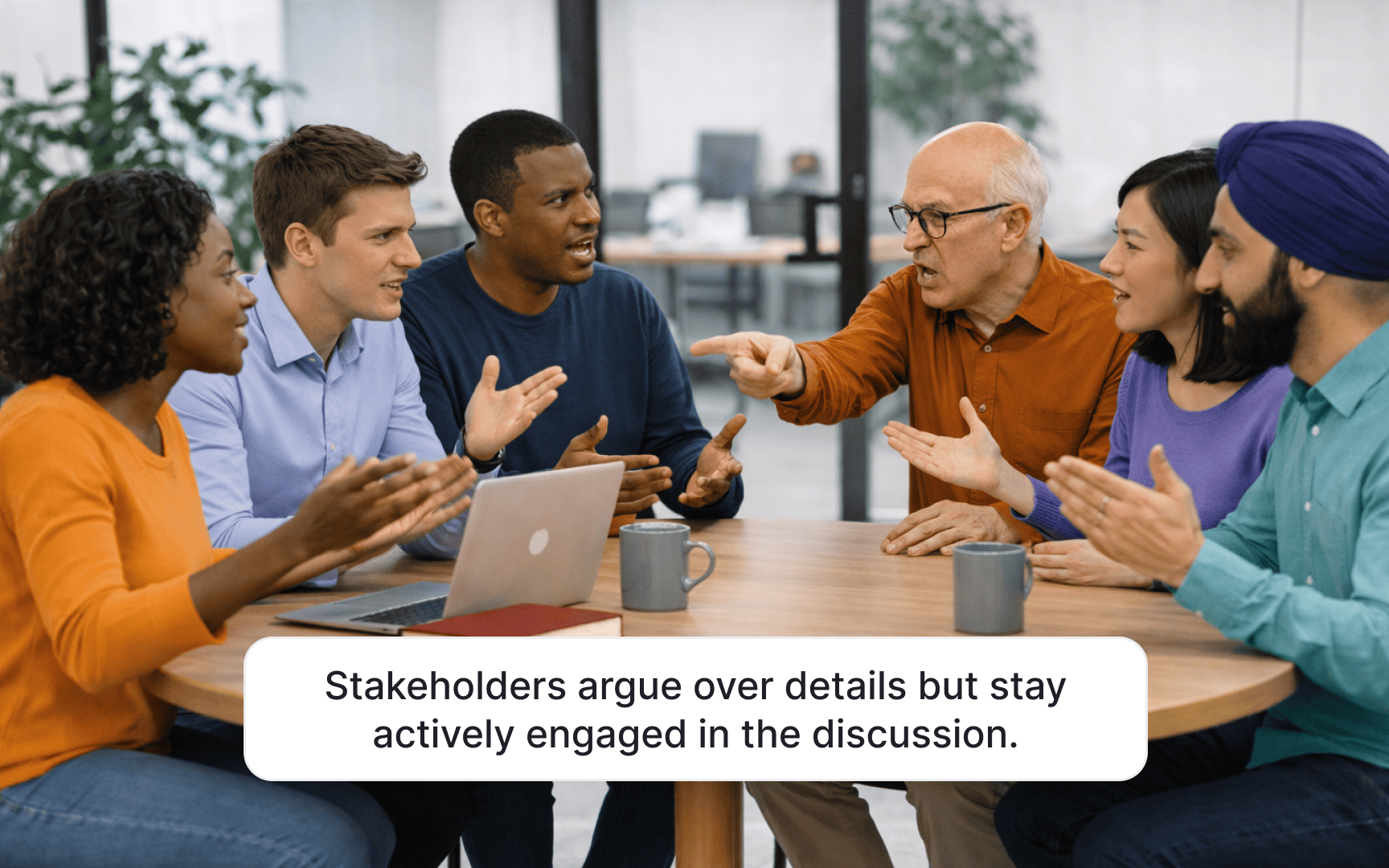
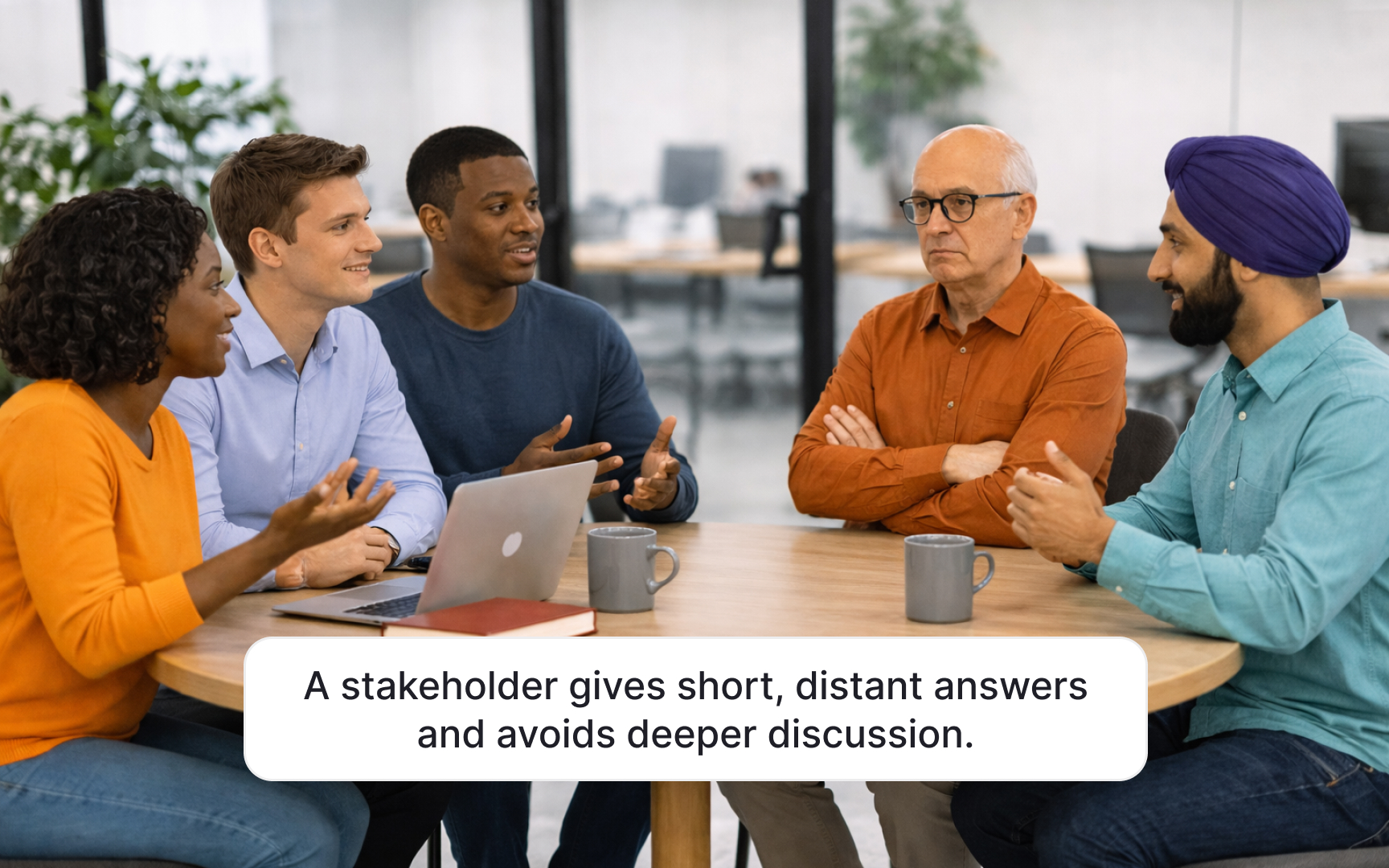
Before conflict becomes obvious, there are often small signs that something is wrong. A stakeholder might stop speaking up in meetings, delay replies, or sound less engaged. These behaviors may look minor, but they can show frustration, confusion, or doubt. Paying attention to them helps you respond before tension grows.
Body language and tone also tell a lot. A colder tone, shorter answers, or less participation in shared channels can all suggest discomfort. Online, the same can appear through slow feedback or a sudden drop in collaboration. These early hints show that someone feels unheard or uncertain.
When you notice these changes, start a calm and friendly conversation. Asking simple questions can open communication again and clear up misunderstandings. This small step often prevents problems from escalating and helps keep relationships healthy.
Pro Tip: Watch for quiet changes in mood or communication. They are often the first signs that something needs attention.
Behind every conflict, there are emotions that shape how people react. Fear, frustration, and uncertainty are the most common. A stakeholder may resist a decision not because they disagree with the logic, but because they feel excluded or worried about losing influence. These feelings are easy to miss, yet they often drive defensive behavior.
Recognizing these emotions helps teams respond with empathy instead of judgment. For example, when a stakeholder shows frustration, it can help to ask what they are concerned about rather than pushing harder for agreement. Emotional reactions are rarely about the project details alone. They are about security, recognition, or control.
Understanding these drivers makes it easier to rebuild trust. When people feel heard and respected, they are more open to finding solutions. A calm tone, patience, and genuine curiosity go further than any formal process in reducing tension and restoring collaboration.
Pro Tip: Emotions reveal what people need. Listening to them often leads to faster and more lasting resolutions.
The environment around a project often shapes how strong a conflict becomes. Tight deadlines, unclear roles, or big changes in leadership can make even small disagreements feel bigger than they are. When pressure rises, people have less patience to listen carefully, and stress turns misunderstandings into tension.
Context also includes the culture of the company. In open and informal workplaces, people might use humor to ease tension, while in more traditional or formal environments, the same jokes can feel disrespectful or dismissive. In some cultures, speaking directly is seen as honest; in others, it may seem rude. These differences explain why a situation that feels minor to one person can feel serious to another.
Being aware of these dynamics helps prevent unnecessary friction. When pressure is high, slowing down and checking how others interpret your tone or words makes a big difference. When roles are unclear, defining them early helps reduce confusion. Understanding the context means managing both the situation and the emotions that come with it.
Pro Tip: The same words can sound very different in different cultures. Pay attention to tone, timing, and local norms.
Projects rarely involve just one type of stakeholder. Each group brings its own goals, priorities, and influence. This mix can create both opportunities and risks. The more diverse the interests are, the higher the chance that one group’s win might feel like another’s loss. Recognizing where these tensions may appear is one of the first steps to preventing conflict.
Mapping stakeholders helps reveal those risks early. Tools like stakeholder registers or influence-interest grids can show who holds power, who is most affected by outcomes, and where goals overlap or clash. For instance, a technical team may prioritize speed, while compliance or legal groups focus on safety and accuracy. Both are essential, but without coordination, friction is almost guaranteed.
Spotting these differences before they escalate allows teams to adjust their engagement strategy. Some stakeholders may need frequent updates, while others need reassurance that their concerns are heard. Understanding these dynamics helps balance priorities and keeps cooperation intact across complex networks.
Pro Tip: Conflict risk rises where goals compete. Mapping influence and interests helps you spot problems before they start.
Once early signs of conflict appear, keeping track of them is vital. Documenting concerns, tone changes, or repeated misunderstandings helps teams see patterns that might otherwise go unnoticed. A short note in a stakeholder log, meeting record, or shared dashboard is often enough to capture what happened and when.
Monitoring these signs over time shows whether tension is growing or resolving. For example, if feedback becomes more defensive or meetings start ending without clear decisions, that’s a signal to intervene. Regularly reviewing these records keeps everyone accountable and ensures that minor issues do not get buried under daily work.
Tracking conflict data also builds transparency. When everyone can see the same information, discussions shift from blame to problem-solving. A clear record helps decide the next step, whether it’s adjusting communication, involving another stakeholder, or setting a mediation meeting. What gets recorded can be managed, and what is managed rarely spins out of control.
References
- How to Deal with Stakeholder Conflict | Borealis Stakeholder Management Software
Topics
From Course
Share


Similar lessons
Stakeholder Management
Stakeholder Communication