Applying the RACI Model for Role Clarity
Define roles and responsibilities on a team clearly to strengthen collaboration and accountability.
When project responsibilities blur, even strong teams lose focus. Misunderstandings about who leads, who decides, and who should be informed can slow progress and spark tension between teams. The RACI framework helps untangle that complexity. It creates a shared language for discussing accountability by clarifying who is Responsible for doing the work, who is Accountable for its outcome, who should be Consulted for input, and who must be Informed about progress.
Used correctly, a RACI chart turns uncertainty into alignment. It helps teams balance autonomy and control, ensuring that decisions happen at the right level and communication flows smoothly across roles. Beyond managing internal coordination, it also supports stakeholder engagement by making expectations explicit and reducing the risks of duplicated work or overlooked voices.
The RACI model is not about bureaucracy. It’s a simple visual map that can evolve with the project, allowing teams to stay clear about ownership even as priorities shift. Understanding how to apply it effectively is key to creating transparent processes, stronger collaboration, and a more reliable decision chain.
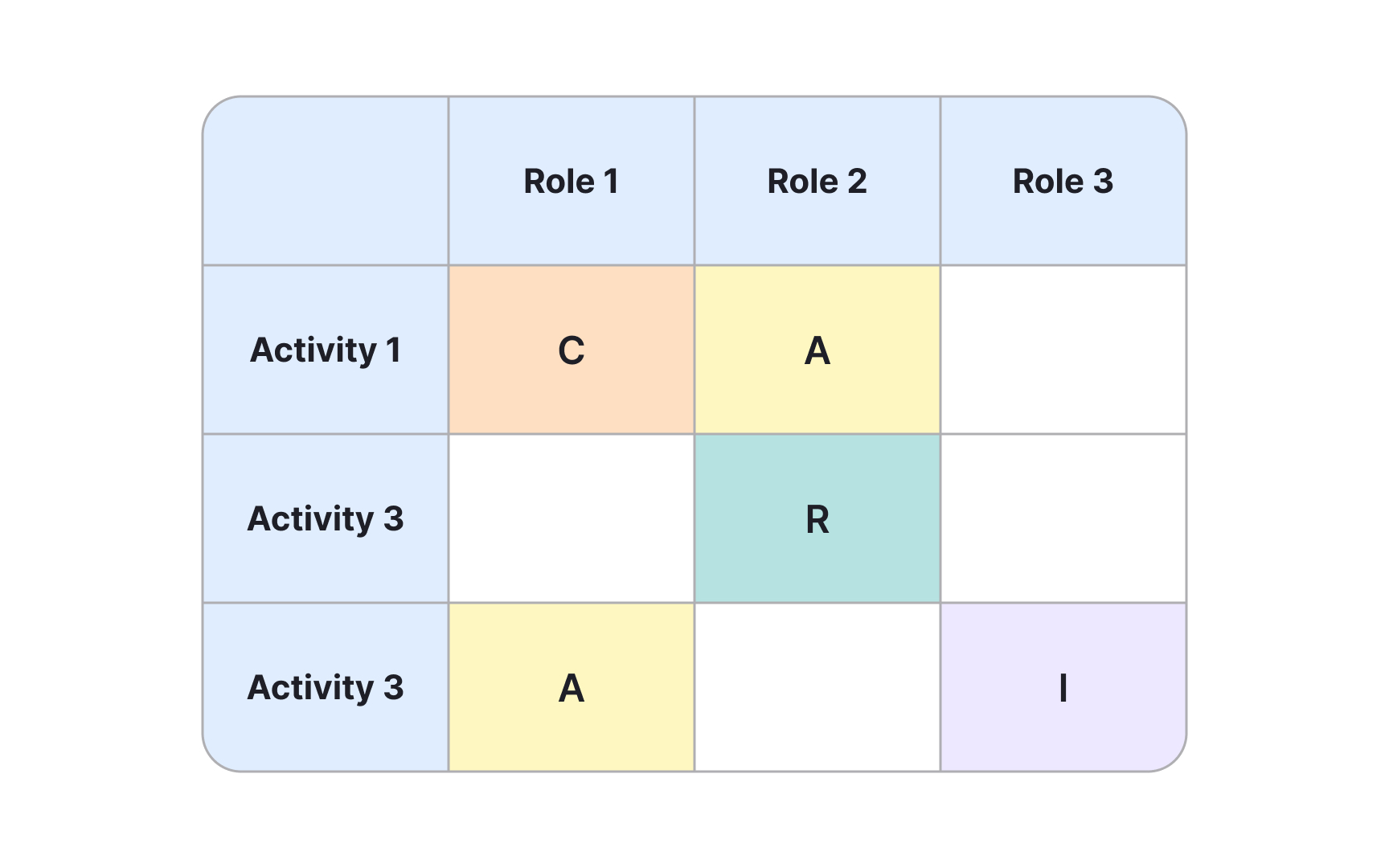
Projects often fail not because of poor ideas but because people are unsure about their responsibilities. When roles overlap or remain undefined, communication breaks down and tasks get delayed. Stakeholders may assume that someone else is handling an activity or that their
The RACI model helps prevent this by turning role clarity into a shared structure for managing stakeholders. It shows how every person fits into the process: who is Responsible for the work, who is Accountable for the outcome, who is Consulted for advice, and who is Informed about progress. By making these roles visible, teams and stakeholders understand what kind of participation is expected from each of them. This reduces overlap, improves communication, and builds accountability across the project.
When people know their role and how it connects with others, collaboration becomes easier and more transparent. Everyone can focus on their part of the work while staying aligned with the larger goal, which leads to stronger engagement and smoother delivery.[1]
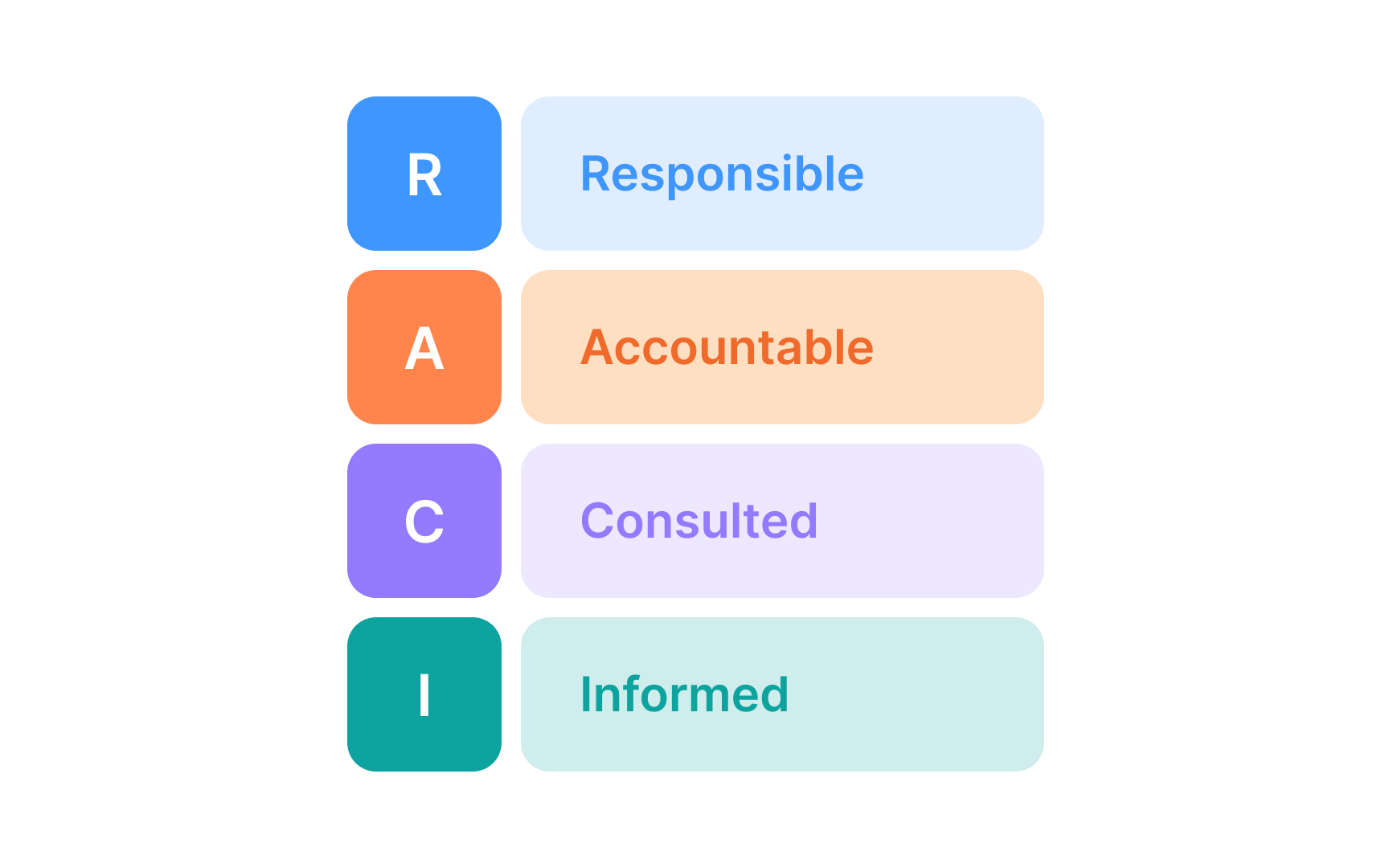
The RACI model gives structure to how stakeholders and teams work together. It divides responsibilities into four clear roles that describe different kinds of involvement. Understanding these roles helps prevent confusion and ensures that every decision and action has the right people involved.
- Responsible (R) are the people who complete the work. They take direct action to deliver tasks and are in charge of making sure things get done.
- Accountable (A) is the person who owns the result. This person approves outcomes, ensures the work meets standards, and makes the final call. Each task should have only one accountable person so that ownership stays clear.
- Consulted (C) includes stakeholders who give
input or expert advice before a decision is made. Their feedback helps improve quality and ensures that different perspectives are considered. - Informed (I) covers those who need regular updates but are not directly involved in carrying out the work. Keeping them informed maintains transparency and helps avoid surprises.[2]
A RACI matrix helps turn a complex network of stakeholders into a clear structure of roles and responsibilities. Creating one is a practical process that helps teams understand who does what, when, and how. It also prevents the confusion that often appears when work begins without defined ownership.
To build a RACI matrix:
- Define key tasks and decisions. Start by listing all the project activities that require coordination or approval. Include both deliverables and communication tasks so that nothing important is missed.
- Identify the people or groups involved. List everyone who contributes to the project — internal team members, leaders, partners, or clients. Think about who performs the work, who approves it, who gives
input , and who needs updates. - Draw the matrix. Create a table where tasks are listed down the left side and roles or names run across the top.
- Assign RACI roles. For each task, mark who is Responsible, Accountable, Consulted, and Informed. Make sure there is only one Accountable per task to avoid mixed ownership.
- Review and confirm. Go through the matrix with the team and stakeholders. Discuss any unclear areas and make sure everyone agrees on their level of responsibility.[3]
Even a well-designed RACI
To prevent this, start by making each role definition as clear as possible. The Responsible person carries out the work, while the Accountable one ensures that it meets standards and is completed successfully. Only one person should be accountable for each task. This avoids the “everyone owns it, so no one owns it” problem.
Too many Consulted or Informed stakeholders can also cause issues. If everyone must review or approve every detail, progress stops. Limit consultations to people whose expertise truly adds value and keep the rest updated at the right frequency. This makes communication purposeful rather than overwhelming.
Pro Tip: Avoid giving more than one person the Accountable role. Clear ownership keeps projects efficient and decisions fast.
The Consulted role in the RACI model ensures that stakeholders with valuable knowledge or experience can share
To keep collaboration effective and fast:
- Involve Consulted stakeholders early in the process, before final decisions are made.
- Limit the number of people in this role to those whose opinions are truly necessary.
- Define clear methods for collecting and applying feedback so that discussions lead to action, not delay.
When consultation is structured this way, projects benefit from expertise without losing momentum. Teams stay informed, decisions are stronger, and accountability remains clear.
Pro Tip: Collect feedback through focused discussions, not endless reviews. It keeps decisions timely and purposeful.
Many project issues come from poor communication rather than poor execution. The Informed role in the RACI model helps prevent this by ensuring that stakeholders receive the right information at the right time.
People in this category need concise updates about progress, decisions, and changes that affect their interests. They do not take part in decisions but rely on clear communication to stay confident and aligned with the project’s direction.
To communicate effectively with Informed stakeholders:
- Choose a suitable format for updates, such as brief summaries, dashboards, or regular check-ins.
- Match the frequency of updates to each stakeholder’s influence and level of interest.
- Focus messages on what matters most (progress, risks, or changes in scope) and avoid unnecessary detail.
Pro Tip: Keep updates short and relevant. Consistency matters more than the amount of information shared.
The RACI model is most effective when used to bring clarity in situations where roles overlap or decisions involve many people. In small, simple projects, teams often communicate directly and do not need a formal
A RACI matrix becomes useful when:
- Responsibilities are shared across different departments or teams.
- There is uncertainty about who approves, executes, or provides
input . - Multiple stakeholders influence outcomes and need coordination.
- Delays or rework appear because no one feels clearly accountable.
In these cases, RACI helps everyone see how responsibilities connect and where decisions are made.
However, RACI adds less value when used too rigidly or for tasks that are already clear. It should support collaboration, not slow it down. Used with balance, it keeps projects aligned and relationships transparent.
Pro Tip: Use RACI only where it brings clarity. Simpler projects often work best with direct communication.
A RACI
To keep your RACI matrix relevant throughout the project:
- Review it regularly. Schedule short check-ins during major milestones or phase transitions to confirm that responsibilities still fit the project’s needs.
- Track changes in stakeholders. When someone new joins or leaves, revisit their role and make sure tasks are reassigned clearly.
- Adjust for scope or priority shifts. If goals, deadlines, or deliverables change, update the matrix to reflect new responsibilities and reporting lines.
- Share updates promptly. Communicate revisions to everyone involved so that no one works with outdated expectations.
Pro Tip: Review your RACI matrix at every major project stage. It’s easier to adjust early than to fix confusion later.
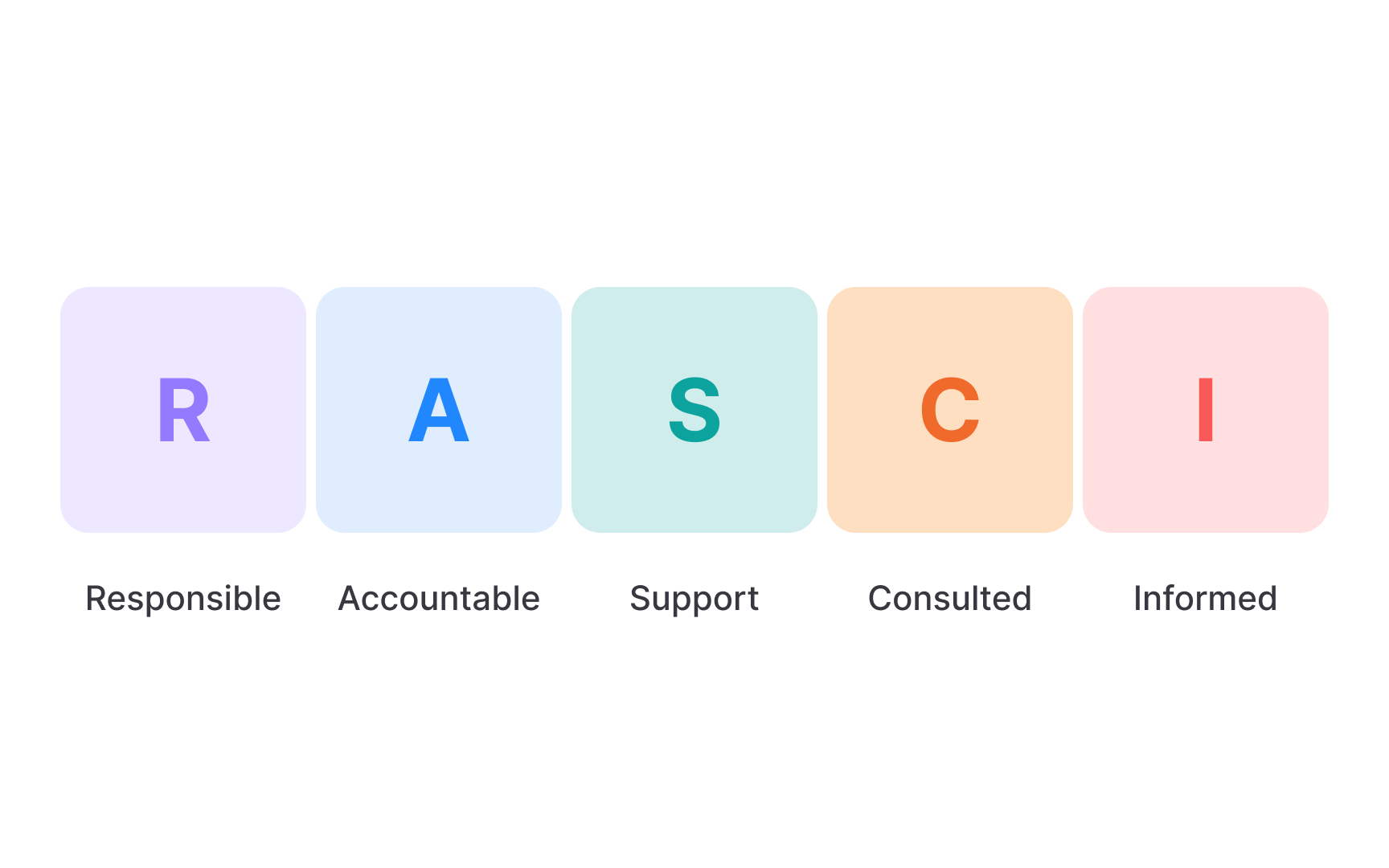
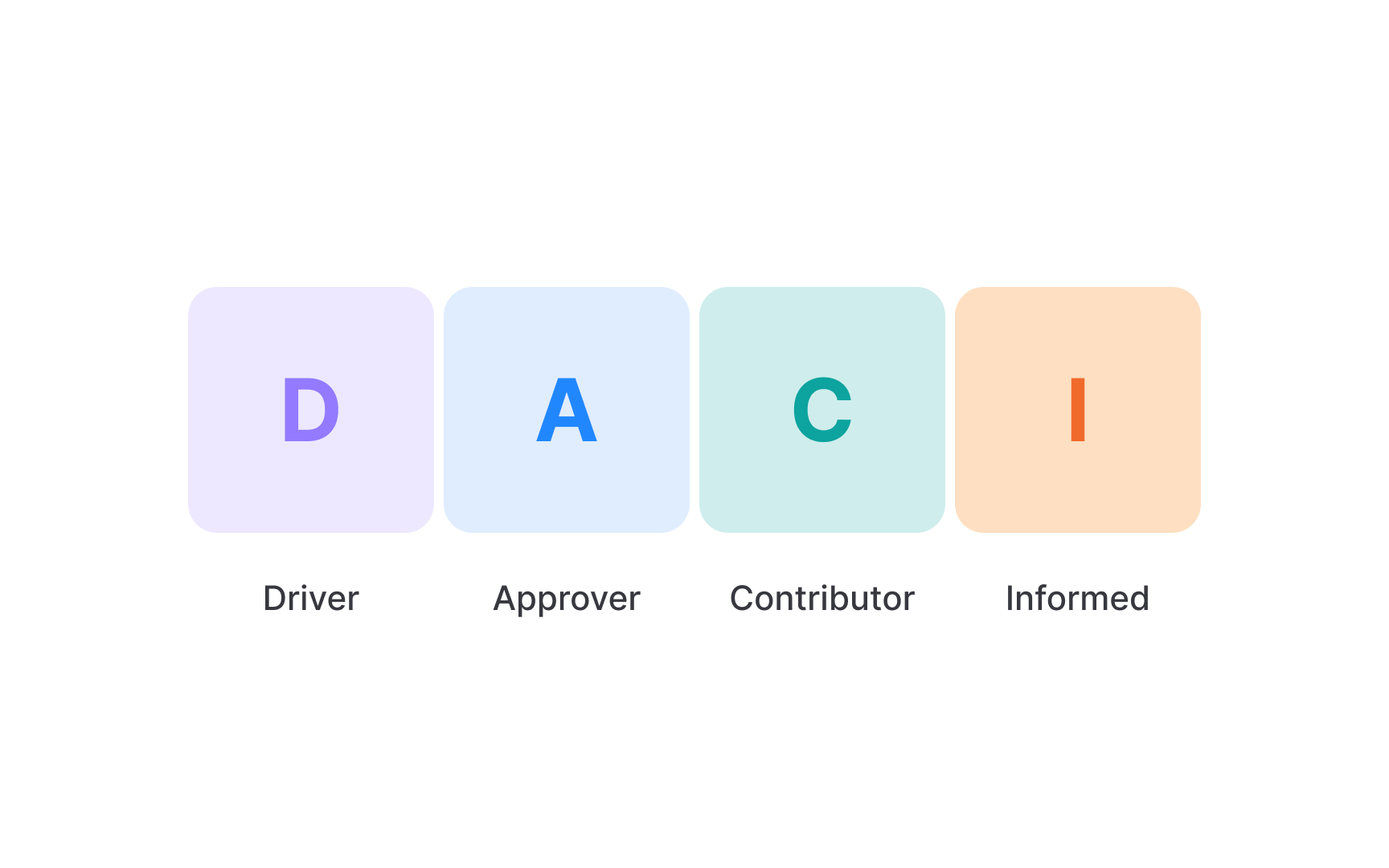
While the RACI model is widely used, some projects benefit from variations that fit their specific structure or pace. Understanding these alternatives helps teams choose the approach that best supports their stakeholders and workflow.
- RASCI adds a 5th role — Supportive — for people or groups who provide resources or assistance. This version is useful when additional help is needed beyond the main responsible party.
- DACI focuses on decision-making. It stands for Driver (who leads the process), Approver (who makes the final call), Contributor (who gives
input ), and Informed (who receives updates). It works well for product or strategy decisions that require multiple viewpoints but a single final authority. - RACI-VS introduces Verifier and Signatory roles to ensure quality control and formal approval. It can help in projects with strict compliance or audit requirements.
The choice of the model depends on how complex the project is, how decisions are made, and how many stakeholders are involved. The key is to select the framework that brings clarity instead of complexity.
Pro Tip: Pick a model that matches your team’s size and culture. The best framework is the one that people actually use.
References
- How to Use the RACI Model for Effective Stakeholder Analysis | Institute of Project Management (IPM) Ireland
- How RACI Matrix Streamlines Stakeholder Engagement | Continuous Improvement Toolkit
Topics
From Course

Share


Similar lessons
Meeting Management

Advanced Collaboration Patterns