UX Research Strategy & Methodology
Discover what goes into setting up a solid UX research strategy to meet your design goals
Companies that invest in a UX research strategy consistently see more revenue than those that don't. According to a study by Forrester, every $1 spent on UX will bring from $2 to $100 in return.[1]
Many product teams still choose to forego UX research as they don't see how they can integrate it into their design process. Others wished they had more resources to do research. Developing a UX research strategy can solve both these problems.
Embarking on UX design for business apps without a UX research strategy is similar to driving across the country without a map: you need to have a plan to help you get where you want to be. The good news is that the action that you need to take doesn't need to cost a lot of money or time.
Strategy is the approach you take to achieve a goal.
Many product teams don't do any UX research and rely on their "gut feeling," citing budget and time constraints. Others do surveys and interviews of their co-workers, friends, and family, introducing bias to their findings. Such approaches often result in time and money wasted or a project that doesn't satisfy users.
Having a UX research strategy allows you to create a product that users need and save your team's efforts along the way. UX research strategy helps you:
- Reinforce the importance of research and get stakeholders on board
- Set research goals (are you making a new product or trying to improve an existing one?)
- Account for time and budget for UX research during project planning
- Integrate UX research into your design process
- Decide which research methods should be used at each stage
- Successfully implement your research findings
Building a successful
Stakeholders can be categorized by their relationship to research:
- Business stakeholders include upper management, product managers, marketing, and sales. They ensure research aligns with business goals and control resources. A VP of Product might validate strategic direction, while marketing directors need user preferences for campaigns.
- Engineering stakeholders are developers, QA teams, and technical support. They provide information about technical limitations. A senior engineer might test prototype feasibility, while QA needs user workflows for test cases.
- UX stakeholders are designers, researchers, and technical writers who need research results for design decisions. A product designer might validate interaction patterns, while content strategists need insights for messaging.
Understanding these categories helps tailor communication so each stakeholder gets the information needed for informed decisions.[2]
Your
Common research goals include:
- Understanding user behavior. Field studies reveal how users accomplish tasks in real environments. A researcher might shadow shoppers to understand purchasing decisions or observe employees using software in their workspace.
- Evaluating usability. Usability testing measures how easily users complete tasks. A team might watch users navigate checkout to identify where they struggle or abandon the process.
- Testing concepts. Concept testing evaluates whether users understand and want a proposed solution before building it. Teams show
prototypes to gauge interest and collect feedback. - Improving workflows. Process evaluation examines how systems work and where they break down. This might involve analyzing support tickets or observing team collaboration.
For research to succeed, stakeholders must trust researchers, budget for studies, and use findings. Conduct stakeholder
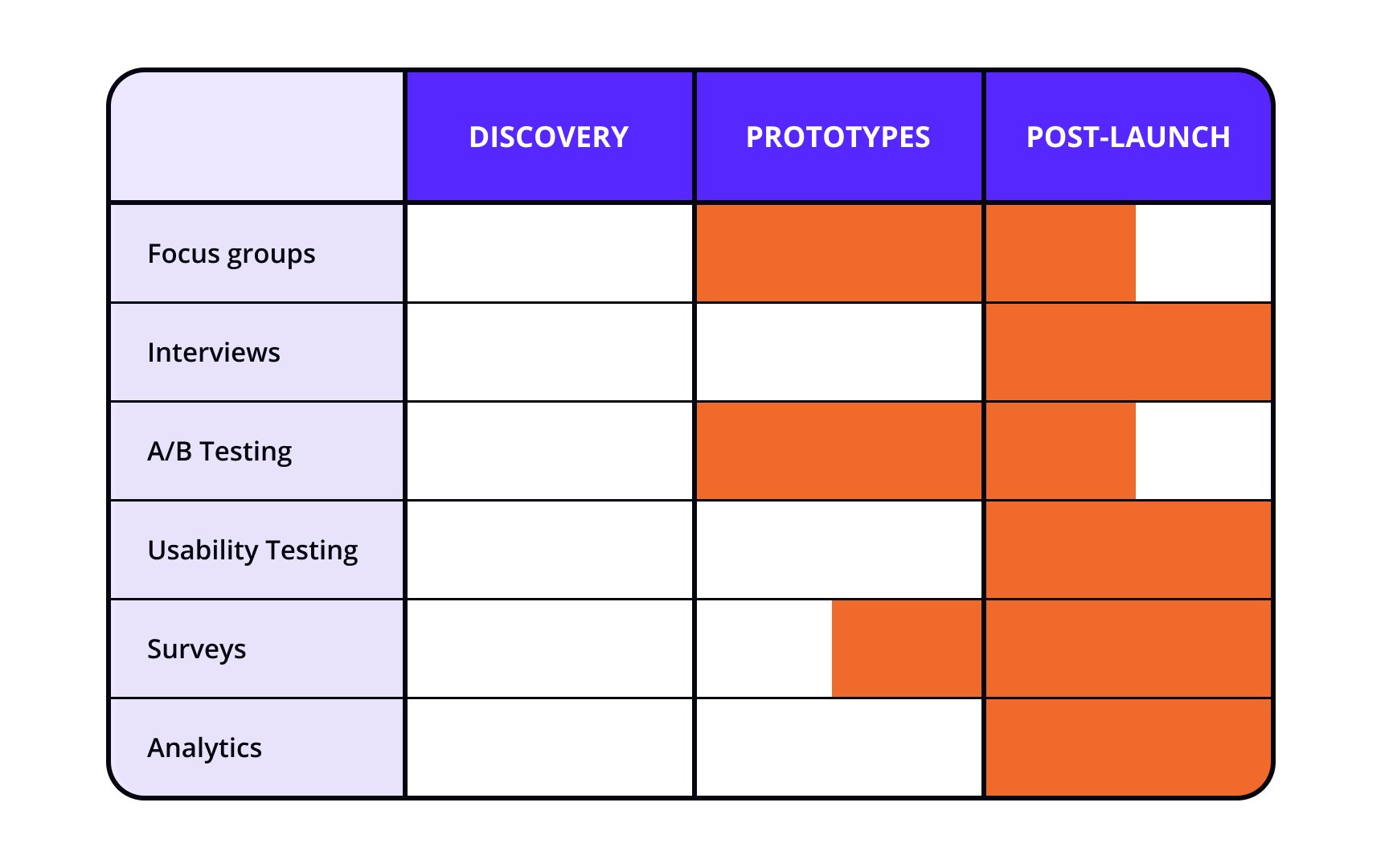
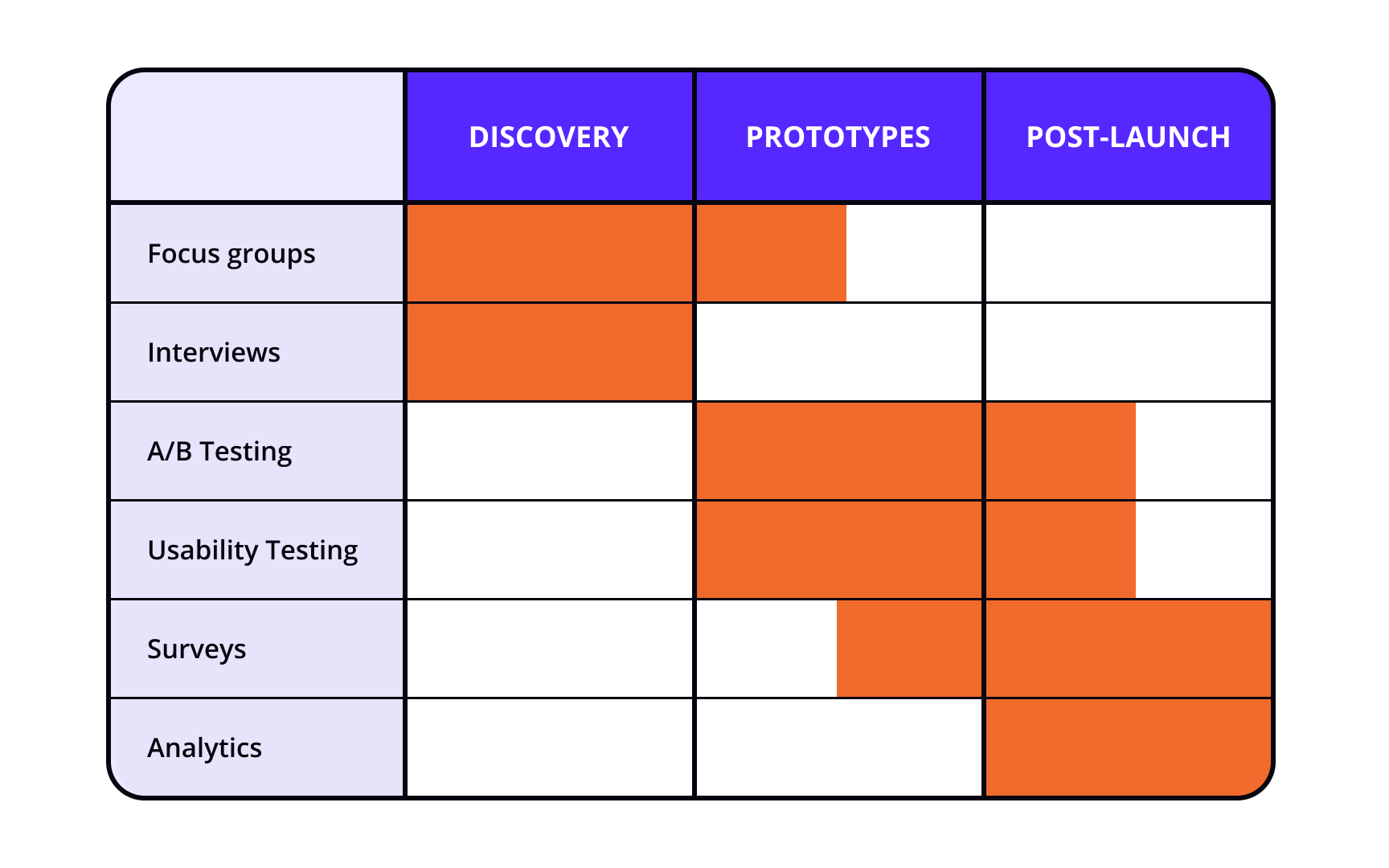
The tests you need to run will differ depending on the stage:
- Discovery: At this stage, you need to learn about the market for your product and its potential users. Consider using methods like generative
interviews , diary studies, ethnography, field studies, and focus groups. - Validation and testing: At this point, you typically have a
prototype to test. The goal now is to understand if your design works for users. Key methods to test this include qualitativeusability testing , tree testing, first click testing, task analysis, A/B testing, and accessibility testing. - Post-launch: Once you've launched your product, it's important to keep the research going to ensure that your solution is still working. You can track it with surveys like NPS or your product's analytics.
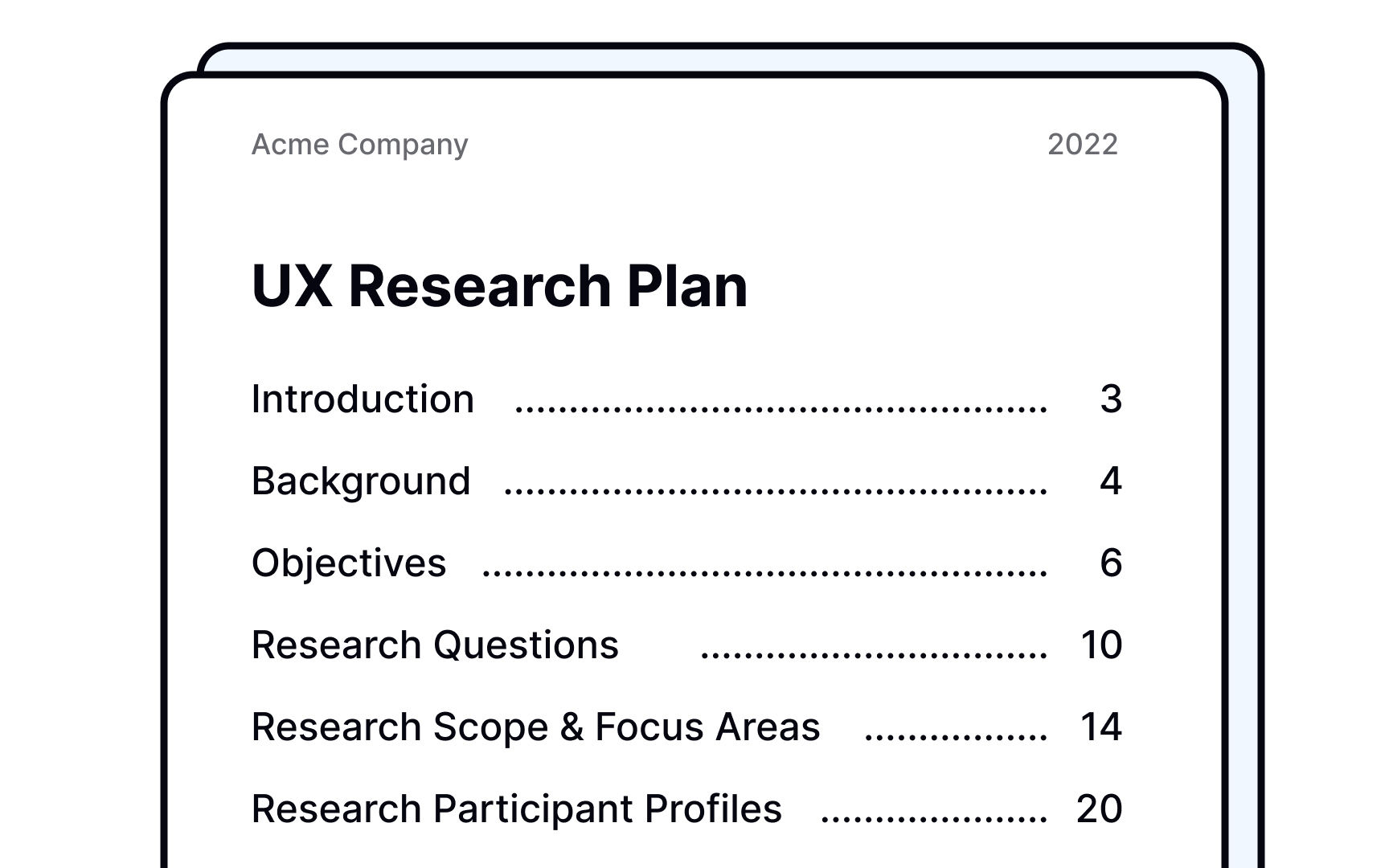
A
- Research goals and questions. What do you want to learn? These should be specific and answerable through research.
- Research method. Which methods will answer your questions?
Usability testing for evaluating task completion,interviews for understanding motivations, or surveys for measuring satisfaction. - Participant criteria. Who will you recruit and how many? Define characteristics that match your target users and justify the sample size for your chosen method.
- Timeline. When will research activities occur and when can stakeholders expect results? This helps manage expectations and ensures adequate resources.
- Analysis approach and deliverables. How will you analyze findings and what format will the results take? This might include reports, presentations, or recorded sessions.
After creating the plan, share it with stakeholders before beginning research. This ensures they understand the approach, keeps them invested, and provides an opportunity for feedback that might improve the study.
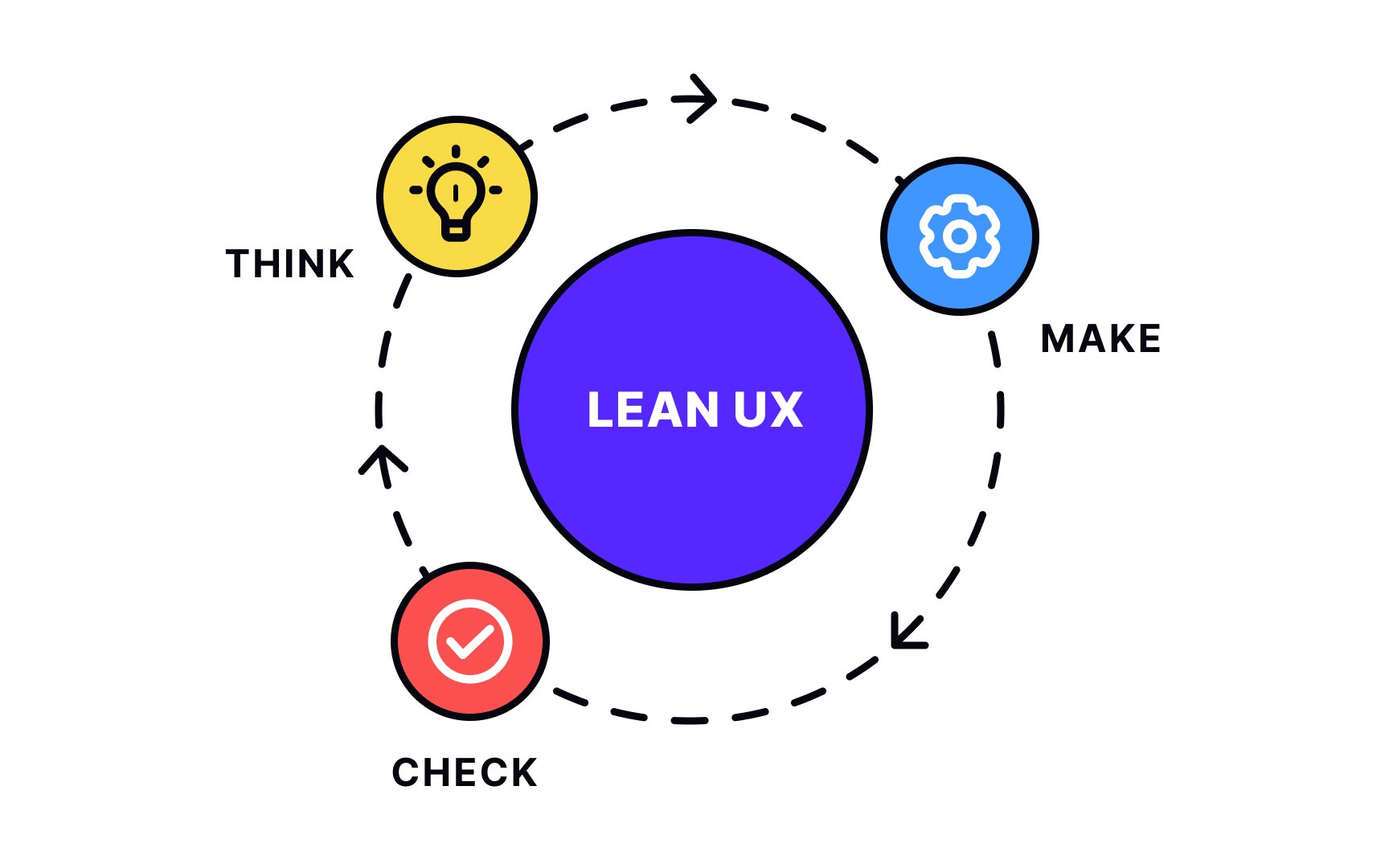
Lean
Lean UX
Common lean
- Guerrilla testing involves approaching people in public spaces for quick feedback. Sessions last 5-10 minutes and reveal usability issues without formal recruitment.
- Remote unmoderated testing allows users to complete tasks independently using recording tools. This scales research across regions without travel costs.
- Rapid surveys collect feedback from many users quickly. Short questionnaires validate hypotheses or measure satisfaction without lengthy
interviews .
The lean approach trades comprehensive data for speed. Results guide the next iteration rather than large design efforts upfront.[5]
One of the main differences between lean
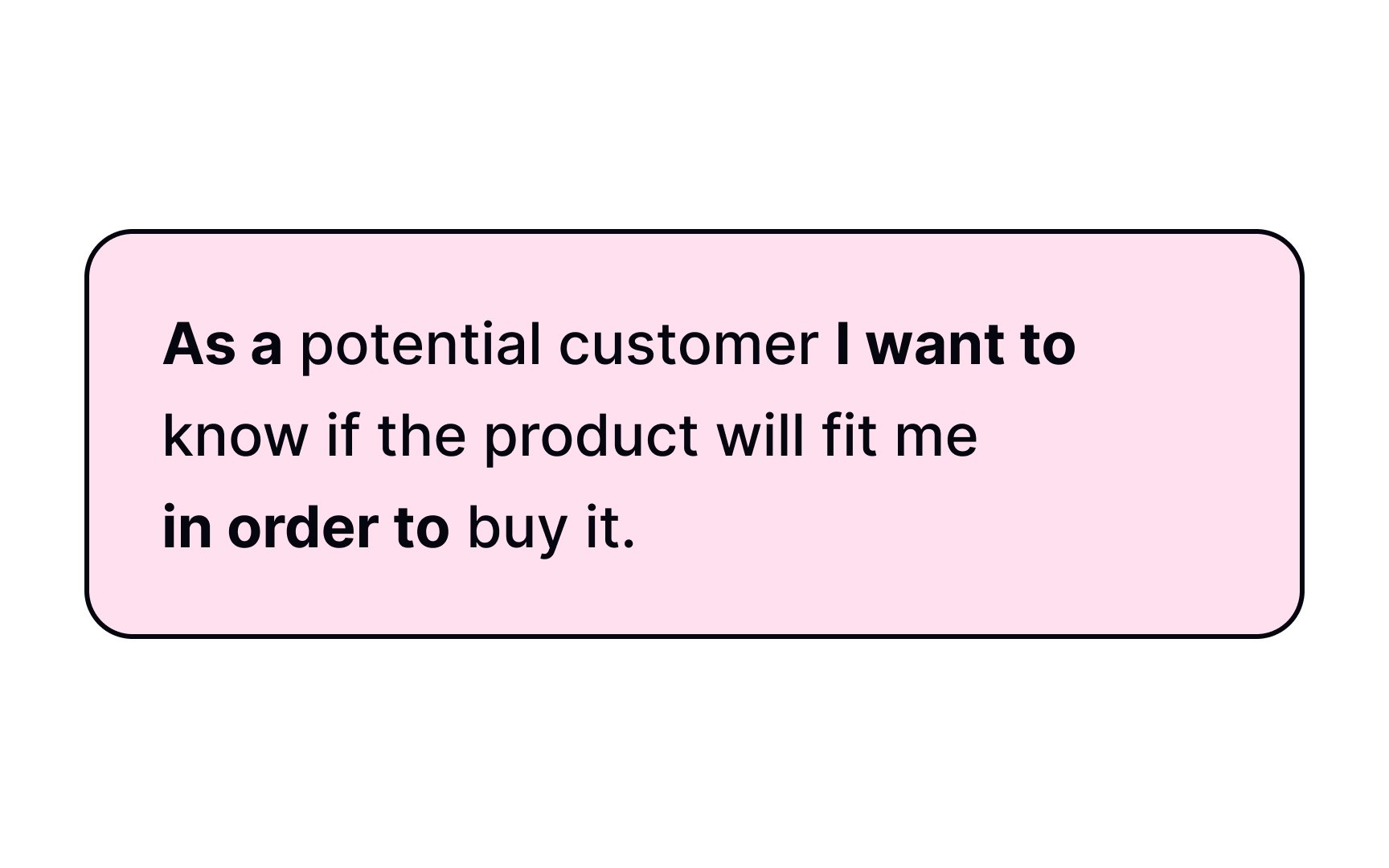
Lean UX is slightly different because the focus is to improve the product here and now. For example, you've noticed that users of an e-commerce site switch back and forth between the product details page and the basket page to edit their selected size, and many leave the website without purchasing.
Start with a problem statement that follows the pattern: "[A user] needs [need] to accomplish [goal]." For example, "A user needs to understand our shoe size system to buy shoes of the right size."
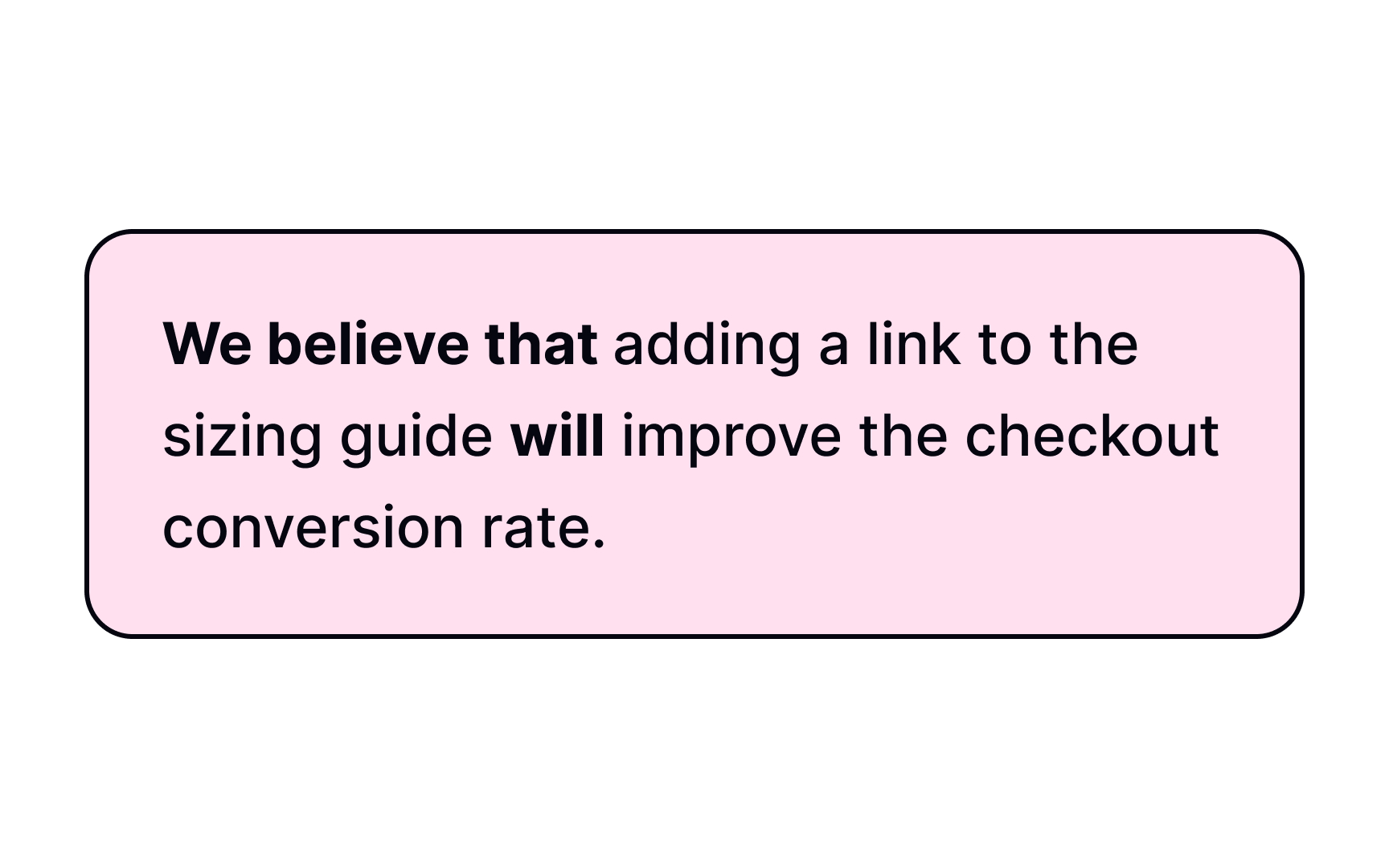
The next step is to get the team together to brainstorm possible solutions and make assumptions. For example, an assumption might be: "Adding a link to the sizing guide to the product details page will solve sizing uncertainty."
To test this assumption, create a hypothesis. "Adding a link to the sizing guide will increase customers' progress from the basket to
New product research typically focuses on:
- Understanding user problems. Before building features, teams research what problems users face and how they solve them today. Competitive analysis reveals what users expect and where gaps exist.
Interviews uncover needs that current solutions don't address. - Testing concepts before development. Concept testing evaluates whether users understand and want the proposed solution. Teams show
prototypes to assess interest before full development. This reveals whether the value proposition resonates. - Validating onboarding approaches. User onboarding, the process of guiding users to find value in your product, can make or break adoption. Research tests how users discover core functionality and whether the initial experience helps them succeed.
- Identifying adoption barriers.
Usability testing on prototypes reveals friction before launch. Testing with five users identifies 85% of majorusability issues, saving development costs.[6]
Existing product research typically focuses on:
- Reducing churn and improving retention. Analytics reveal where users drop off or decrease usage over time. Combining behavioral data with
interviews uncovers why users leave for competitors. Teams identify friction points in critical workflows and address pain points before users abandon the product. - Optimizing existing features.
Usability testing on current features reveals where users get stuck or confused. Session recordings and heatmaps show how users actually interact with the product versus how designers intended. These insights guide refinements that make features more discoverable and easier to use. - Validating new features and improvements.
A/B testing compares design variations to determine which changes improve key metrics like conversion or engagement.Prototype testing gauges user interest in proposed features before full development. This prevents investing resources in features users don't need or want.
Retention research often reveals that small
References
- How to Improve Your Projects With Lean User Research | Paul Boag - User Experience Advice
- From Research Goals to Usability-Testing Scenarios: A 7-Step Method | Nielsen Norman Group
- Improving ROI with Proper UX Strategy | Designial- Product Development & Marketing | Silicon Valley, California
- Product-Led Growth and UX | Nielsen Norman Group
Top contributors









Topics
From Course

Share


Similar lessons

User Research Basics
UX Research Ethics & Biases