Customer Journey Mapping
Step into the shoes of customers and see the entire service process, touchpoints, and interactions in a clear and structured manner
Customer journey mapping is a powerful technique that brings clarity to the intricate pathways customers go through. It allows service designers to step into the shoes of customers and enables stakeholders to see the entire process, touchpoints, and interactions in a clear and structured manner.
It's true — creating customer journey maps may require some effort and research, but when done correctly, the outcomes are absolutely worth it. By identifying pain points, service designers can focus on eliminating or improving them, resulting in a better overall customer experience. Not only that, but these maps also unveil untapped opportunities for innovation and differentiation, which can truly set your services apart. And let's not forget that visualizing the journey also improves communication and collaboration among different teams.
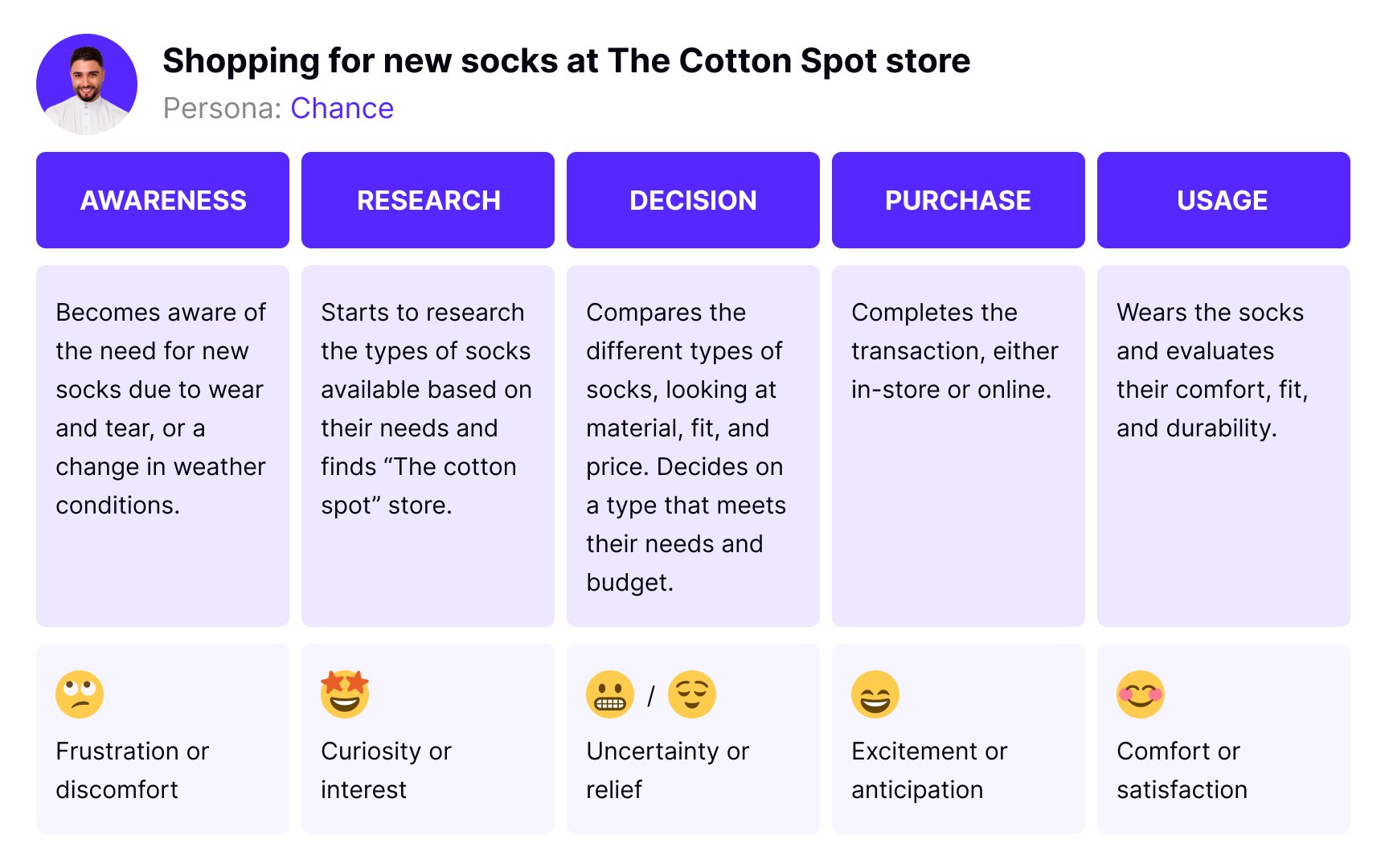
A
Creating a customer journey map involves gathering information about the customer's experience at each stage of their journey. Begin with understanding the touchpoints, actions, and emotions that customers experience by collecting data through various methods, such as:
- Customer interviews
- Surveys
- Observational studies
- Data analysis from customer feedback, reviews, and social media


The main actor of a
By putting yourself in the customer's shoes, you can better understand their needs and pain points and find ways to improve their experience.
In cases where a service caters to multiple customer personas, it may be tempting to include them all in a single customer journey map.
However, this can become overwhelming and make gaining insights into each persona's unique experience difficult. Therefore, it is advisable to create separate journey maps for each persona, allowing for a more tailored approach to improving their experience.
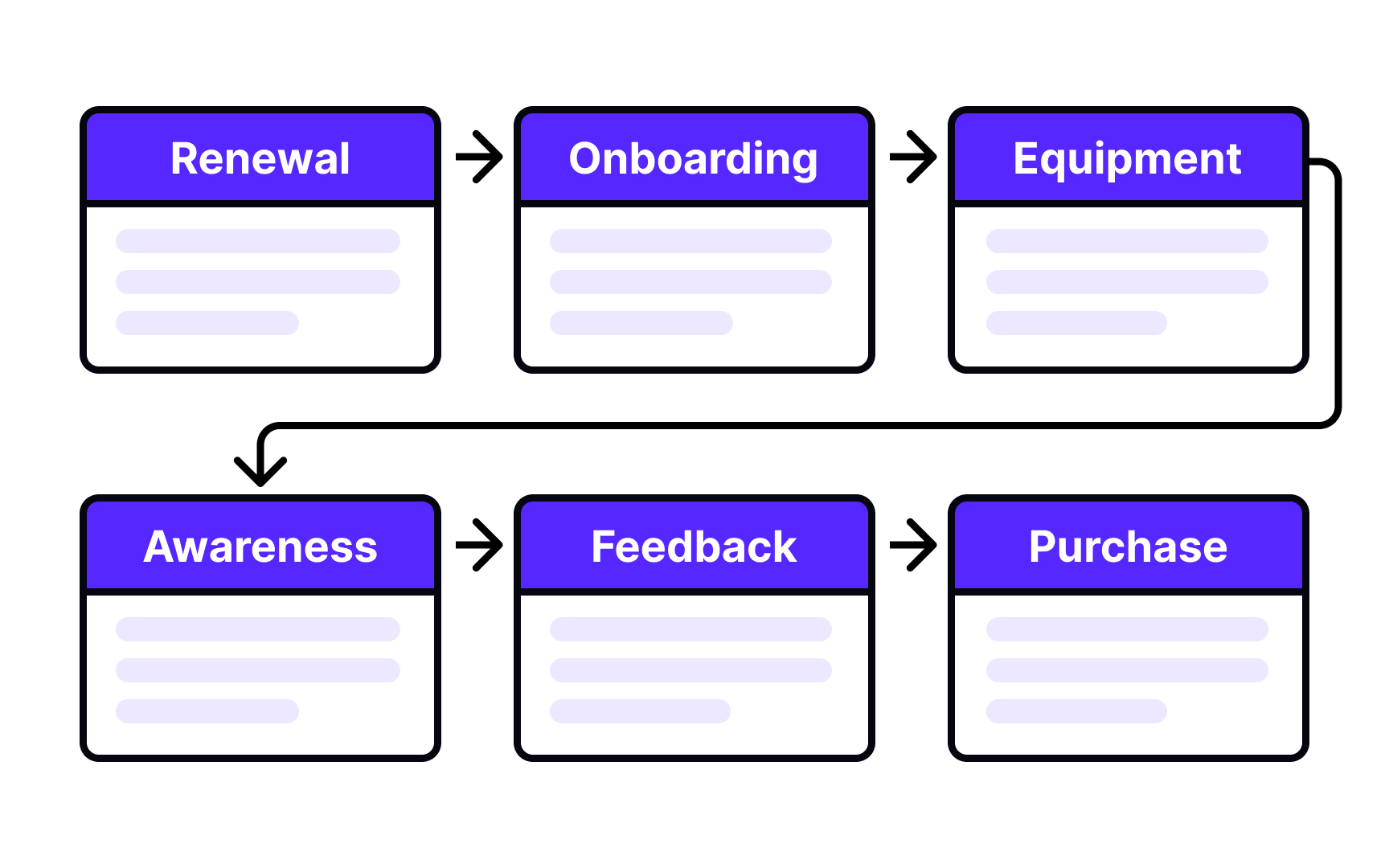
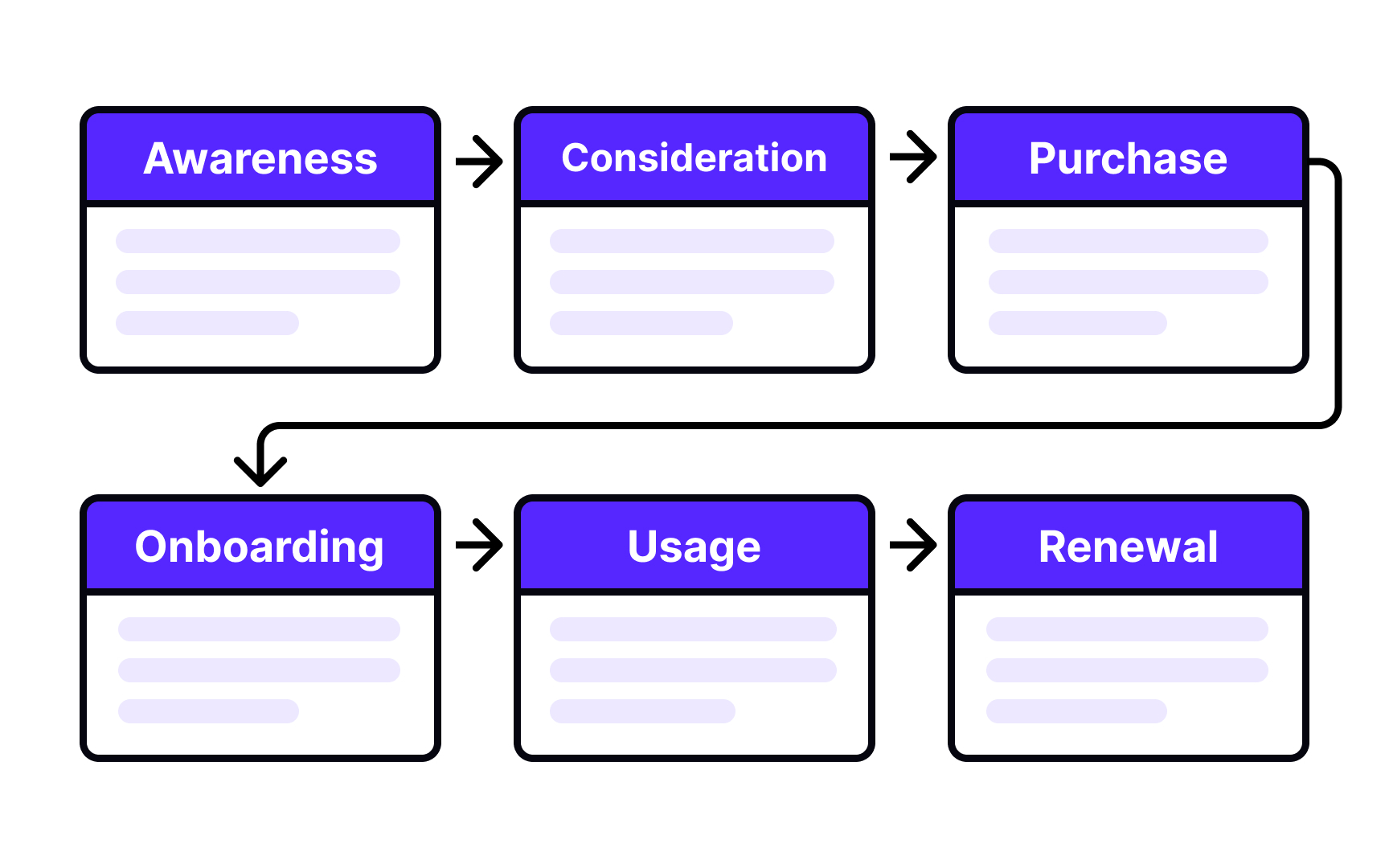
A
Some common phases that may be included in a customer journey map are:
- Awareness: Customers become aware of a product or service at this stage
- Consideration: During this stage, customers evaluate whether the product or service is suitable for their needs
- Purchase: Customers decide to purchase the product or service
- Onboarding: Customers learn how to use the product or service and get started with it
- Engagement: Customers use the product or service regularly
- Support: Customers may require help or support with the product or service
- Loyalty: Customers become loyal fans of the product or service and may recommend it to others
Defining the phases of a customer journey map requires a comprehensive understanding of the customer's experience, which can be obtained through
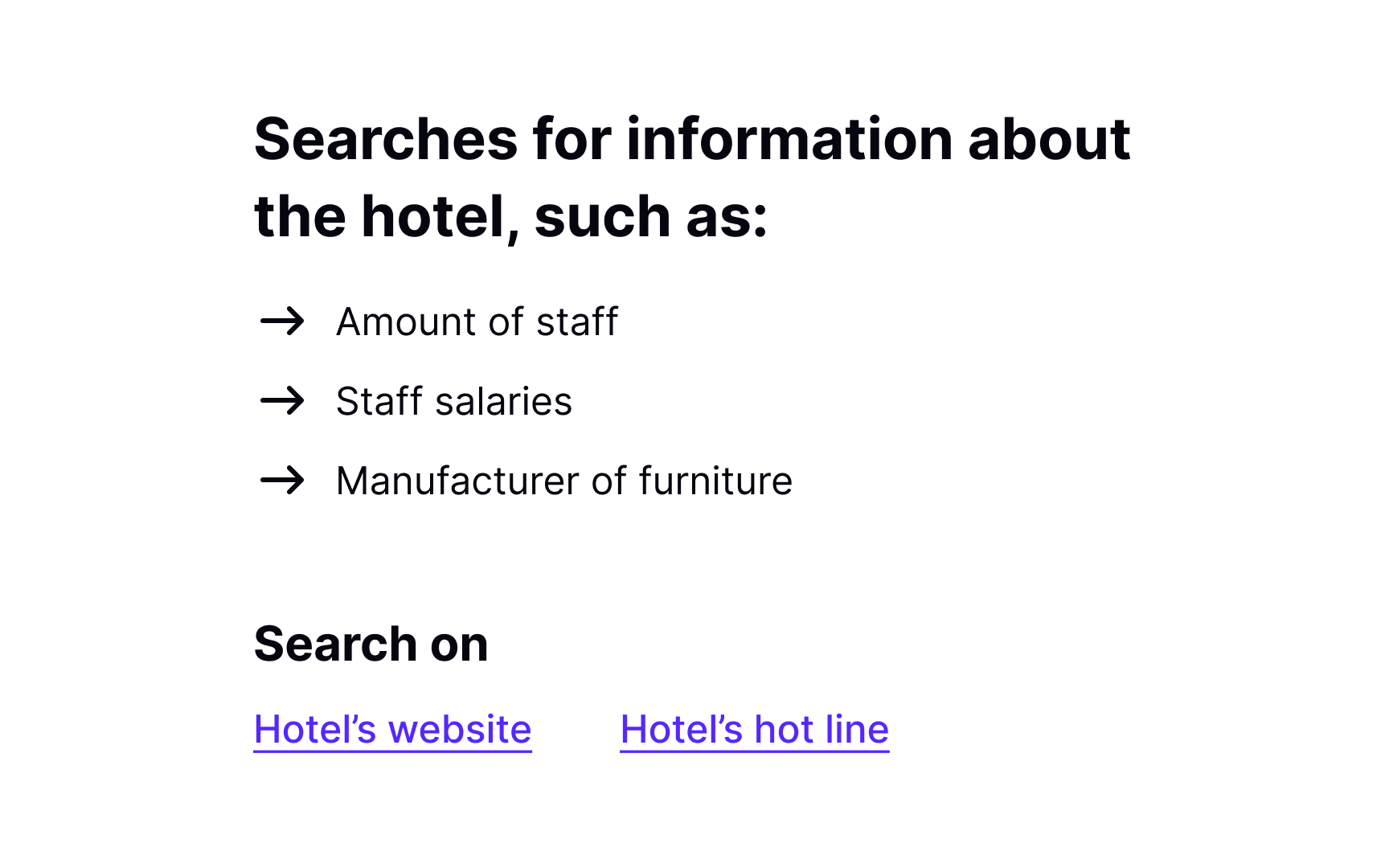
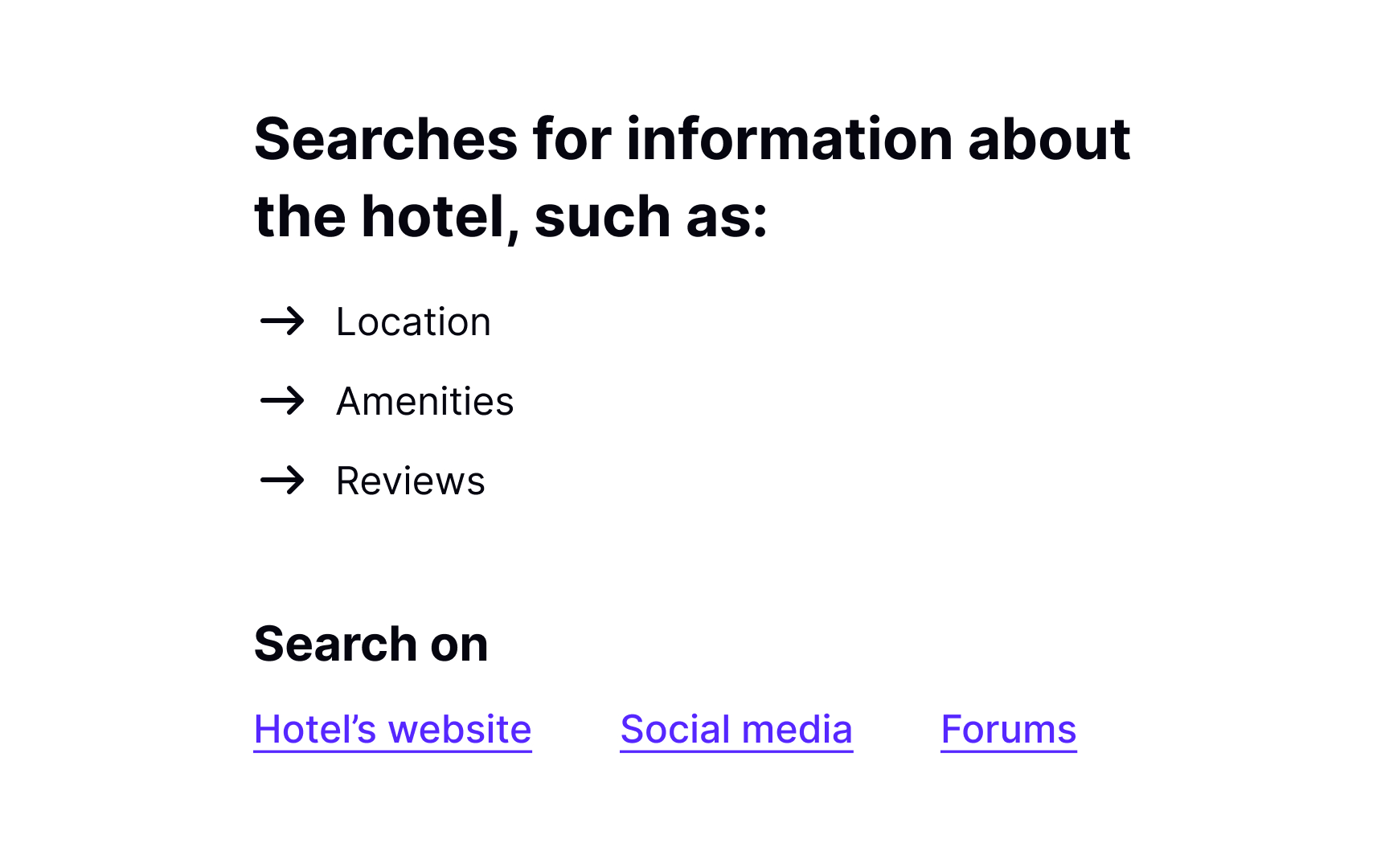
Actions on a
By mapping out the customer's actions at each phase, businesses can understand how customers engage with their service and identify potential pain points or challenges. This information can then be used to improve the
For example, during the consideration phase, customers may perform online
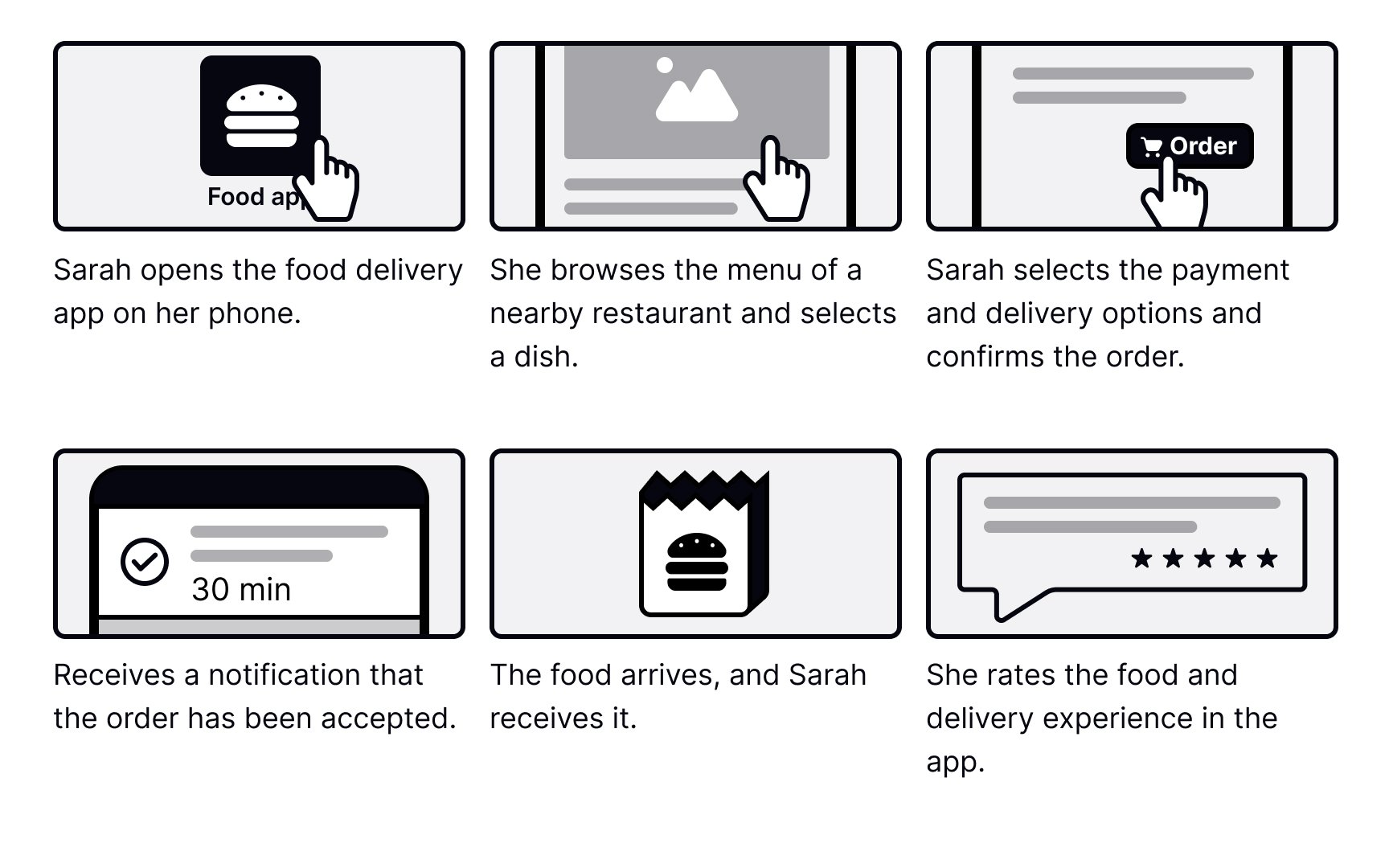
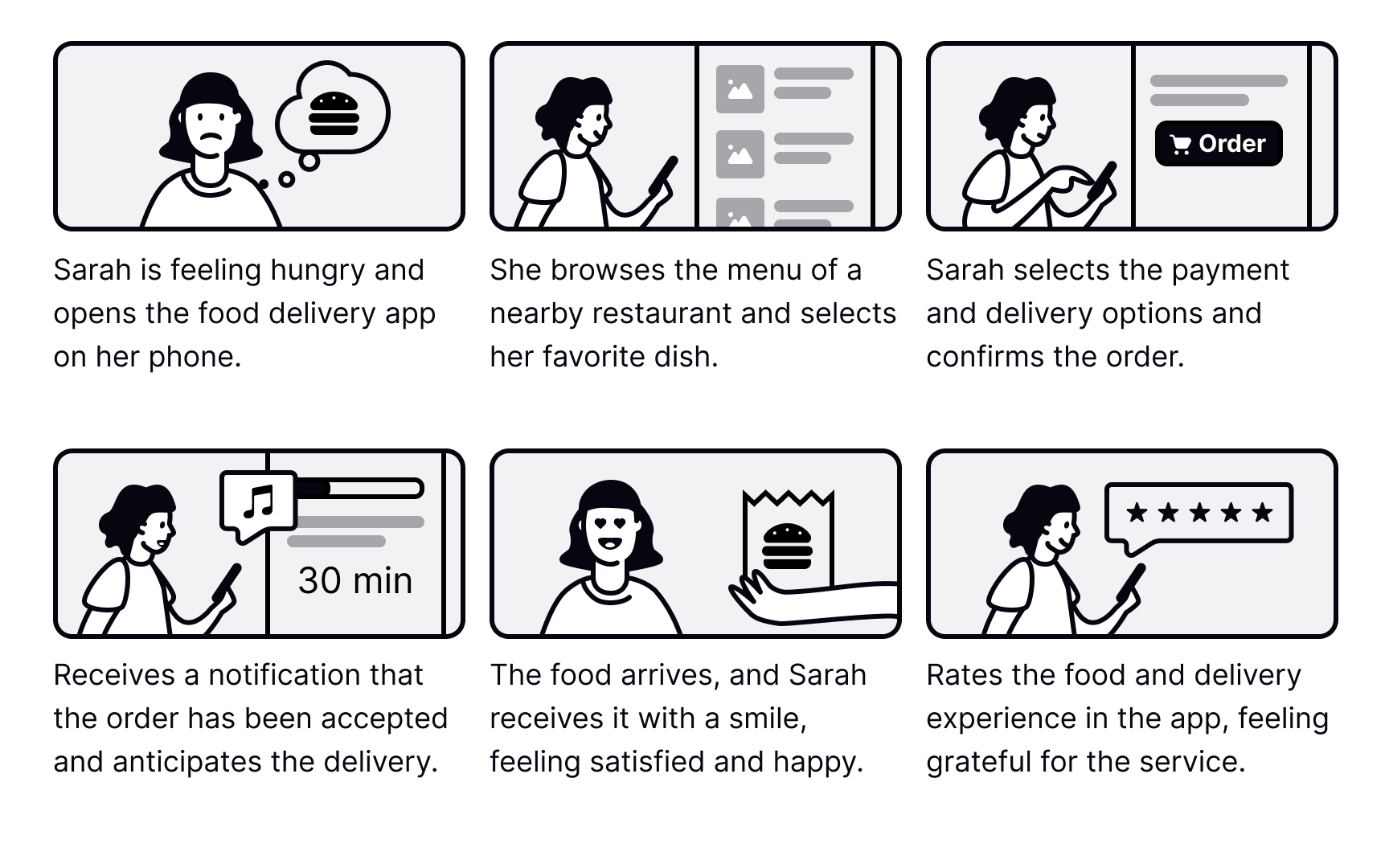
Storyboards in
What makes storyboards so effective? People enjoy listening to stories, and storyboards are a wonderful tool to evoke empathy toward other people’s experiences, making it easier to relate to their needs and desires.[3]
While the focus of storyboards should be on the content rather than the quality of the artwork, polished and professional-looking illustrations may be appropriate for high-level presentations or stakeholder meetings.
Pro Tip: To create a storyboard, start with a script based on a solid understanding of user behavior. This can be achieved by collecting data through various methods, such as user interviews, surveys, and observational studies.
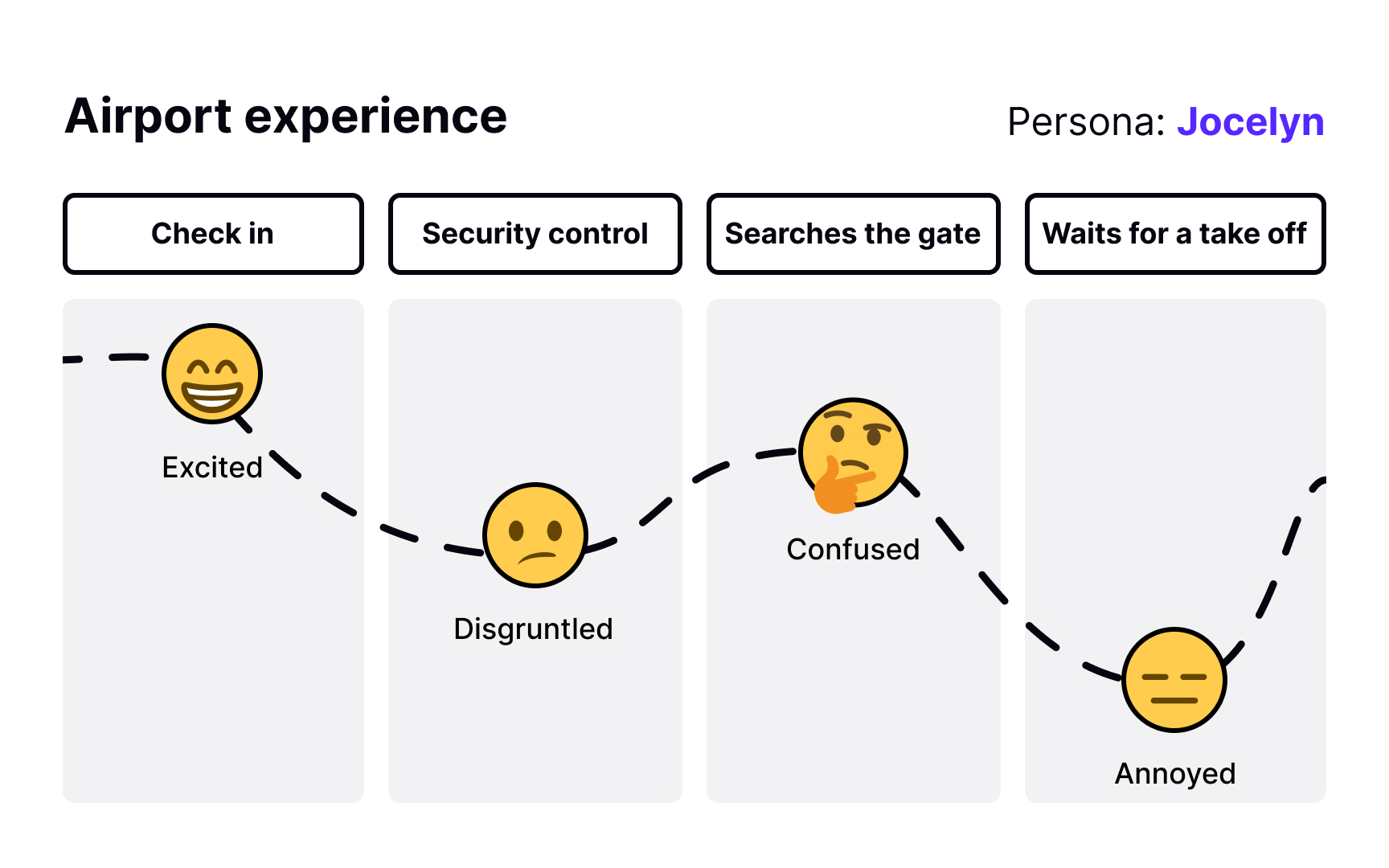
Emotions are a fundamental part of the
The most common factors that might influence the emotions of customers include:
Interaction with service employees- Service quality
- Service design
- External factors like the time of day, weather, or the customer's personal circumstances
The emotional journey is depicted on a
Emotional journeys help businesses not only to identify potential pain points but also to show areas where the service meets the needs of customers effectively. To capitalize on this positive experience, the company could consider introducing new features that further motivate users, which can increase user engagement and loyalty. This, in turn, can lead to improved user retention and positive reviews.
Channels on a
Some common channels that can be included on a customer journey map are:
- Website: An
interaction between customers and a business's website, including browsing, searching, and completing forms - Social media: An interaction between customers and a business's social media platforms, such as Facebook, Twitter, or Instagram
- Email: An interaction between customers and a business's email campaigns, including newsletters, promotions, or transactional emails
- In-person interactions: An interaction between customers and a business's physical location, such as a store or office
- Phone: An interaction between customers and a business's call center or customer service representatives
- Mobile: An interaction between customers and a business's mobile app or website
- Advertising: An interaction between customers and a business's advertising campaigns, such as online ads or billboards
- Customer support: various support options like in-app help centers, email, phone support, or live chat to assist customers with their queries or issues
By mapping out the customer journey across all these channels, businesses can understand the
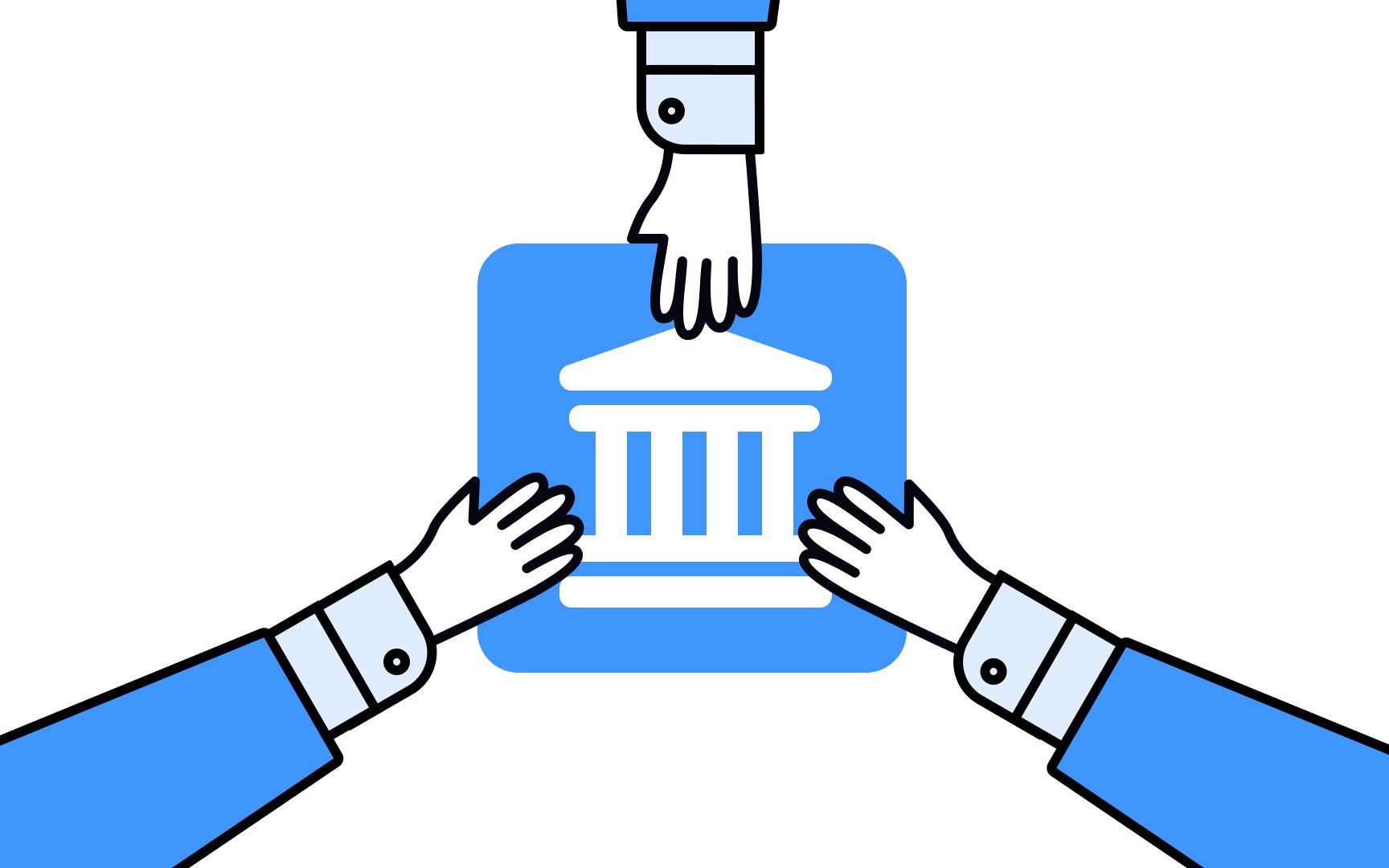
Stakeholders are individuals or groups who have an interest or stake in the customer journey and its outcomes. This includes both internal and external stakeholders. Internal stakeholders may include employees from different departments within the company, such as:
- Customer service
- Marketing
- Sales
- Product development
- Operations
Their role is to collaborate and share insights to improve the
- Customers
- Partners
- Suppliers
- Regulatory agencies
Their role is to provide feedback and insights to the company about the customer journey and their experience with the service, as well as to hold the company accountable for providing a high-quality experience.
Overall, the role of stakeholders on a CJM is to work together to improve the customer experience, identify pain points, and find opportunities to improve and innovate the service. Knowing the stakeholders helps you identify potential key participants that should be included in the
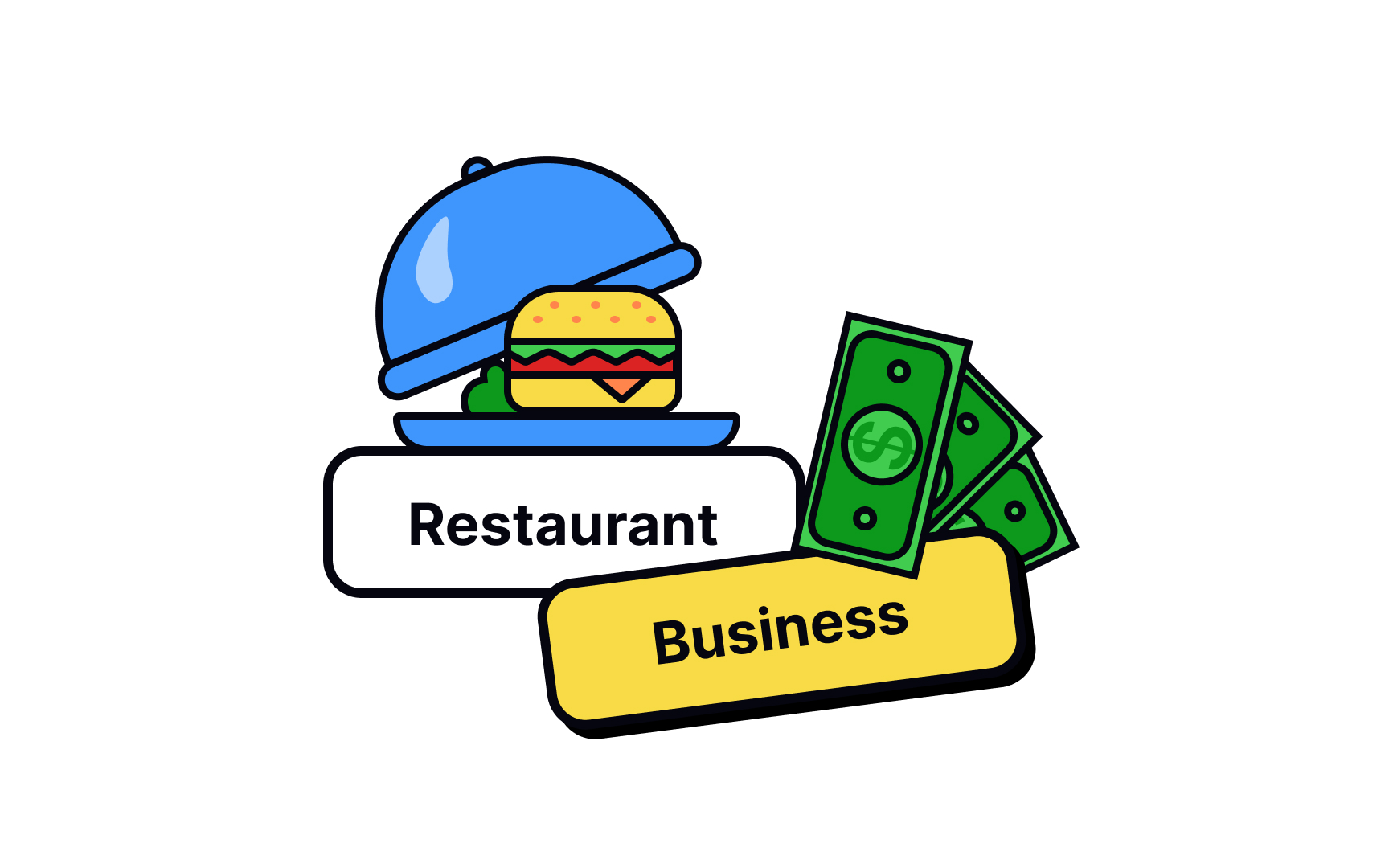
Backstage processes on a
- Order processing: Tasks such as inventory management, order fulfillment, and shipping
- Customer service: Handling customer inquiries and complaints and providing technical support
- Quality control: Monitoring service quality, identifying areas for improvement, and implementing changes
- Payment processing: Processing payments, issuing refunds, and handling billing inquiries
- Data management: Collecting and analyzing data, managing customer profiles, and using data to improve the service
Mapping backstage processes helps identify areas where improvements can be made to ensure that the service is delivered smoothly and efficiently. It also helps ensure that the service is aligned with the needs and expectations of customers, even if they are not aware of the specific processes that occur behind the scenes.
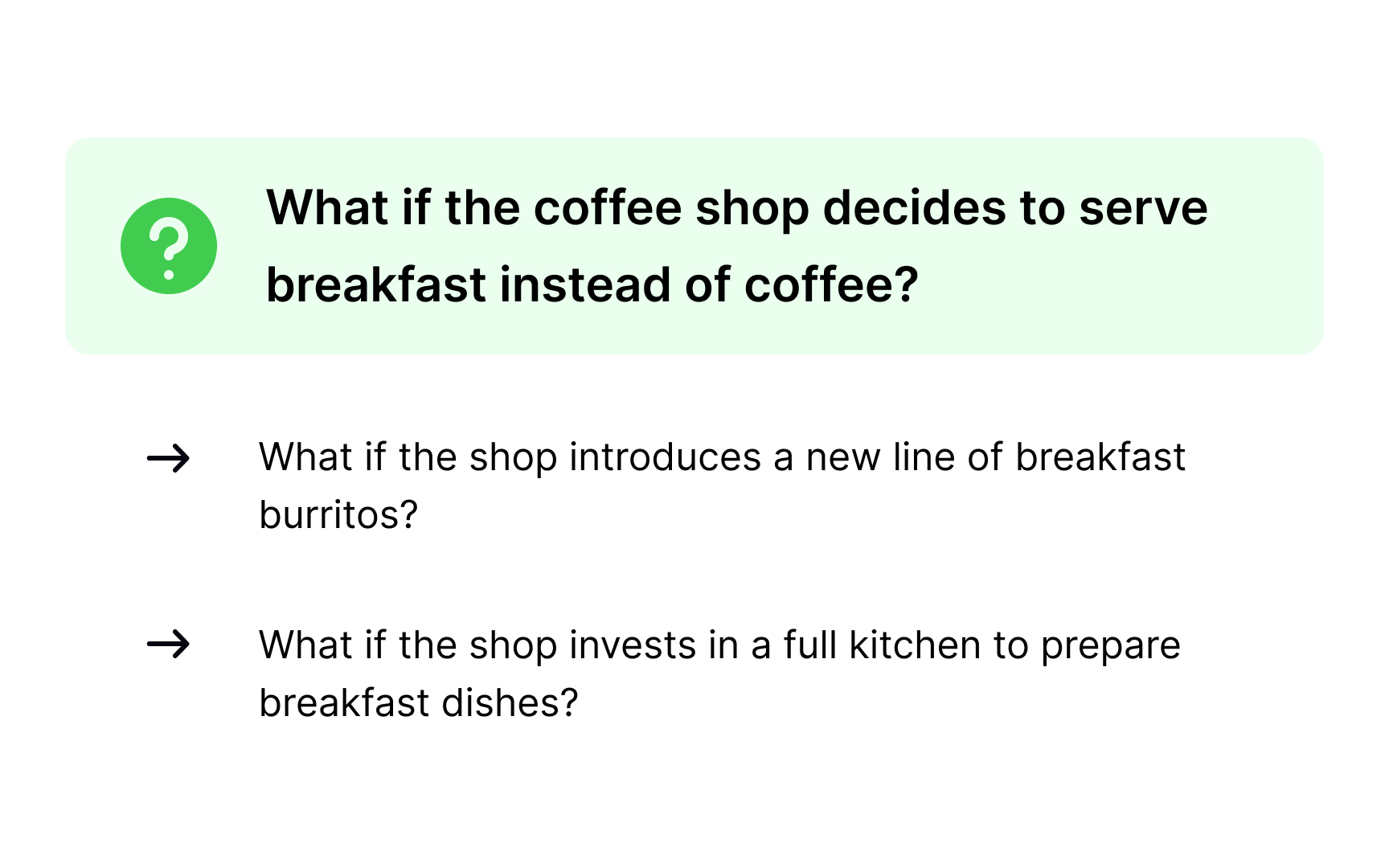
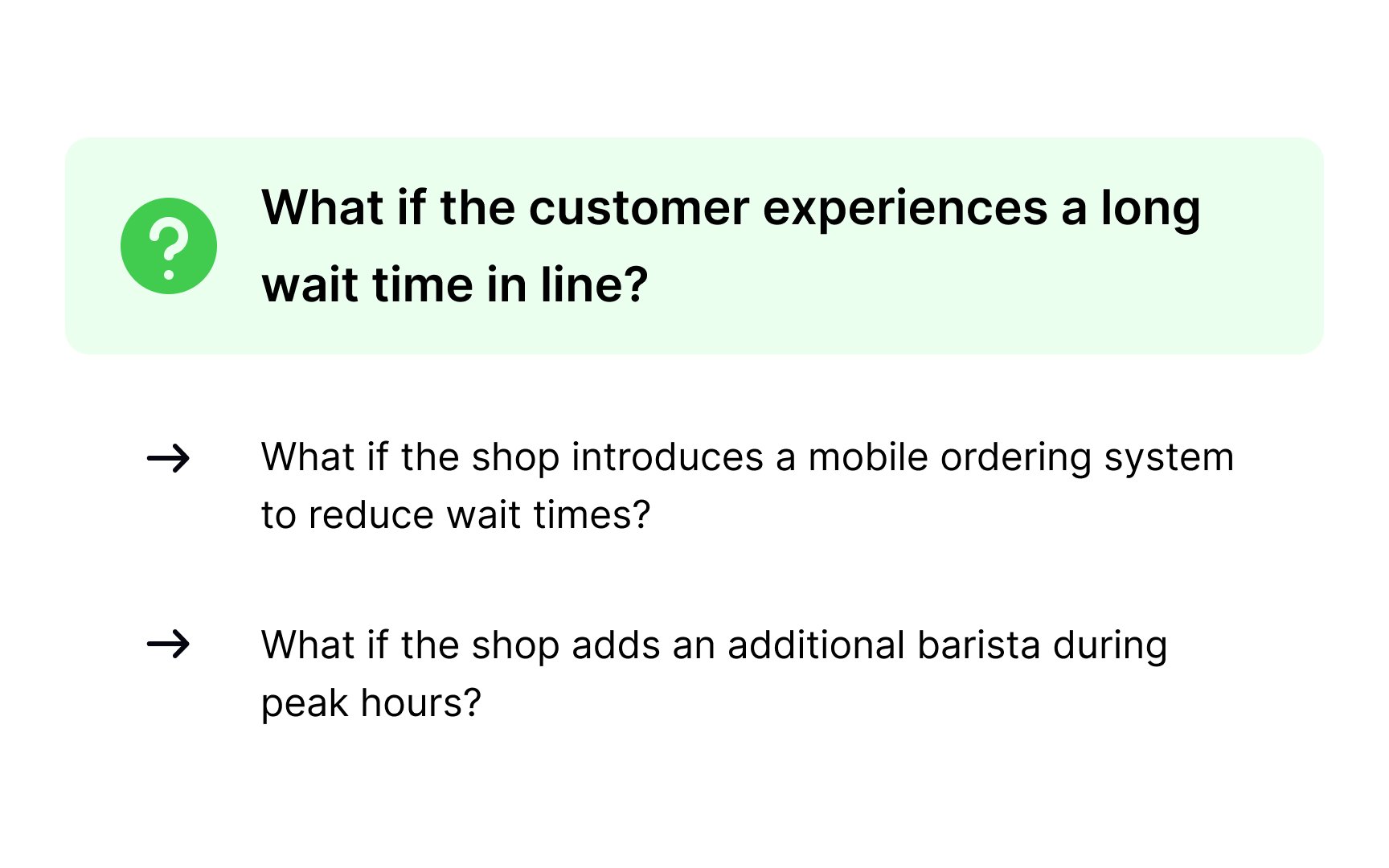
The "What if?" lane on a
The "What if?" lane can help companies identify and address potential pain points, improve the
For example, in the "What if?" lane, a company may consider scenarios such as a customer experiencing a technical issue or having difficulty finding the information they need. By anticipating these scenarios and developing solutions in advance, the company can ensure the customer journey is smooth and seamless, leading to a positive experience and increased customer satisfaction.
Pro Tip: When creating the “What if?” lane, try to avoid brainstorming major changes in the service offering. Instead, address a specific issue and explore hypothetical solutions in the customer journey for the current service.
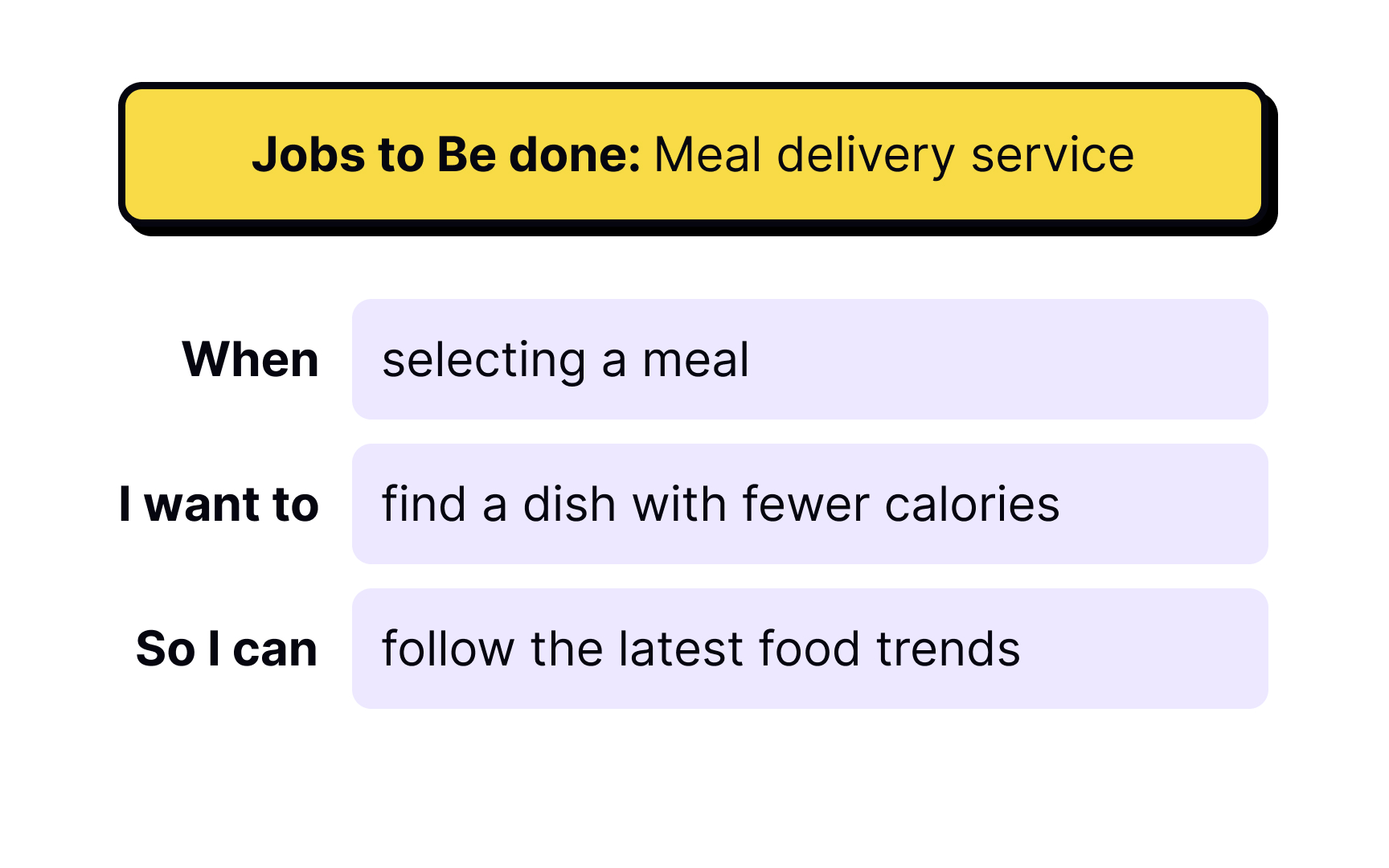
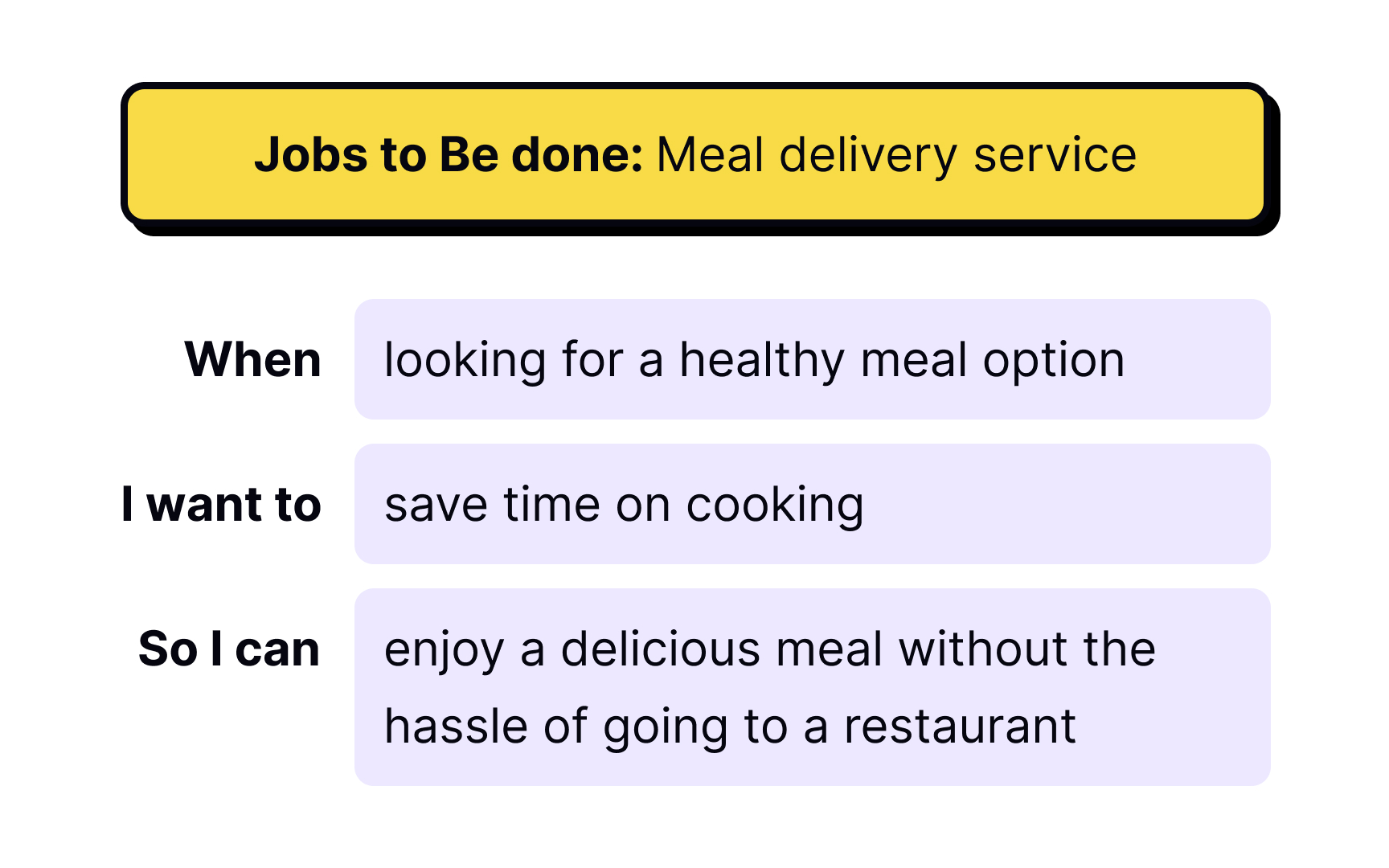
Jobs to be done (JTBD) is a framework that focuses on understanding the underlying motivations and needs of customers when they "hire" a product or service to accomplish a specific job or task. JTBD offers several benefits in gaining a more comprehensive understanding of customer needs. Firstly, it provides a more prescriptive approach by explicitly defining users' tasks and how they will accomplish them. This specificity allows for a clearer understanding of customer requirements and desired outcomes.
Jobs to be done are typically expressed in a sentence format, highlighting the task users need to perform and providing key contextual information, such as the reasons or locations for performing it. Furthermore, a JTBD description often includes both functional success criteria, which outline the objective and clear requirements for the job to be successful, and emotional success criteria. The emotional criteria may include individual considerations and social factors, such as how users imagine they will be perceived by others.[4]
For example, consider the JTBD for a user of a ride-sharing service like Uber: "When I need to get to the airport quickly and reliably, I want to hire a ride-sharing service that can pick me up at my location, provide a comfortable and safe ride, and ensure I reach the airport on time."
Combining the JTBD framework with
References
- Journey Mapping 101 | Nielsen Norman Group
- This Is Service Design Doing | O’Reilly Online Learning
- Personas vs. Jobs-to-Be-Done | Nielsen Norman Group
Top contributors



Topics
From Course
Share


Similar lessons

UX Design Processes & Research Methods

Qualitative UX Research Methods