Documentation platforms
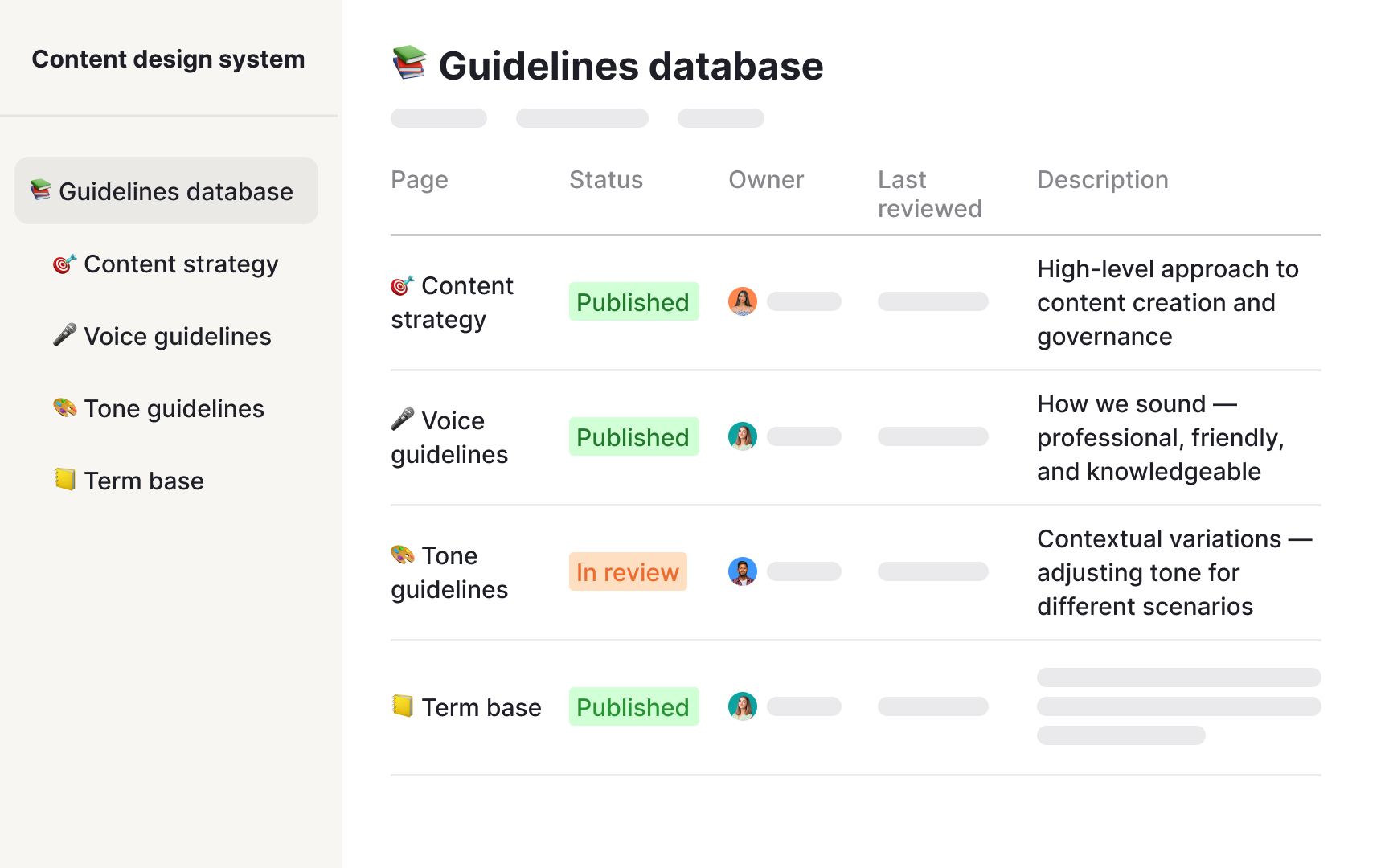
Documentation platforms are centralized digital spaces where teams store, organize, and maintain all their content guidelines, style guides, writing standards, and process documentation. They transform scattered Google Docs, PDFs, and email threads into a single, searchable knowledge base that everyone across teams can access and trust.
Content patterns (reusable templates) should live in tools like Figma. Guidelines, on the other hand, can be maintained in tools like Confluence or Notion, where comments capture the reasoning behind decisions, and where version history shows how standards have changed over time.
Start by auditing your existing documentation, no matter how scattered. You'll likely find multiple versions of your style guide, conflicting voice guidelines, and processes that only exist in someone's head. For example, the marketing team might have separate voice guidelines — collaborate with them to avoid conflicts.
Create a clear hierarchy:
- Core guidelines (strategy, voice, tone, style) at the top level
- Component-specific rules (buttons, modals, banners)
- Communication-specific rules (emails, push notifications, physical letters)
- Process documentation (how to request content and review cycles).
Most importantly, assign ownership. Each section needs someone responsible for keeping it up to date.