Ascent AI

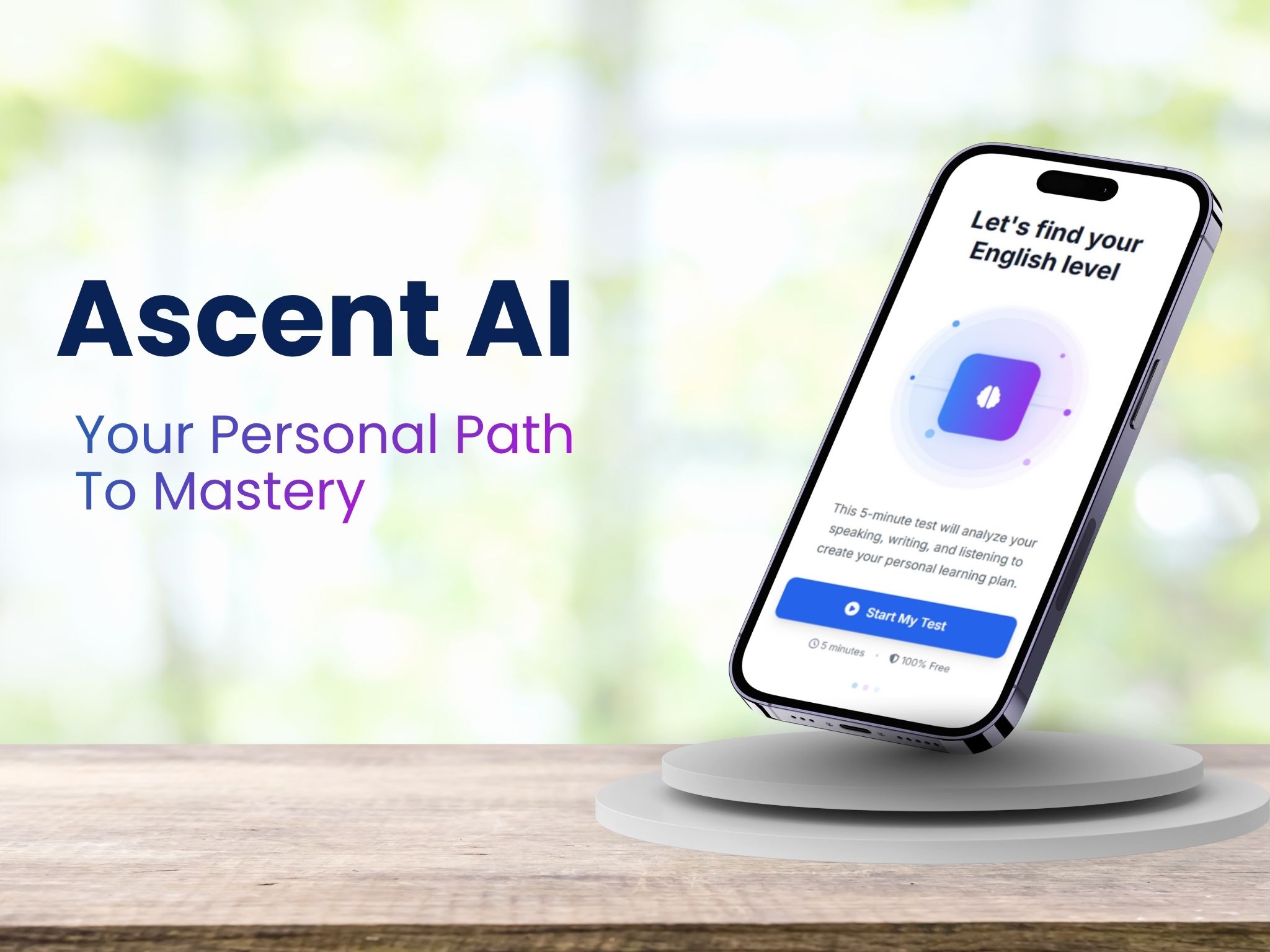
The Future of Work is Global. Your English Should Be, Too.
In today's digital age, your career isn’t limited by borders. With 39 percent of the global workforce now operating in hybrid or remote roles (Gartner, 2024), we can work with anyone, anywhere, from our laptops. But there's one thing that can stop great talent from reaching their full potential: the language barrier.
This is a massive challenge, as an estimated 6.5 billion people, or over 80 percent of the world's population, do not speak English (Ethnologue, 2024). Not feeling confident in English can be a major career blocker. In fact, studies show that fluency in English can increase your salary by an average of 10 to 15 percent (Preply, 2023), even if you are the best at what you do.
Master English the Smart Way

English is the world's common language for business, tech, and collaboration. It is the most spoken language on the planet, with over 1.5 billion total speakers (Ethnologue, 2024), making it the clear choice for global professionals. That's why we built Ascent AI.
Our app is designed to help you master English, and fast.
We don't believe in a single lesson plan for everyone. Our app is powered by a smart, adaptive AI that acts as your personal tutor. From day one, it figures out your exact level, from your grammar to your pronunciation.
As you learn, the app adapts.
- Already mastered a topic? We’ll move on, so you never waste time.
- Struggling with something specific? The AI will create new drills and conversations just for you.
This personalized path means you learn faster and more efficiently because you’re always focusing on what you need to improve next. Stop just learning English, start mastering it at your own pace.
My Process: Collaborating with AI

(Click here to view the process)
You might be wondering how an app this complex gets designed. This project was a journey into collaborating with AI. specifically, with UXPilot.
Before I designed a single screen, I did my homework. I knew AI wasn't a magic wand; it's a tool, and you have to know how to use it. I spent hours diving into YouTube tutorials, design blogs, and articles, all trying to answer one question: "How do you use UXPilot effectively?"
My biggest takeaway? Prompting is everything.
Collaborating with AI is a skill. You can't just say, "Make me a language app." You have to be the director. The detailed prompts I built which included my Design Attributes block for colors, fonts, and styles became my script. I was giving the AI a clear, non-negotiable set of rules to follow.
The Surprises (and the Limits)
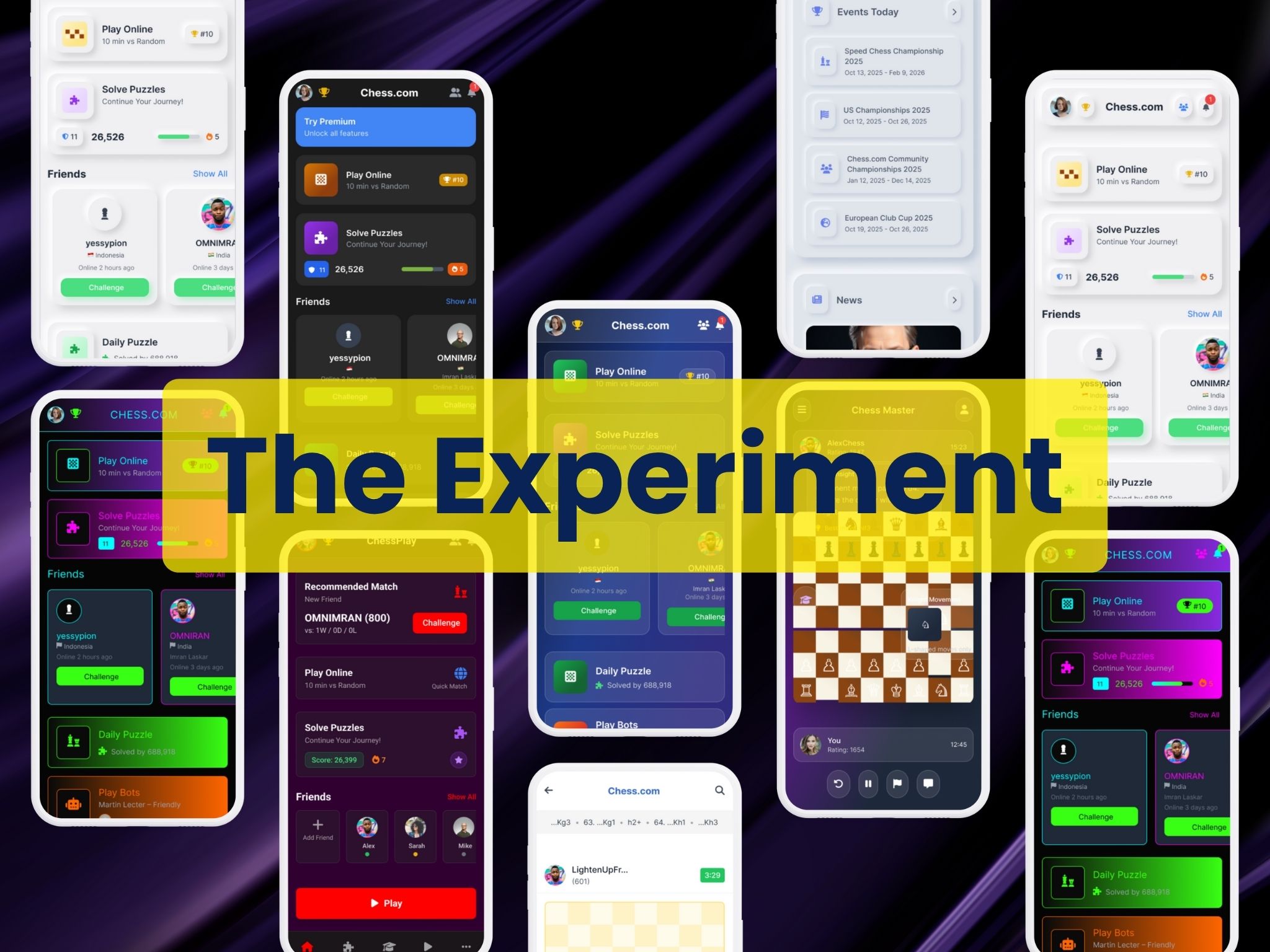
After a few experiments, UXPilot actually blew past my expectations. I wasn't just getting basic layouts.
I challenged it with complex, trendy design styles like Neumorphism (the soft, "pushed-out" plastic look) and Glassmorphism (the "frosted glass" effect). To my surprise, it understood and generated them beautifully. This was a "wow" moment; the AI wasn't just a wireframing tool, it was a creative partner.
Of course, it's not perfect. It has its limits.
I found that UXPilot struggles with highly unique or non-standard layouts.
For example, you couldn't ask it to design something with the complex spatial rules of a chess board. It’s built for (and excels at) modern app and web interfaces, but not abstract art.
The main friction point I hit was with editing. While the AI generates beautiful first drafts, making small manual tweaks to the generated output was difficult.
I found it challenging to edit the designs manually without the premium features, which seems to be how you're expected to refine the final product (e.g., by exporting to Figma).
But overall, as a tool to rapidly build a consistent, high-fidelity foundation, the experience was a huge success.
Finding the Right Balance

Here’s a final thought on all of this. Technology is always going to move forward, and it's not going to wait for any of us. It’s on us to adapt, stay curious, and learn to use these powerful new tools to our advantage.
But, and this is important, we have to find the right balance.
The goal is to use technology, not to become so dependent on it that we lose our own edge. If we let our tools do all the thinking for us, our own critical thinking and creative skills can get dull.
The real mastery is in using AI as a co-pilot, not as the auto-pilot. We should be using it to become smarter, more efficient, and more capable, not just as a crutch that replaces our own abilities.

Reviews
1 review

I like the app and your approach! You really did a good job. You thought everything through very well, especially the main dashboard, which clearly shows progress, achievements, and weaknesses, and also guides the user to the next tasks. That’s incredible! All the tasks are useful and have good explanations. I also like the articles and videos, which are very helpful.
The design is clean and modern, which is great.
I just have a few small comments:
- Why did you include so many options for the word exercise? When the user sees them all at once, it might feel confusing, and the buttons are a bit too large. I understand the idea that the word will repeat until the user remembers it perfectly, but I’d still recommend testing this flow.
- Please check the paddings and alignments, because in some cards they create inconsistency, and sometimes elements are placed too close or too far from the borders.
- Please check accessibility contrast. Overall, it’s good, but in some areas the text becomes a bit difficult to read.
- Try not to overwhelm certain screens. Explore how you can use the space more efficiently.
Keep designing and refining - you’re on the right track!
You might also like

Smartwatch Design for Messenger App


Bridge: UI/UX Rebrand of a Blockchain SCM Product

Pulse Music App - Light/Dark Mode


Monetization Strategy


Designing A Better Co-Working Experience Through CJM


Design a Settings Page for Mobile
Product Thinking Courses

Ethical & Responsible Product Design

Product Vision & Strategy

Product Management Foundations