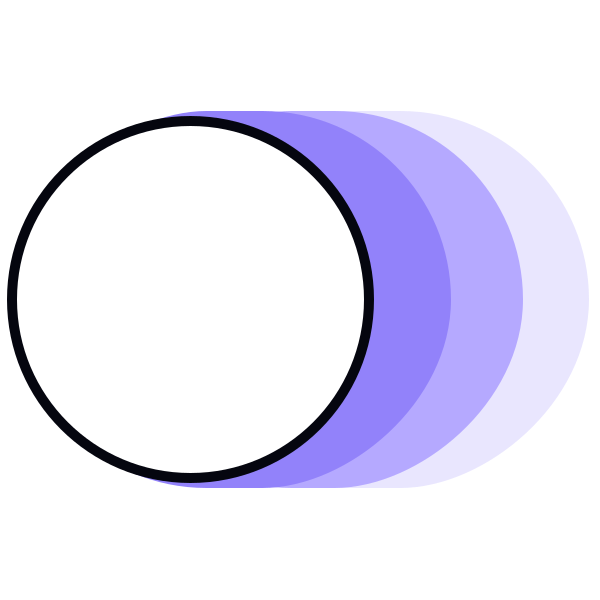
Light direction and consistent shadow placement
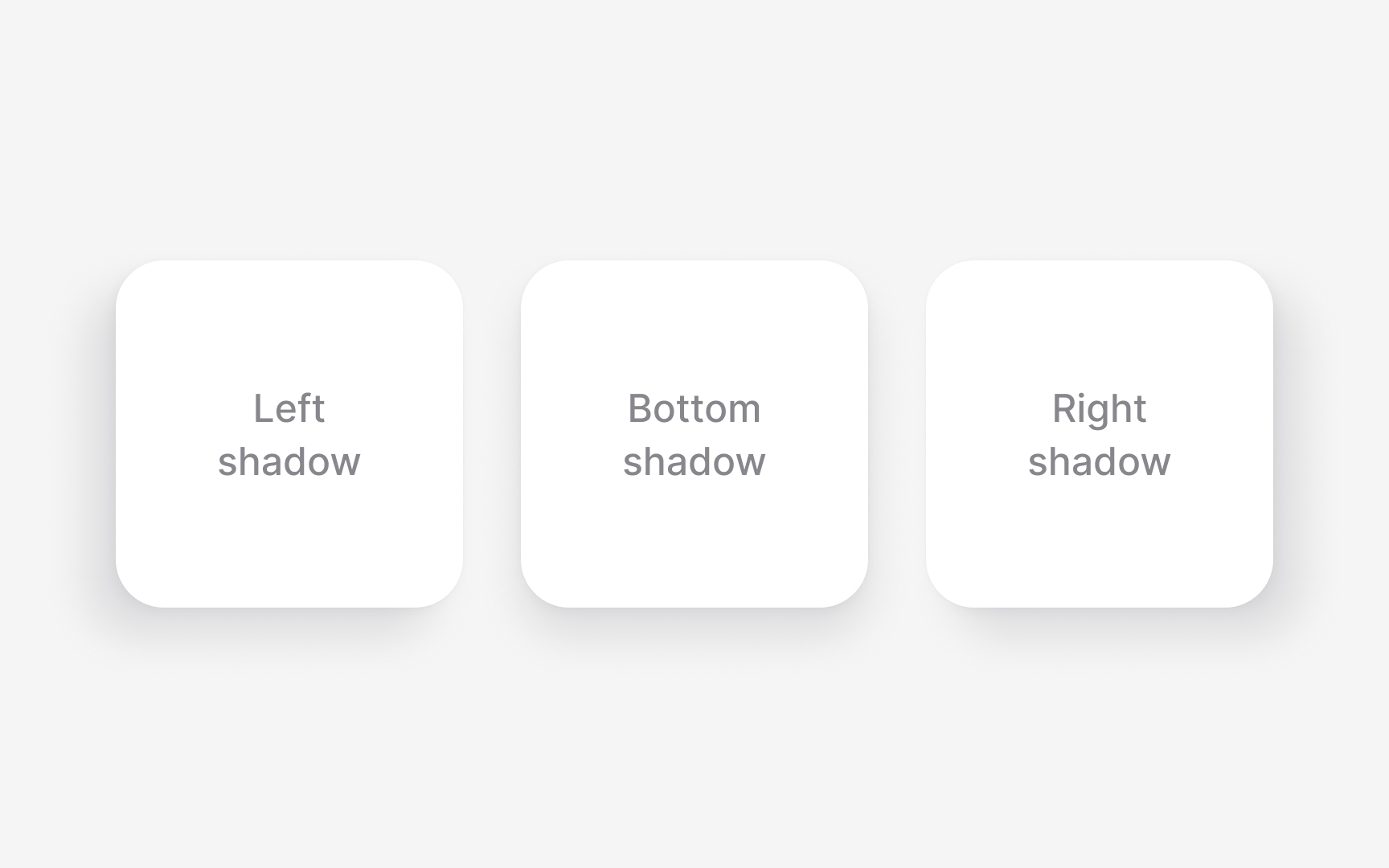
Light direction shapes how shadows fall across the interface. When the light comes from one side, the shadow lands on the opposite side. Using a single light direction across an entire product keeps depth predictable and prevents surfaces from looking disconnected. If shadows fall in different directions within the same screen, the layout can feel unstable and harder to understand.
Defined shadow positions help solve this problem. Systems often use left, right, or bottom shadows as standard placements. These positions are not decorative. They give each layer a clear sense of orientation so the interface feels grounded in the same environment. Keeping the light source stable also strengthens hierarchy because lifts and overlaps become easier to read at a glance.
Pro Tip: When choosing a shadow direction, check it on busy layouts. Inconsistent angles are easier to spot when many elements appear together.