Using the Product Strategy to Build Your Roadmap
Mould strategic priorities into actionable roadmap initiatives that align teams and drive measurable outcomes
The real power of roadmapping comes from connecting every initiative back to your broader product strategy, creating a clear line of sight from vision to execution. When teams understand why certain projects exist and how they ladder up to strategic goals, prioritization becomes clearer and alignment happens naturally.
Effective roadmaps communicate more than timelines. They tell the story of how your product will evolve to meet user needs and business objectives. Strategy and roadmaps aren't static documents. Market conditions shift, user feedback reveals new insights, and competitive landscapes evolve. Knowing when to adjust your roadmap versus when to pivot your entire strategy is a critical skill. This requires ongoing communication with stakeholders about the relationship between strategic intent and tactical execution, ensuring everyone understands that roadmaps are living documents guided by strategic priorities.
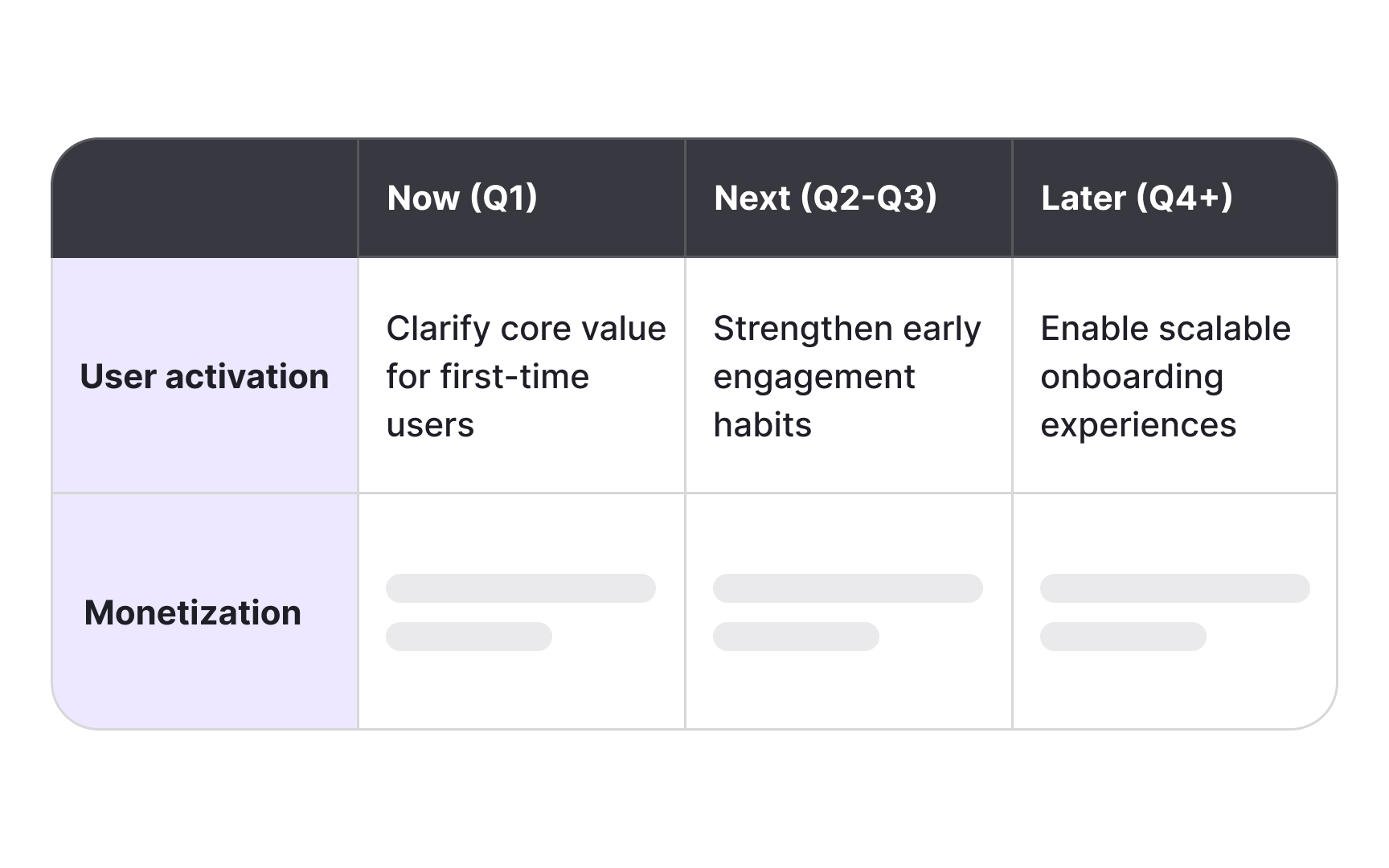
Different roadmap formats serve different needs:
- Now-Next-Later roadmaps organize work by confidence level rather than dates. "Now" shows committed work in progress, "Next" contains validated priorities queued up, and "Later" holds strategic opportunities needing more discovery. This format works well when timing is uncertain but sequence matters.
- Theme-based roadmaps group
initiatives under strategic categories that span time horizons. Themes like "Self-Service Experience" or "Enterprise Readiness" show how multiple projects contribute to a larger goal. This format helps stakeholders see the bigger picture and understand why seemingly unrelated initiatives belong together. Teams can work across themes simultaneously while maintaining clarity on strategic focus areas.[1] - Outcome-based roadmaps organize around results rather than outputs. Instead of listing features, they state target outcomes like "Reduce time-to-value for new users" or "Increase monthly active usage by 20%." This format keeps teams focused on impact rather than delivery and allows flexibility in how outcomes are achieved. Choose your format based on stakeholder needs, organizational planning culture, and how much uncertainty you're navigating.
Pro Tip: You can combine formats. A Now-Next-Later structure with theme rows gives you both sequencing clarity and strategic grouping.
Strategy sets direction, OKRs define measurable targets, and roadmap initiatives represent the work you believe will hit those targets. Each roadmap
Start with your key results and work backward. If a key result is "Increase day-7 retention from 40% to 55%," ask what obstacles prevent users from returning and what opportunities might encourage them. For example, you might discover that users abandon the product because onboarding is confusing, or that they don't receive timely reminders about features they tried once. These answers become candidate initiatives like "Redesign onboarding flow to reduce time-to-value" or "Implement personalized email nudges based on user behavior." Each initiative is essentially a bet that solving a particular problem or creating a specific experience will move the key result in the right direction.
This translation process also exposes gaps. If you have key results with no supporting initiatives, your roadmap has coverage problems. If you have initiatives that don't connect to any key result, question whether they belong on the roadmap at all. The OKR layer acts as a bridge, ensuring your roadmap is filled with strategically relevant work rather than disconnected projects.
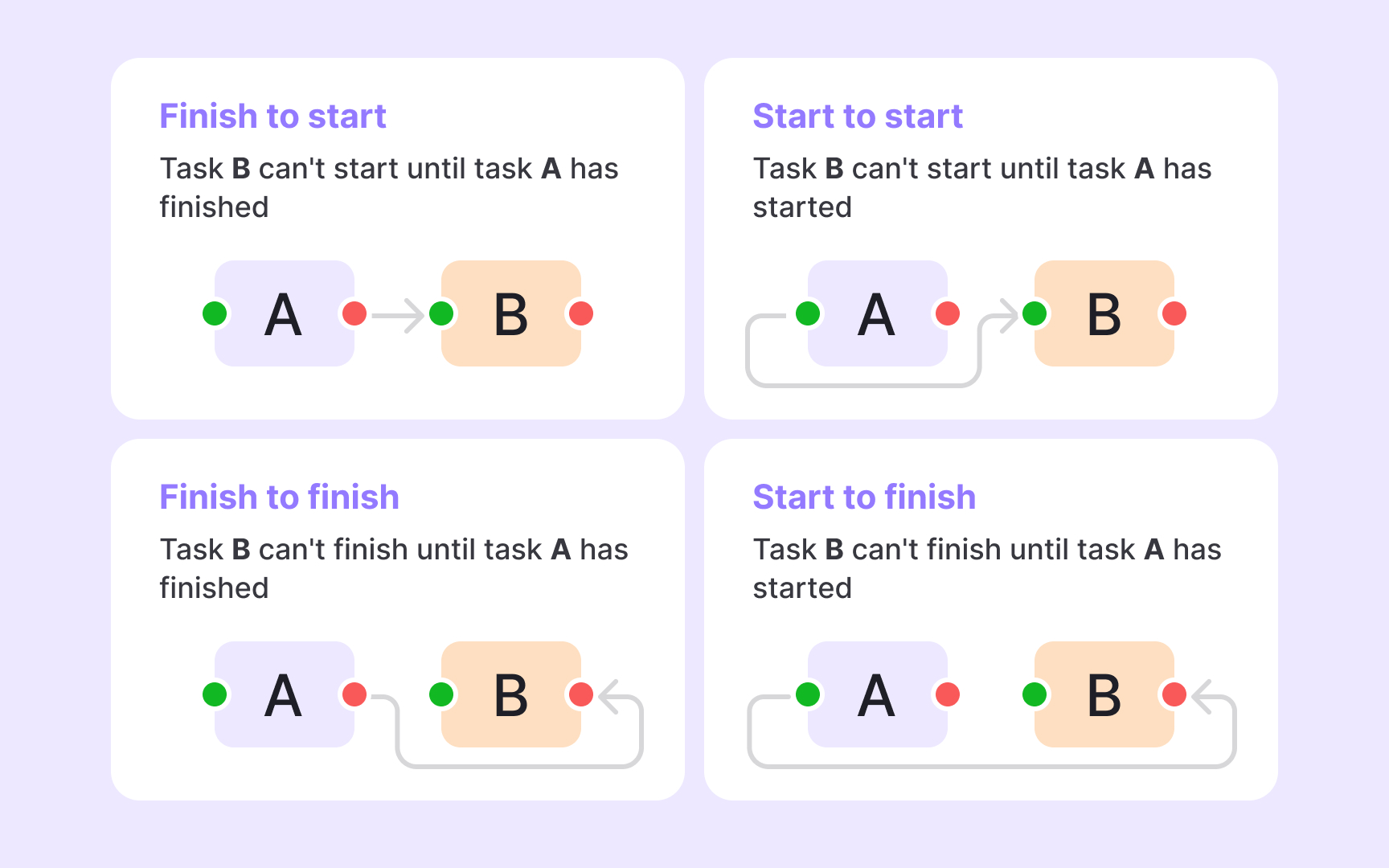
Strategic initiatives rarely stand alone. One team’s work often depends on another team’s output, shared systems, or outside partners. If these links are not shown, teams hit blockers during delivery. That causes delays across many efforts. This matters most in execution-focused roadmaps, such as Gantt-style plans. These show timing, task order, and team handoffs. They make dependencies clear so teams can plan work in the right sequence.
High-level roadmaps like Now–Next–Later serve a different goal. They show direction, not delivery details. In that format, dependencies are not meant to be visible.
When building an execution roadmap, list what must be ready before each
Quarterly and annual roadmaps serve different purposes and audiences. Annual roadmaps provide a long-term view that helps with budgeting, hiring, and strategic alignment across the organization. They answer questions about major investments and directional bets over the coming year. Quarterly roadmaps zoom in on near-term execution, detailing what teams will actually work on in the next 90 days.
The right cadence depends on your context. Early-stage products with high uncertainty benefit from shorter planning cycles where learning happens fast and pivots are common. Mature products with predictable patterns can plan further ahead with more confidence. Most organizations use both: an annual roadmap for strategic communication and quarterly roadmaps for operational planning. Syncing these cadences requires discipline.
Quarterly plans should ladder up to annual priorities, but they also need flexibility to incorporate new learning. Each quarter becomes a checkpoint to assess progress against annual goals and adjust based on what you've discovered. This rhythm prevents annual plans from becoming stale while keeping quarterly work strategically anchored.
Pro Tip: Treat annual roadmaps as directional guides and quarterly roadmaps as commitments. Communicate this difference to stakeholders clearly.
A roadmap only delivers value if stakeholders understand how it connects to strategy. Without this context, roadmaps become feature request lists that everyone wants to edit. When you clearly communicate the strategy behind your roadmap, stakeholders can engage with priorities rather than pet projects. They understand the "why" behind what's included and, equally important, what's not.
Tailor your communication to each audience. Executives need to see how roadmap
Open roadmap reviews by restating current strategic focus before discussing specific initiatives. When requests come in, evaluate them publicly against strategic criteria. This consistent framing trains stakeholders to think strategically about roadmap discussions rather than advocating for individual features.
Pro Tip: Start every roadmap presentation with a quick strategy recap. It frames the conversation and reduces off-strategy requests.
Clear communication isn't enough if stakeholders don't support the roadmap in the first place. Without buy-in, you'll face constant pressure to add off-strategy requests, and teams will lack confidence to push back on distractions. Building buy-in isn't a one-time presentation but an ongoing process of involvement and demonstrated results.
Start by involving key stakeholders early in the strategy-to-roadmap process. When people contribute to shaping priorities, they're more likely to support the outcome. Share the tradeoffs considered and how input was incorporated. This transparency builds trust even when specific requests don't make the cut. Identify your most influential skeptics early and focus on understanding their concerns. Converting skeptics creates advocates who help you build broader support.
Reinforce buy-in through consistent follow-through. Deliver on roadmap commitments and share progress against strategic goals. When
References
Topics
From Course

Share


Similar lessons

Roadmaps and Prioritization
Why You Need a Roadmap