When to use progress trackers
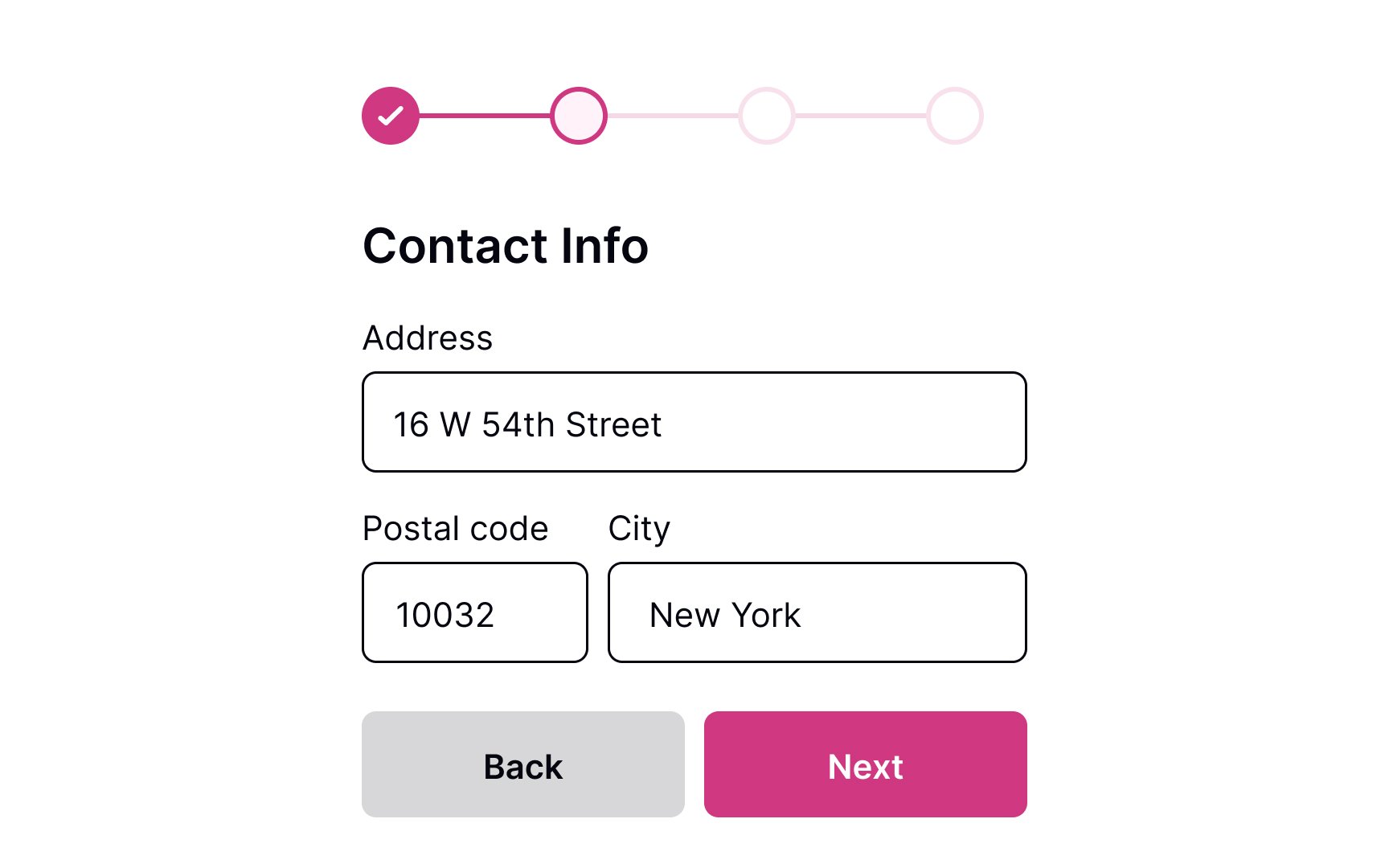
Progress trackers are a valuable feature that can improve the user experience by breaking a long form into logical and numbered steps, allowing users to track their progress. They can be especially helpful in minimizing user abandonment rates and motivating users to move forward and complete a task. By providing a clear sense of progress, progress trackers can satisfy the basic psychological need for closure and increase user satisfaction when a form is completed successfully.
On the other hand, ambiguous and confusing forms can create roadblocks, impede progress, and cause frustration for users. Therefore, using progress trackers can improve the user experience and increase the likelihood of successful form completion.[1]
In addition to tracking progress, progress trackers provide users with information about how many steps they have completed, their current position, and the remaining steps. However, it's important to note that not all forms require progress trackers. Overcomplicating the flow of a form can be counterproductive, and progress trackers should only be used when the process is long and takes more than three steps.
Forms such as checkout processes, tax forms, flight bookings, scholarship applications, and other complex forms that require multiple steps can benefit from progress trackers. By providing users with a clear sense of their progress, progress trackers can encourage users to continue and ultimately lead to a more positive user experience.