Prototyping
Unlike traditional design-only prototypes, collaborative prototyping considers technical architecture, user experience, and business requirements simultaneously.
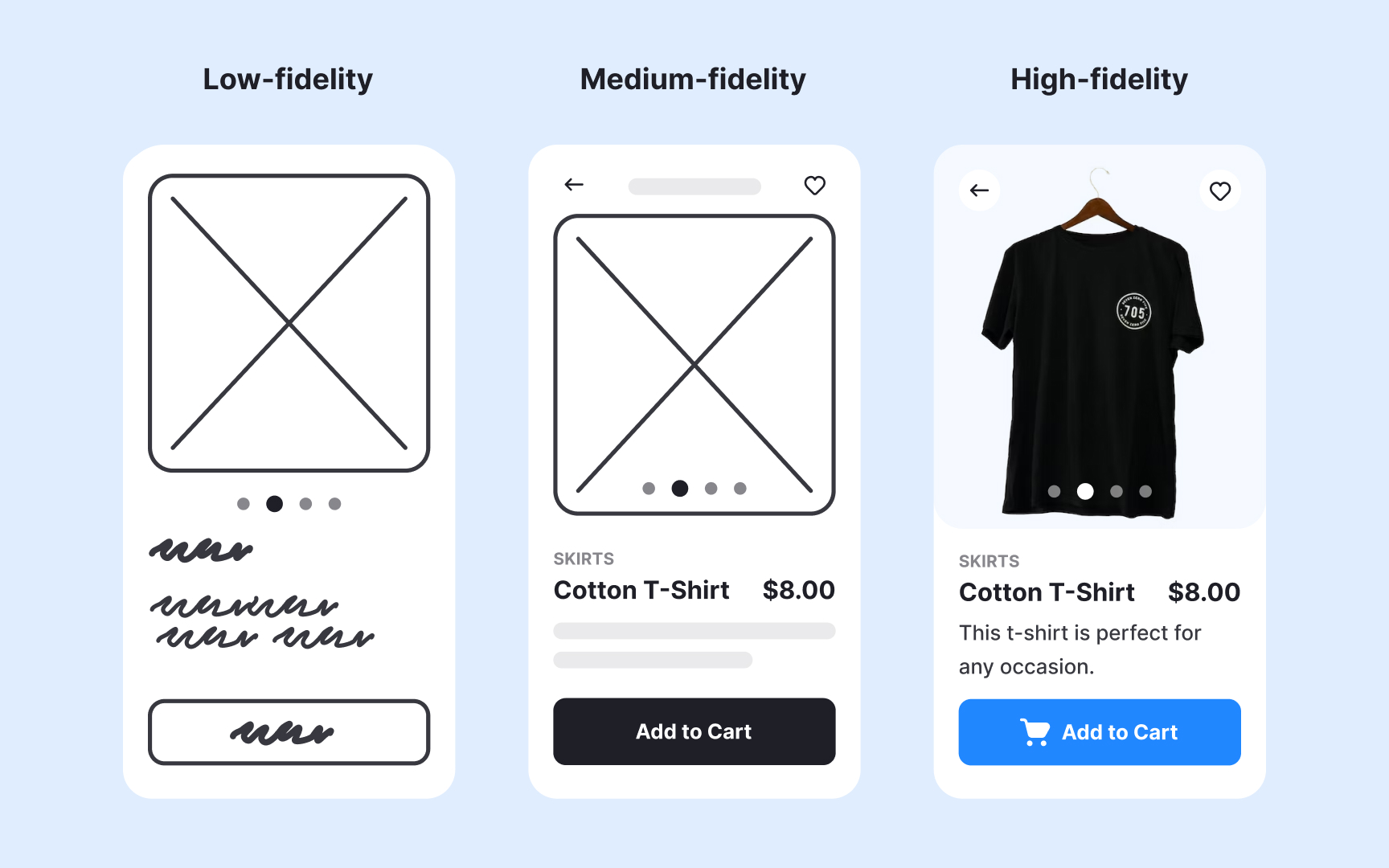
Teams need to choose prototyping fidelity based on specific validation goals:
- Low-fidelity prototypes like paper sketches test basic user flows and technical concepts quickly.
- Medium-fidelity wireframes explore system architecture and user interactions.
- High-fidelity prototypes validate complete experiences while testing technical performance and business metrics.
Rapid prototype iterations allow you to fail fast and learn together. Designers can use them to discover usability issues, developers to identify technical roadblocks, and product managers to test business hypotheses — all before significant resources are invested. Additionally, regular prototype reviews can help create shared understanding and prevent costly adjustments later in development.