Progressive disclosure in practice
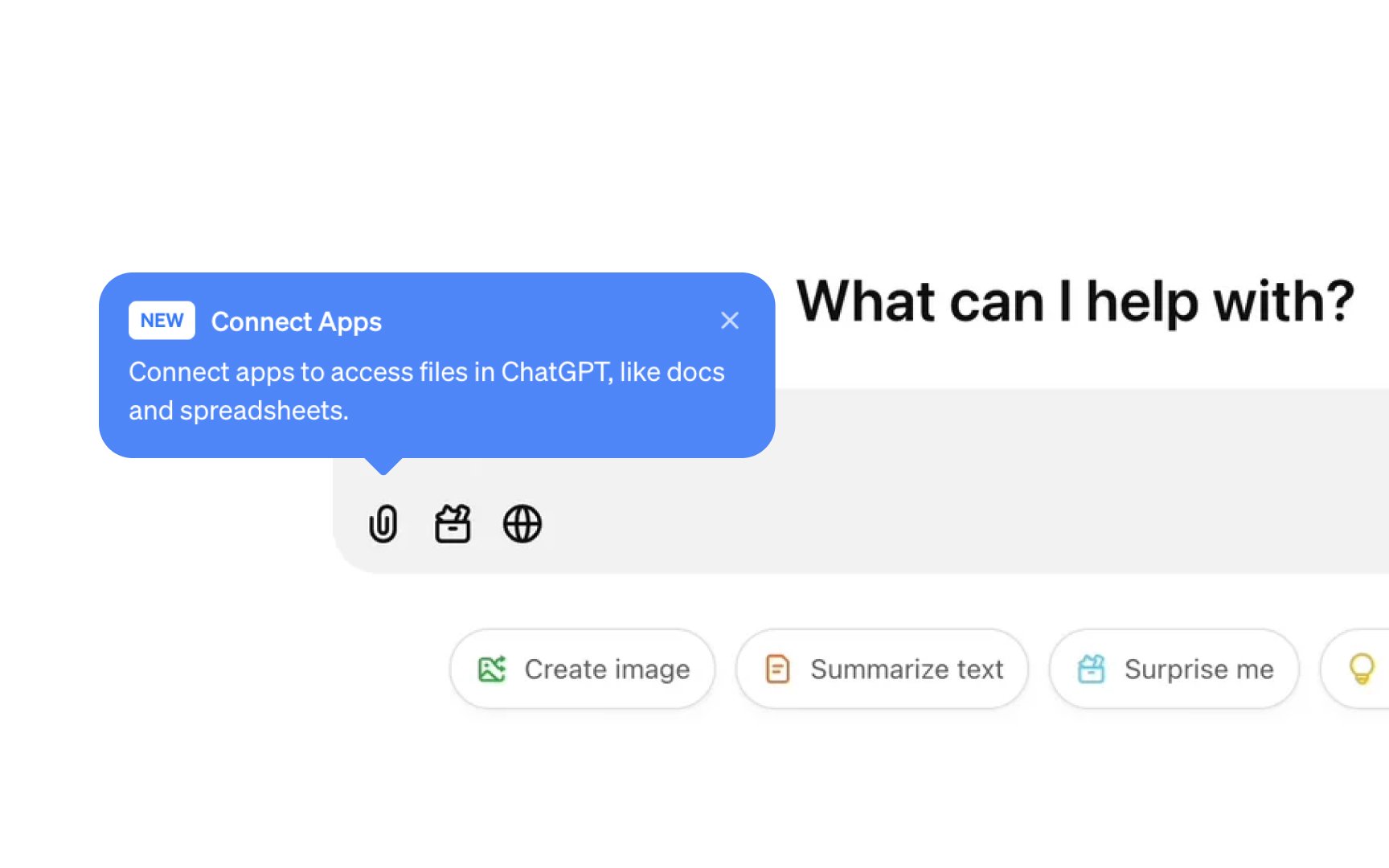
Progressive disclosure in AI interfaces strategically reveals controls based on user expertise and needs. This approach starts with a simplified interface showing only essential controls, then provides paths to more advanced options as users need them. For example, ChatGPT initially presents just a basic prompt field, but uses contextual tooltips to introduce new features like "Connect Apps" only when relevant, rather than overwhelming users with all capabilities at once. This pattern respects both beginners and experts.
Novices aren't overwhelmed by complexity they don't yet need, while advanced users can access powerful features when necessary. Common implementations include tooltips highlighting new features, expandable panels, and "Settings" buttons that hide less frequently used options. When implementing progressive disclosure, ensure that default settings work well for most users most of the time, as many will never explore advanced options. Make paths to advanced controls easy to discover without being distracting. Consider using a staged introduction approach where new capabilities are introduced through tooltips or highlighting only after users have mastered basic interactions. This creates a natural learning curve that builds user confidence while gradually revealing the system's full potential.