CJM x Mindspace case study - Ester Cinelli

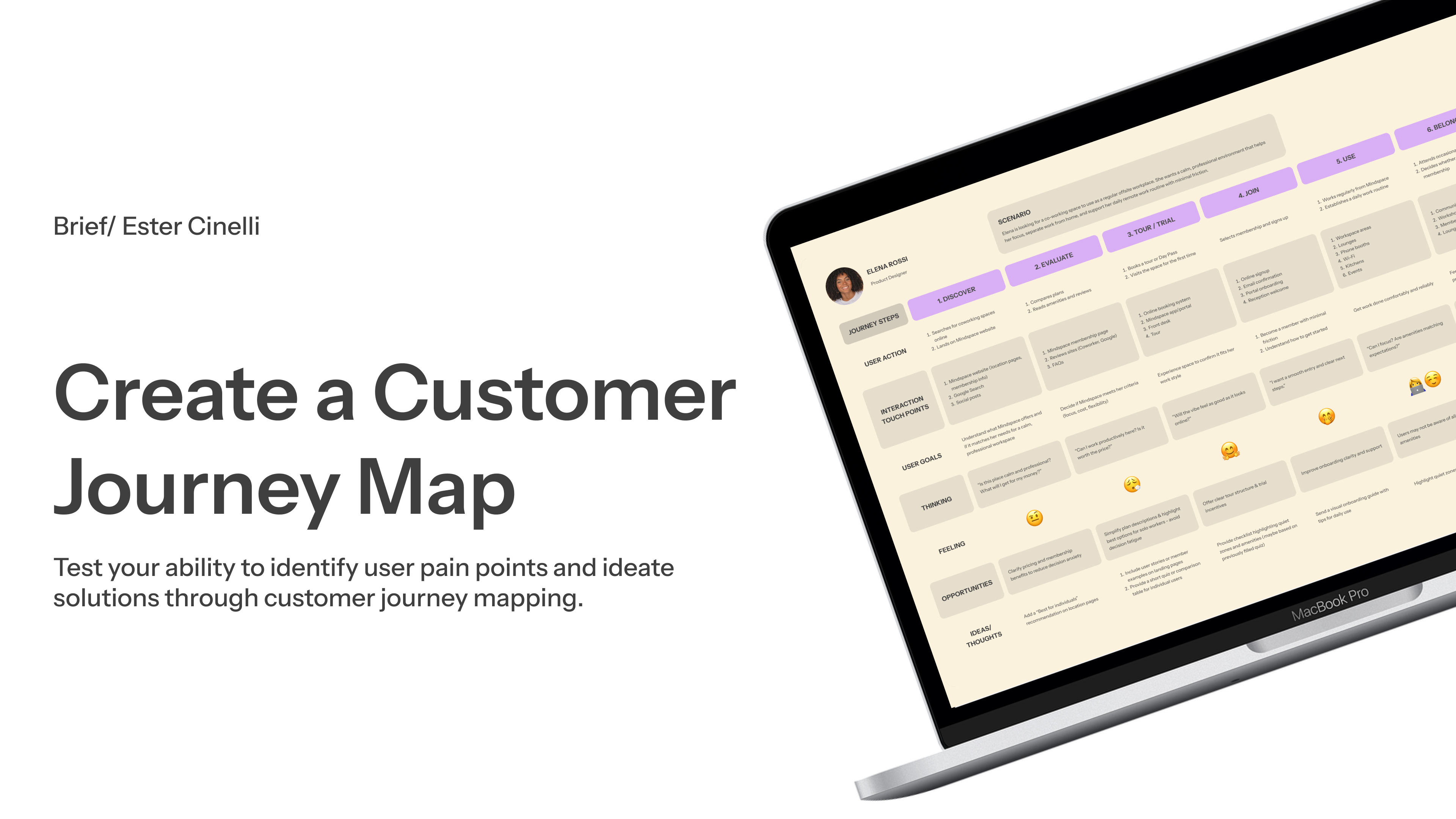
Mindspace was chosen for this customer journey map because it offers a premium, design-focused co-working experience aimed at people who need a consistent place to work outside their home. Unlike competitors like WeWork, Workbar, and CO+HOOTS, Mindspace prioritizes atmosphere, comfort, and daily productivity over things like massive scale or intense community networking.
The project centers on a remote professional working as an individual, which fits the brief's focus on understanding the personal experience of using co-working spaces. This angle made it possible to dig into both practical and emotional elements—how someone discovers the service, decides to join, gets set up, and uses it day after day.
The journey map came together through research into Mindspace's website, membership tiers, facilities, and how they position themselves. Each stage shows what users actually do and where they interact with the service. The thoughts and feelings attributed to users are based on typical patterns and expectations among remote workers.
Problem areas emerged by looking at points where users might feel unsure, encounter obstacles, or find their needs aren't quite met—especially when choosing a plan, visiting for the first time, or going through onboarding. The recommended improvements are practical and achievable, designed to smooth out rough patches, communicate more clearly, and better support individuals throughout their time with Mindspace.
Tools used
From brief

Topics
Share
Reviews
4 reviews

Hey Ester,
I truly enjoyed going through your project and appreciate the attention to detail you've put in. Very well summarized and presented. Great effort overall, keep up the fantastic work and I’m excited to see what you create next. Best of luck! 😊

Hey Ester.
You did a really nice job with the presentation and the journey map. I also like how you introduced the user story through competitors and the persona. That’s a great practice and it sets a strong foundation for everything that follows.
One small nitpick. For the emotions, you might consider adding a short text label next to the emojis. Even though emojis are familiar to most people, they can be interpreted in different ways. Adding a word would help clarify exactly what emotion you intended to communicate.
I also noticed that you didn’t include pain points as a separate attribute in the journey map. Every journey map is unique and depends on what you’re trying to explore, so this isn’t a criticism. I’m just curious about how you decided which attributes to include and which ones to leave out.
Overall, great work!

Hi Ester!
First impression this feels more strategic than just visual. A CJM case study already shows depth, and this one feels like you actually analyzed the experience instead of just mapping steps.
I like how the journey seems structured and layered. It’s not just “user does X,” but also how they feel and where friction happens. That emotional mapping is what makes a CJM powerful 👌📍
If I’d elevate it further, maybe make the key opportunity areas even more obvious like clearly showing which improvements would drive the biggest impact 🚀 But overall, thoughtful analysis and solid UX reasoning.

Hey Ester! I really enjoyed reading through your project. You did solid research and a real scenario user journey that I even related to. I really appreciated the pointing out of areas of improvement and ideas on next steps for the coworking. Great looking, beautiful presentation too. Nicely done!
You might also like

Smartwatch Design for Messenger App


Bridge: UI/UX Rebrand of a Blockchain SCM Product


Pulse Music App - Light/Dark Mode


Monetization Strategy


Designing A Better Co-Working Experience Through CJM


Design a Settings Page for Mobile
User Research Courses

Ethical & Responsible Product Design


Product Management Foundations


The Product Development Lifecycle & Methodologies