Unpacking the 5 SCARF domains
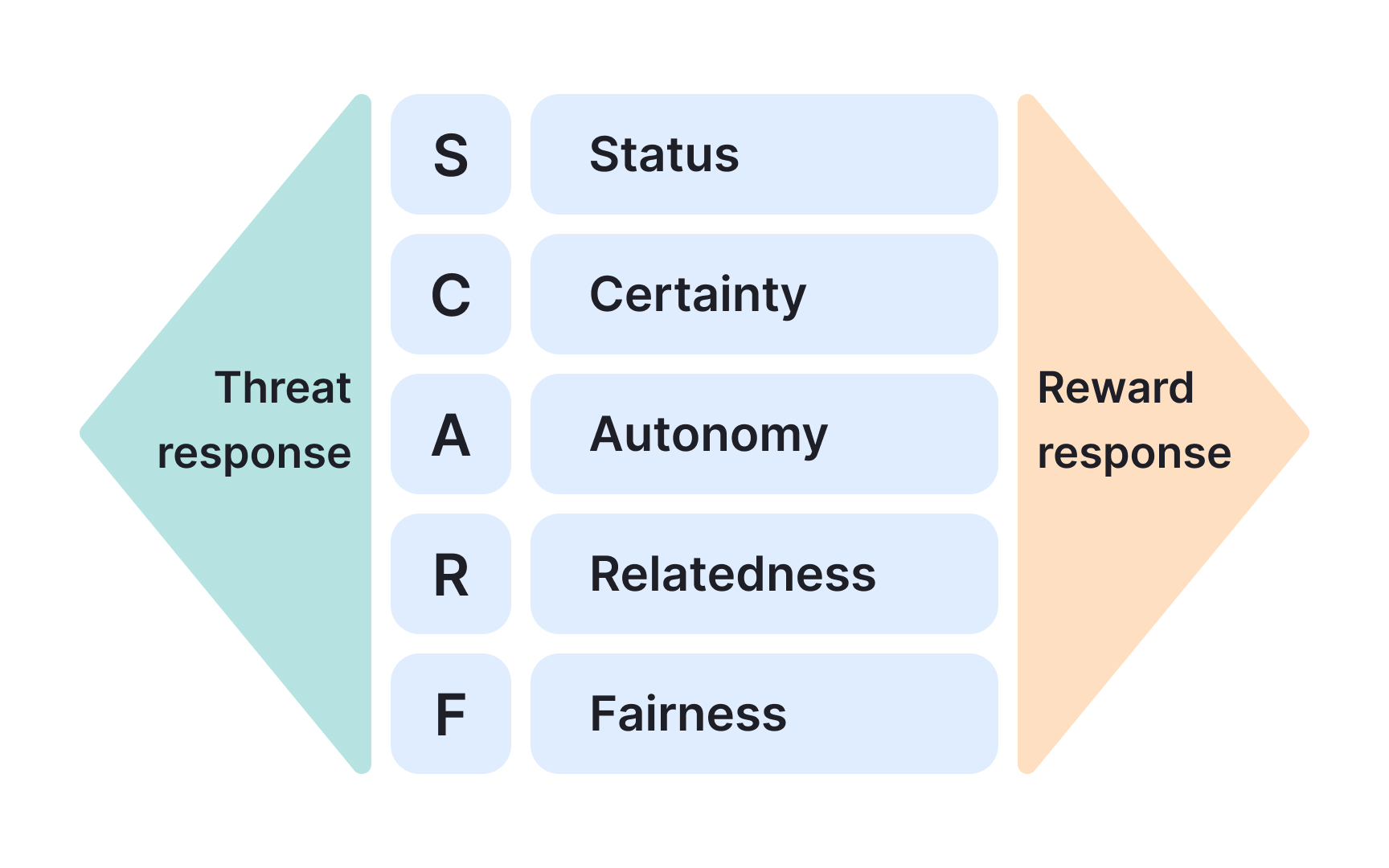
The SCARF model describes 5 social needs that strongly influence how people respond to collaboration, change, and uncertainty. Each domain can trigger a sense of safety or danger in the brain. When these needs are satisfied, people feel motivated and secure. When they are violated, they may resist or disengage. Understanding these domains helps anticipate reactions and adjust communication to keep interactions positive.
The 5 domains are:
- Status: how individuals see their importance compared to others.
- Certainty: how predictable and understandable the future or process feels.
- Autonomy: how much control a person has over choices and outcomes.
- Relatedness: how connected and trusted they feel in relationships.
- Fairness: how equitable and transparent decisions appear.
Each of these dimensions affects behavior in distinct ways. A stakeholder who values certainty may react strongly to unclear plans, while someone driven by fairness may withdraw if they sense unequal treatment. The SCARF model helps identify which domain is most sensitive for each person so communication can reinforce safety rather than trigger defensiveness.
Pro Tip: Watch for signs of tension around fairness or autonomy. These two often reveal where collaboration can quickly break down.