Scoring and ranking decisions
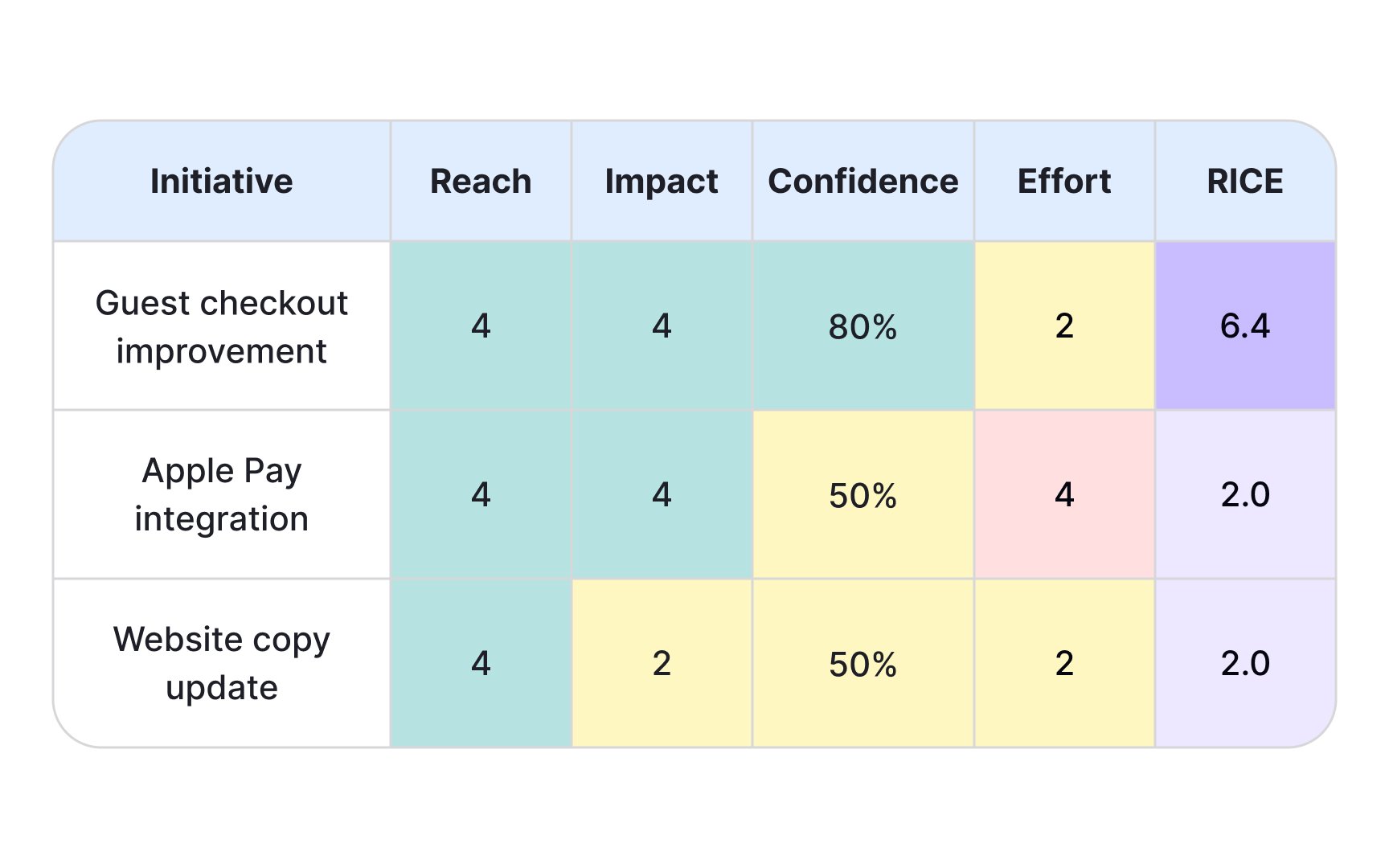
When priorities compete, intuition alone is not enough. Scoring systems introduce structure and make trade-offs visible. A common method is RICE, which multiplies reach, impact, and confidence, then divides by effort. Imagine two competing features: an improved search function and a new AI-powered recommendation engine. Search may have high reach and clear impact for all users but low effort. Recommendations may promise delight but come with high uncertainty and heavy engineering costs. Using RICE makes the difference transparent: search receives a stronger score, while recommendations can be scheduled later.
Weighted scoring models work in a similar way but allow teams to assign more importance to certain criteria, such as user experience or revenue potential. This is especially useful when different stakeholders value outcomes differently. Without scoring, the loudest voice often decides, leading to bias and conflict. With scoring, the discussion shifts from opinion to evidence, and product managers can explain why one initiative moves forward while another waits. Transparency in ranking builds trust and ensures that resources are invested in the most impactful opportunities.