Mapping support technologies
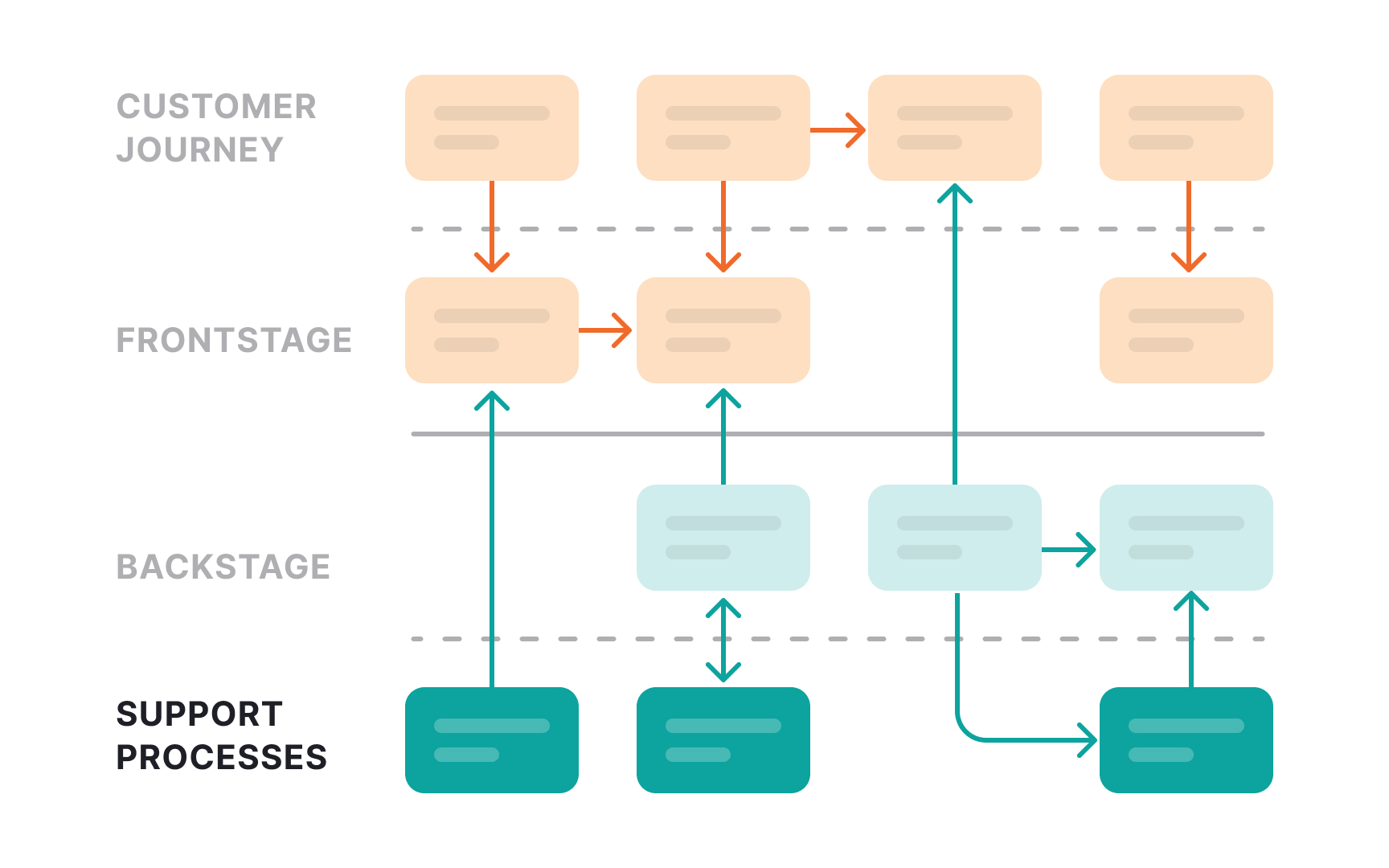
Support processes form another critical layer in service blueprints. These include all systems, databases, and procedures that enable both frontline activities and backstage actions. In government services, they range from data management processes to record-keeping systems. Each support process connects to specific activities in the layers above. When a citizen submits information through an online form, it triggers several processes: identity verification, data storage, and information processing.
Understanding these connections helps identify where support processes enhance or limit service delivery. Support processes often need to work together. Information might move from a public portal to a verification system, then to a departmental database. The blueprint should show these process interactions clearly, as they often affect service speed and quality. Note which processes directly affect service delivery. Focus on those that handle citizen requests, manage essential data, or enable staff to complete their tasks. This helps teams identify critical processes that need the most attention.
Pro Tip: Map both digital and manual support processes. Paper filing systems can be just as important as databases.