What is Ethical Product Design
Understand what ethical product design really means and why it's essential for modern product teams
Ethical product design represents the intersection of innovation and responsibility, where creating valuable products meets the imperative to consider their impact on users and society. As products become deeply integrated into daily life, the choices made during development carry profound consequences for privacy, fairness, accessibility, and human well-being.
Understanding ethical design principles equips product professionals to navigate complex moral decisions while building products that benefit rather than harm users. This foundation shapes how teams approach everything from data collection to algorithmic decision-making, from inclusive design to transparent communication. The shift from asking "can we build this?" to "should we build this?" marks the evolution of product development toward greater accountability and social responsibility.
Ethical product design means creating products that actively consider and minimize potential harm while maximizing benefit to users and society. It addresses moral responsibilities in how products collect data, influence behavior, and impact vulnerable populations. At its core, ethical design recognizes that every product decision creates ripples affecting real people. Whether designing a social media algorithm or a financial app, choices about features, data usage, and user experience shape lives in meaningful ways. A notification system might boost engagement metrics but could also fuel addiction. A recommendation engine might increase sales while reinforcing harmful biases.
Ethical design requires balancing business objectives with user well-being, transparency with competitive advantage, and innovation with responsibility.
It demands asking difficult questions throughout development:
- Who might be harmed?
- What biases exist in our data?
- Are we being transparent about how we use information?
- Should we build this?
This proactive approach prevents ethical failures that damage both users and company reputation.
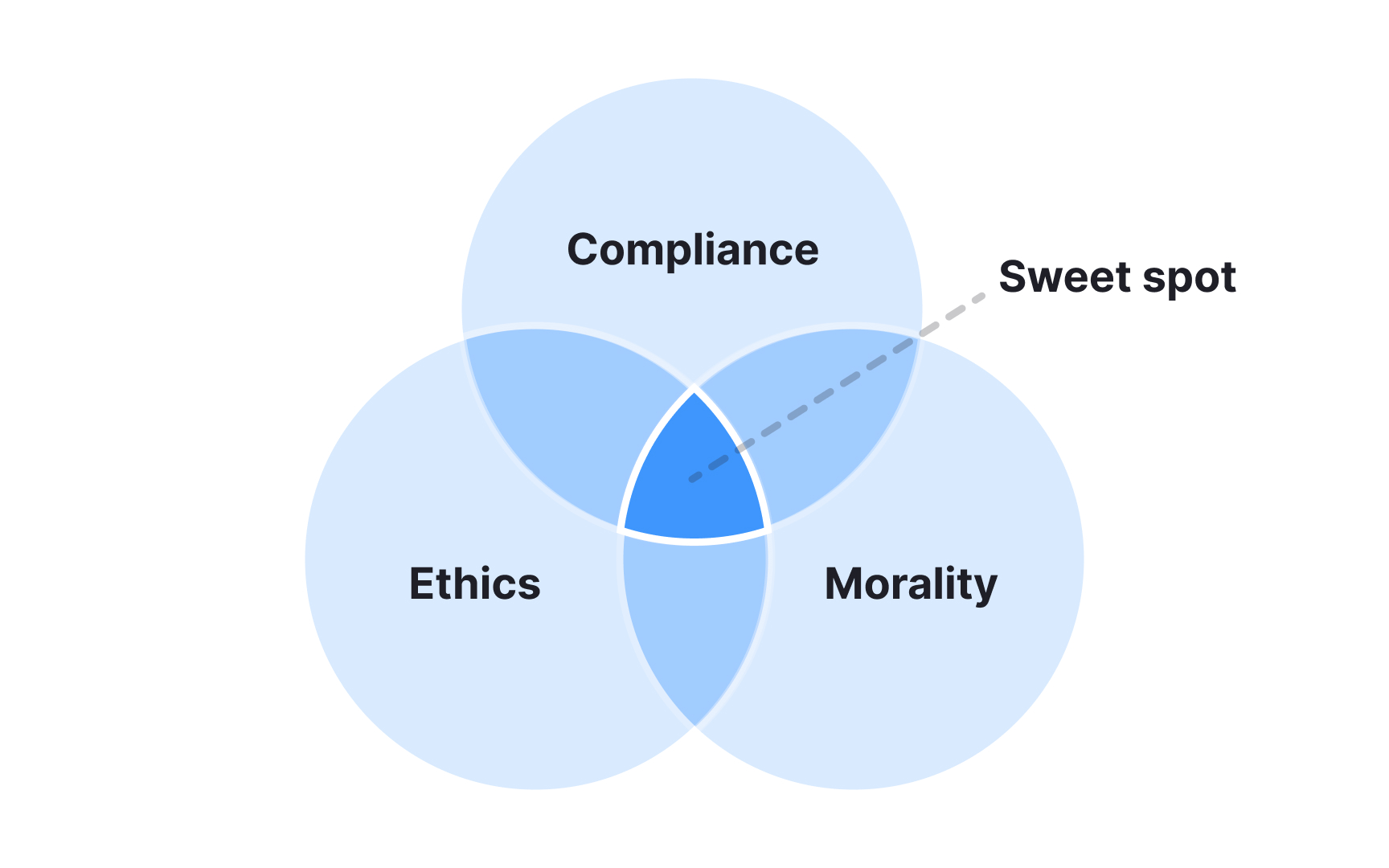
Understanding the distinction between ethics, morality, and compliance helps product teams navigate complex decisions. Compliance involves following laws and regulations — the baseline requirement for any product. Ethics encompasses professional standards and principles specific to product development, like respecting user privacy even when legally allowed to exploit it. Morality represents deeper personal values about right and wrong that guide individual decisions.
These 3 layers often overlap but can conflict. A feature might be legally compliant yet violate ethical standards, like using dark patterns that technically follow disclosure laws but deliberately confuse users. Similarly, professional ethics might permit practices that individual team members find morally troubling, such as building addictive features that maximize engagement.
Product teams need frameworks for navigating these tensions. Start with compliance as the foundation, layer on professional ethical standards, then encourage open dialogue about moral concerns. When conflicts arise, transparency and user benefit should guide decisions. Document ethical choices and their rationale to build institutional knowledge and accountability.
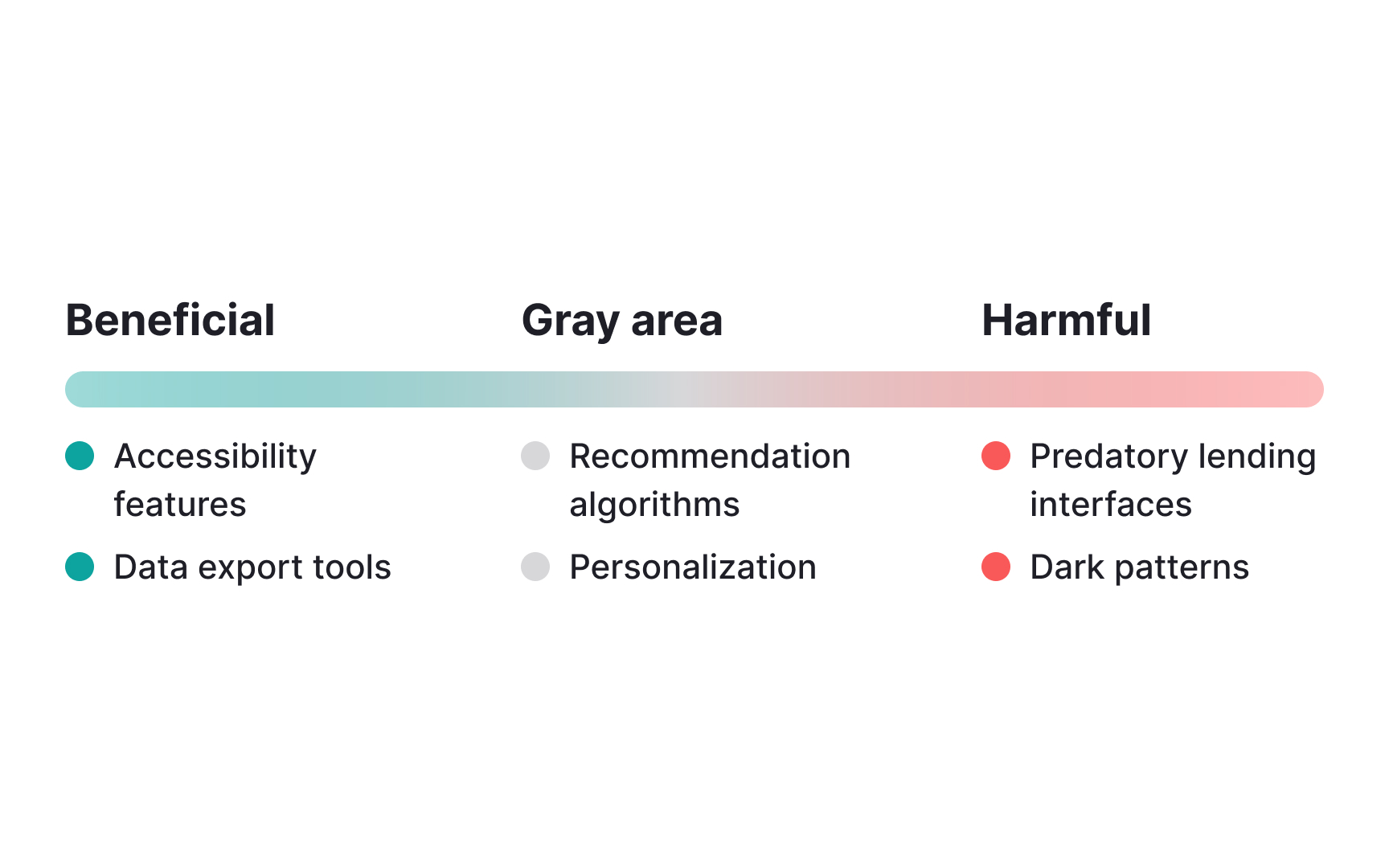
Product decisions exist on an ethical spectrum rather than simple right-or-wrong categories. At one end lie clearly beneficial features like
Most decisions fall in the gray area between these extremes. Consider recommendation algorithms: they can helpfully surface relevant content but also create filter bubbles that polarize users. Push notifications might provide valuable updates or manipulate users into compulsive checking. Personalization can enhance
Navigating this spectrum requires nuanced thinking. Evaluate each feature along multiple dimensions: user autonomy, transparency, potential for harm, and long-term societal impact. Consider the context of use and vulnerable populations who might be disproportionately affected. Regular reviews help ensure features don't drift toward the harmful end of the spectrum as metrics pressure increases.
Good intentions alone don't guarantee ethical outcomes. For example, Airbnb's vision of belonging anywhere contributed to housing shortages in major cities.[1] These failures stem from predictable blind spots in how well-intentioned teams approach product development.
Scale amplifies unintended consequences. A feature tested with hundreds might behave differently with millions of users. Edge cases become common at scale, and small biases compound into systematic discrimination. The infamous example of soap dispensers that didn't recognize darker skin tones shows how limited testing perspectives create exclusionary products despite no malicious intent.[2]
Ethical blindness occurs when teams fail to recognize ethical dimensions of their decisions, often due to cognitive biases, organizational pressure, or gradual normalization of questionable practices. A team focused on engagement metrics might not see how their
Several factors contribute to ethical blindness:
- Confirmation bias leads teams to seek data supporting their approach while ignoring warning signs
- Groupthink suppresses dissenting voices who might raise ethical concerns
- Metrics myopia causes teams to optimize for measurable outcomes while ignoring unmeasurable harms
- Time pressure and competitive dynamics push teams to ship quickly rather than reflect deeply.
Unethical design carries steep costs beyond potential lawsuits and regulatory fines. Facebook lost younger users and faced advertiser boycotts over privacy violations and harmful
Hidden costs accumulate slowly but significantly. Employee morale suffers when staff must build or support products they find ethically troubling, leading to turnover and difficulty recruiting talent. Technical debt grows as teams pile on band-aids to address ethical issues retroactively rather than building responsibly from the start. User trust, once broken, requires years to rebuild if possible at all.
The opportunity cost of unethical design might be highest. Teams focused on exploitative practices miss chances to build genuinely valuable features. Resources spent on damage control could fund innovation. Markets lost to competitors with stronger ethical foundations represent permanent setbacks. Calculate the full lifecycle cost of ethical shortcuts versus responsible development, and the business case for
Building ethical advantage requires authentic commitment, not surface-level marketing. Users can now quickly detect "ethics washing" where companies claim values they don't practice. So, start by identifying ethical differentiators meaningful to your users: privacy,

Several misconceptions prevent teams from embracing ethical design:
- "Ethics slows development" assumes ethical considerations must be retrofitted rather than built in from the start. In reality, addressing ethics early prevents costly rework. Teams practicing
ethical design report faster long-term velocity because they avoidtechnical debt from hasty decisions and trust-destroying incidents that derail roadmaps. - "Users don't care about ethics" misreads user behavior. While users might accept unethical practices when alternatives don't exist, they switch quickly when ethical options emerge. The rapid adoption of privacy-focused browsers, email providers, and messaging apps shows latent demand for ethical alternatives. Users especially value ethics when products touch sensitive areas like health, finances, or children.
- "Ethical design means boring products" falsely pits ethics against innovation. Instagram's well-being features like usage dashboards enhance rather than diminish the experience. The most innovative products often emerge from ethical constraints that force creative problem-solving. Ethics provides guardrails, not roadblocks, channeling innovation toward sustainable value creation.
Pro Tip: Reframe ethical constraints as design challenges that spark creative solutions
References
Topics
From Course

Share


Similar lessons
Best Practices for Ethical Design Thinking
Ethical & Societal Implications