Anonymization techniques
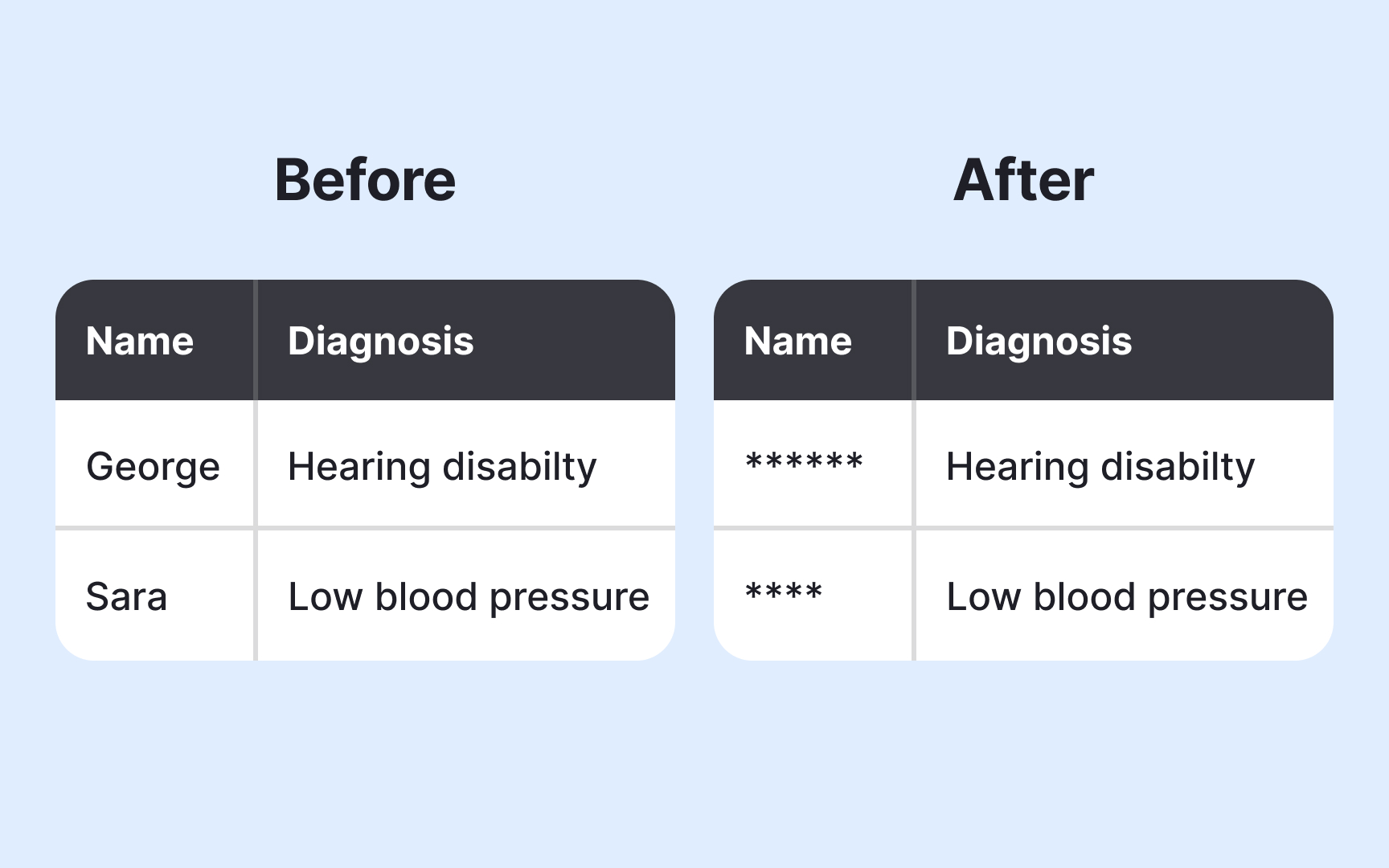
Anonymization removes or modifies personal identifiers from data so individuals cannot be identified, even with additional information. Use anonymization when you need to analyze user behavior, share data with researchers, or retain information for historical analysis without keeping personal data. This process transforms personal data into anonymous data that falls outside privacy regulations while still providing analytical value.
Common techniques include:
- Data masking (replacing identifiable values with placeholders)
- Aggregation (combining individual records into group statistics)
- Pseudonymization (replacing identifiers with reversible artificial codes)
- Generalization (reducing precision of data like ages or locations)
Each technique has different strengths and risks. Simple masking might still allow identification through combining multiple data points, while proper aggregation can prevent re-identification entirely.
True anonymization is permanent and irreversible. If you can reverse the process or re-identify individuals by combining datasets, the data remains personal and subject to privacy laws. Pseudonymization offers less protection than full anonymization but provides more utility for certain analyses.