Step 2: Write the explanation of the user journey
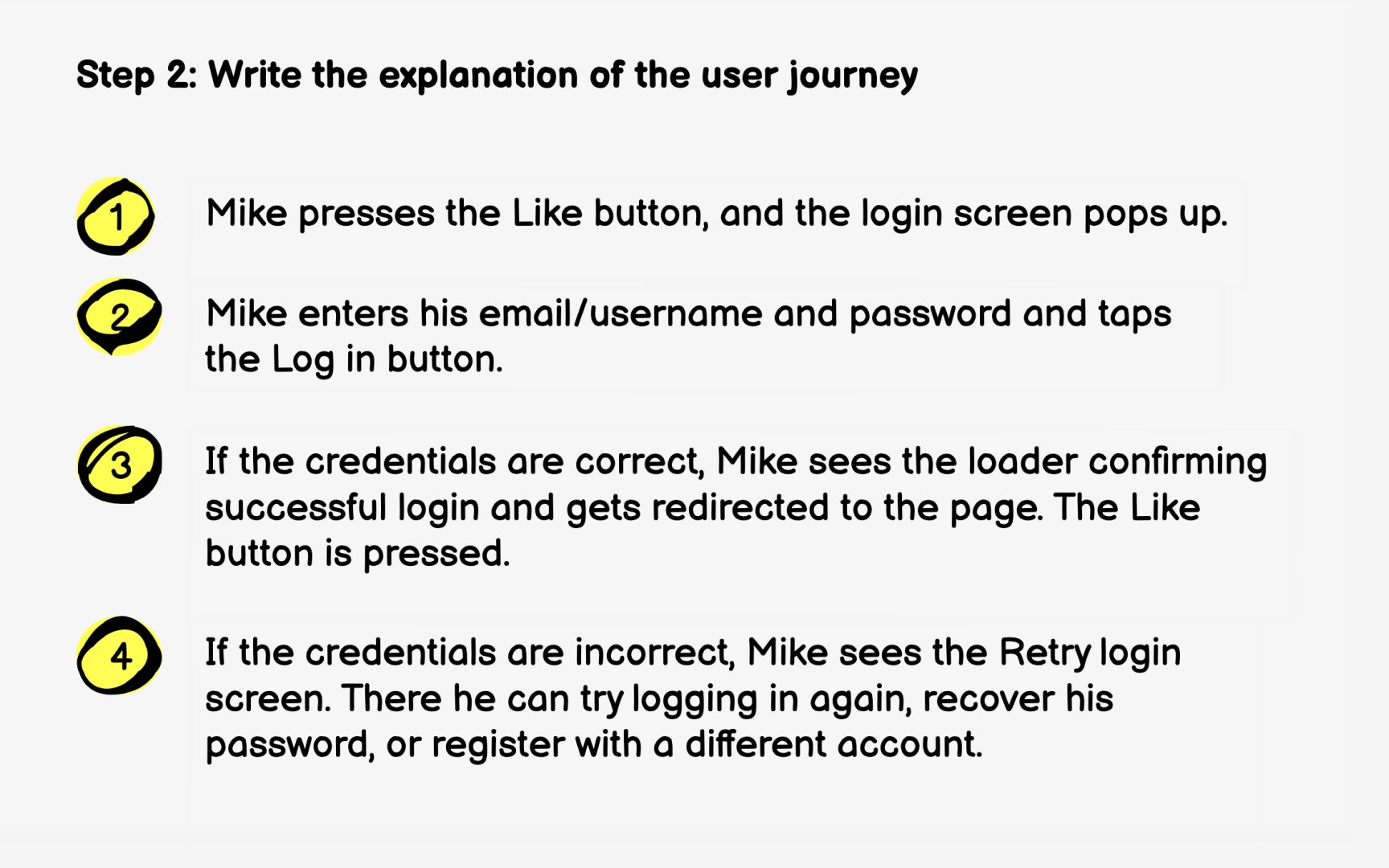
After defining the user story, write out the user journey in plain language. Describe the steps a user takes from their starting point to achieving their goal. This narrative helps everyone understand the flow before any screens are designed.
Write from the user's perspective using non-technical language. For example: "Sarah opens the app and taps her profile icon. She selects 'Order History' and sees a list of her past purchases. She finds the coffee subscription she bought last month and taps 'Reorder.' The app shows her the order summary with the same shipping address. She confirms, and sees a success message."
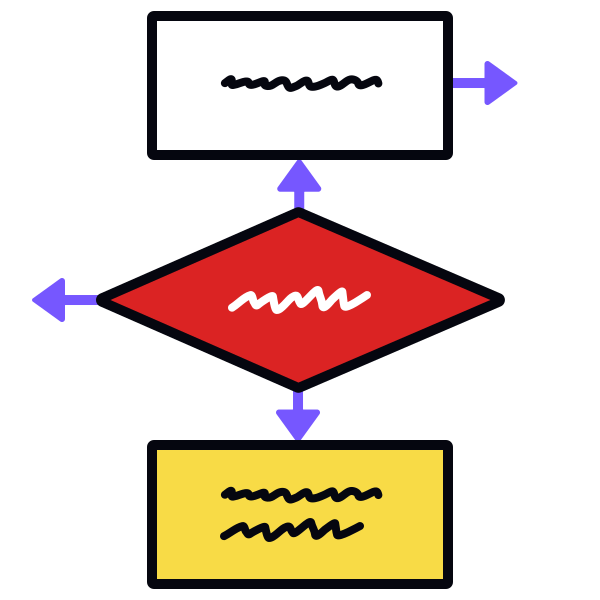
Keep the journey concise but complete. Include decision points where users might take different paths. What if Sarah wants to change the shipping address? What if the item is out of stock? These branches become scenarios your wireframes need to address.
The user journey also surfaces questions to discuss with stakeholders. Does reordering use the original payment method or require re-entry? Can users modify quantities? Resolving these questions before wireframing prevents rework later.
Pro Tip: Read your user journey aloud. If it sounds confusing, the actual experience probably will be too.
Top contributors