Step 1: Formulate user story and acceptance criteria
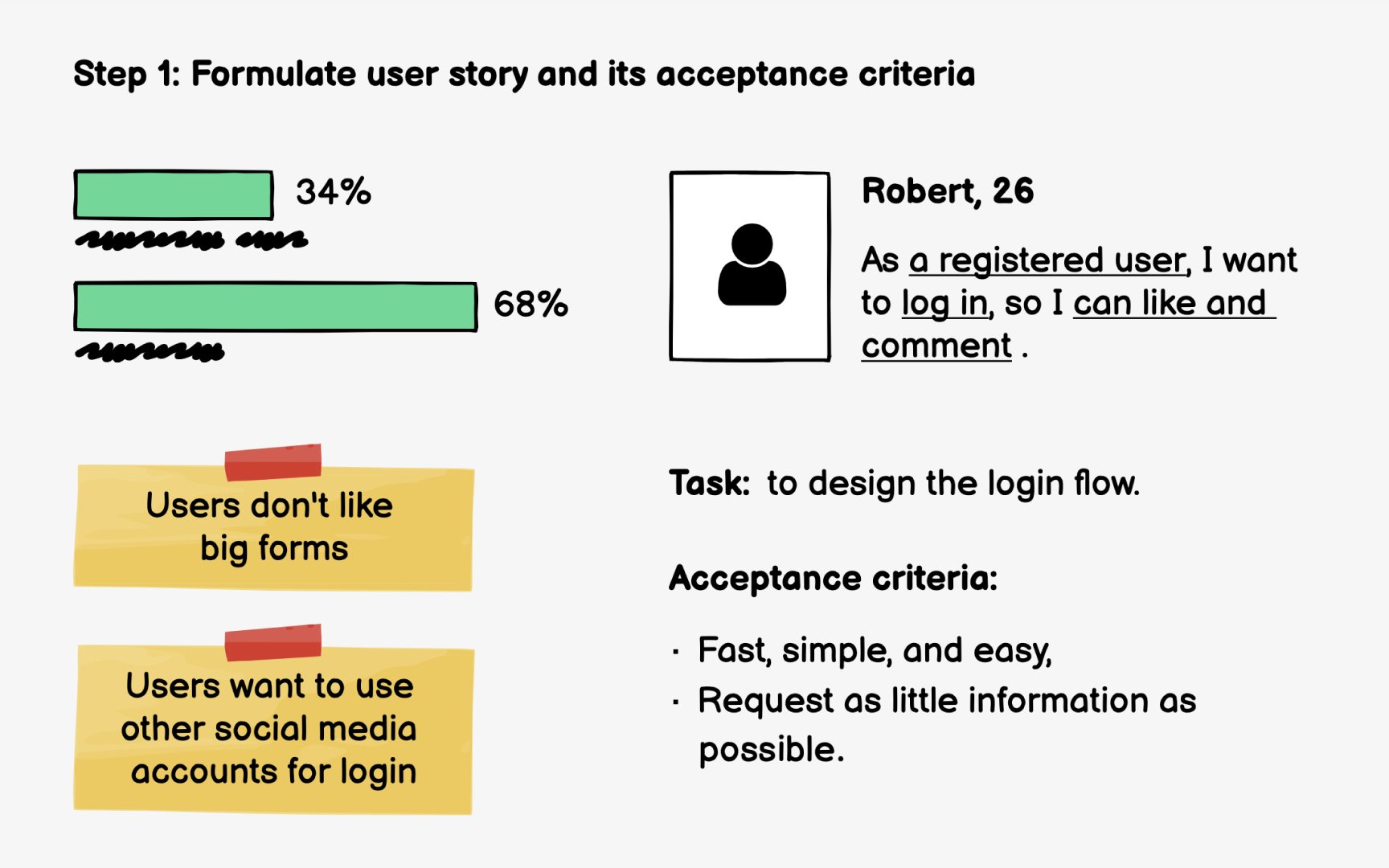
Every wireframe starts with a clear user story. The story defines who the user is, what they want to accomplish, and why it matters. This narrative context guides every design decision that follows.
For example: "As a returning customer, I want to reorder my previous purchase, so that I can save time on repeat orders." This structure keeps the focus on user value rather than implementation details.
Acceptance criteria define what success looks like. They become testable conditions your wireframe must support. Good criteria are specific and measurable: "User can view order history from the last 12 months," "Reorder button appears on each past order," "User receives confirmation before the order is placed." These criteria tell designers exactly what elements the interface needs.
Many Agile teams include wireframes in their Definition of Ready, a checklist that stories must meet before entering a sprint. For UI-focused stories, this typically means wireframes are attached showing layout, key interactions, and edge cases.[1]
Pro Tip: Write acceptance criteria before wireframing. They become your checklist for what the design must include.
Top contributors