Mind mapping
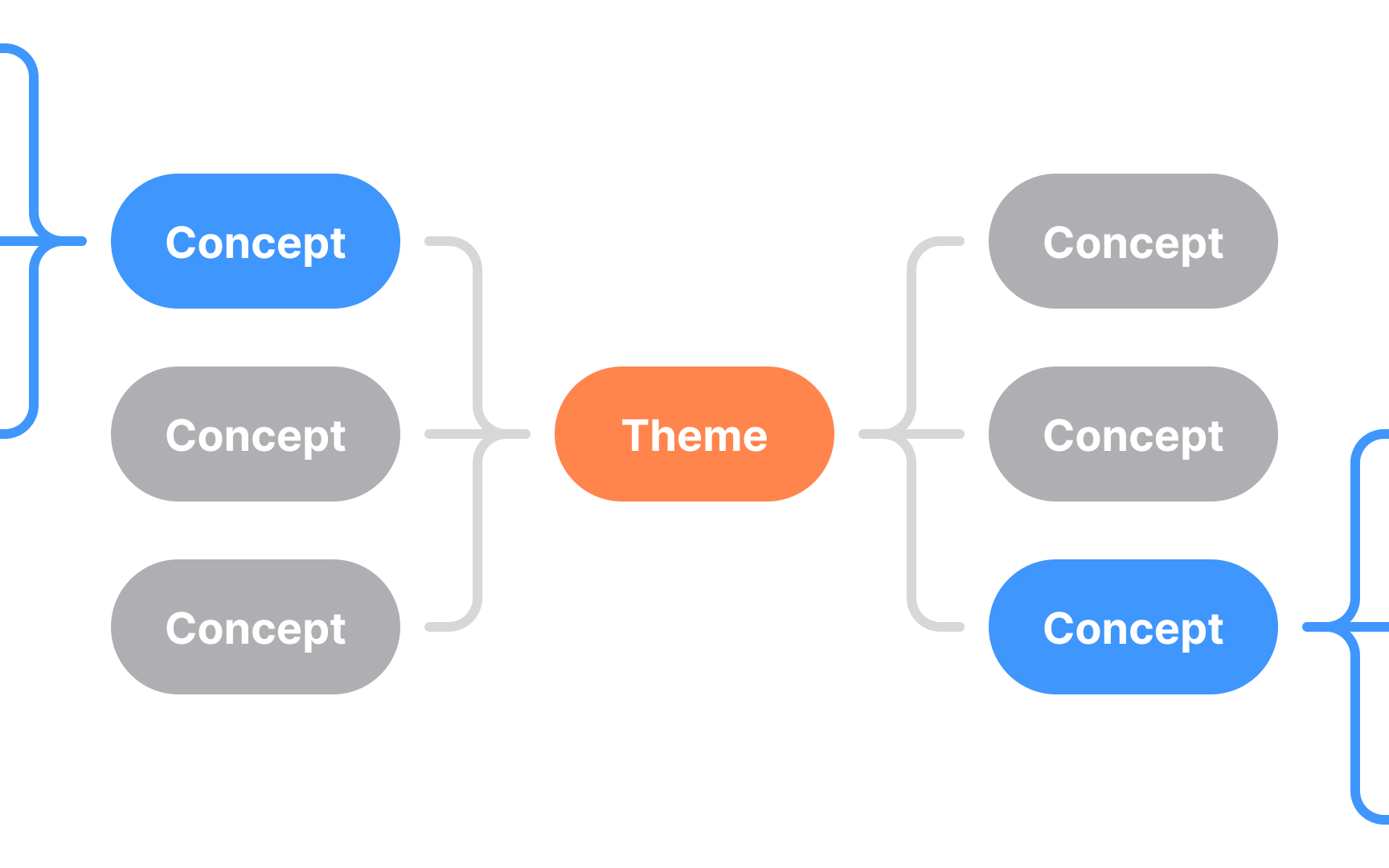
Mind mapping helps visualize complex relationships between different aspects of a challenge, making it easier to spot unexpected connections between technical constraints, user needs, and business goals. This technique excels at breaking down silos by showing how different departments' concerns interconnect.
Here's how to conduct cross-functional mind mapping:
- Core concept (2 mins): Write the main challenge in the center — for example, "Improving user account management."
- Primary branches (5 mins): Each department adds their key considerations as main branches. For example:
- Development: Authentication, data security, performance
- Design: User flows, accessibility, interface elements
- Business: Conversion points, retention features, upsell opportunities
- Secondary branches (10 mins): Team members circulate, adding sub-branches to other departments' areas, highlighting interdependencies.
- Connection phase (8 mins): Draw lines between related elements across branches, like connecting "password recovery" to both "security protocols" and "user frustration points."
- Opportunity identification (10 mins): Circle areas where multiple departments' concerns intersect, as these often reveal critical focus points.
The resulting map serves as a shared reference point for understanding how changes in one area might impact others.