Voice and tone guidelines
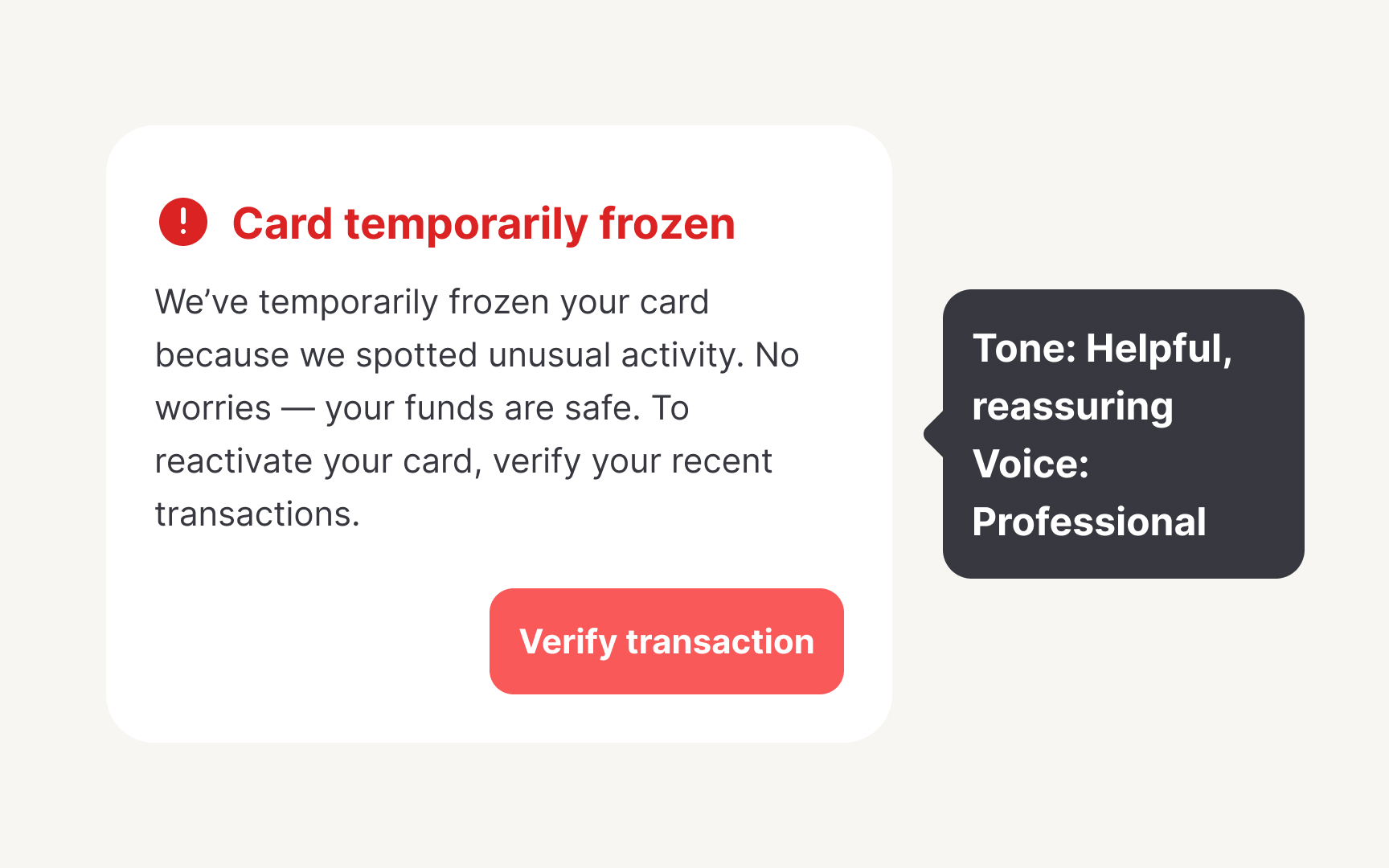
Voice and tone guidelines establish how your product speaks to users across every interaction. Voice represents your product's consistent personality traits: whether it's professional, conversational, friendly, or innovative. Tone adapts this voice to match specific situations, showing empathy during errors or enthusiasm during successes.[1]
Effective voice guidelines include specific, actionable elements like:
- Word choice preferences (contractions vs. formal language, technical terms vs. plain language)
- Sentence structure rules (active vs. passive voice, sentence length limits)
- Emotional boundaries (appropriate humor levels, empathy expressions)
- Forbidden phrases or terms that conflict with brand values
- Before-and-after examples demonstrating proper application
Implementation requires embedding guidelines into daily workflows. Create quick-reference cards, decision trees for tone shifts, and AI bots that work as automated checkers. Regular training sessions and tonality workshops help teams internalize voice principles.