Reusable templates and examples
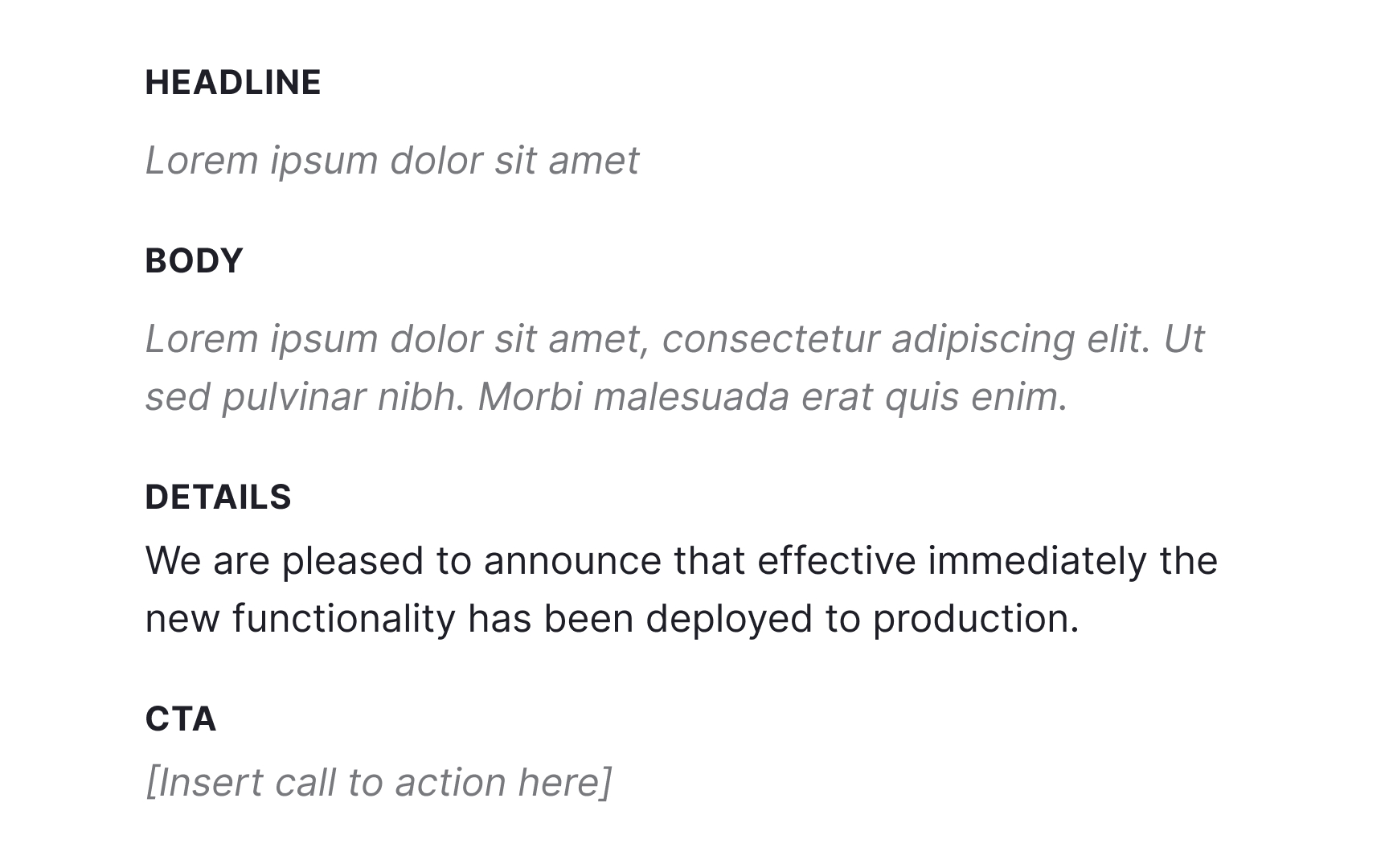
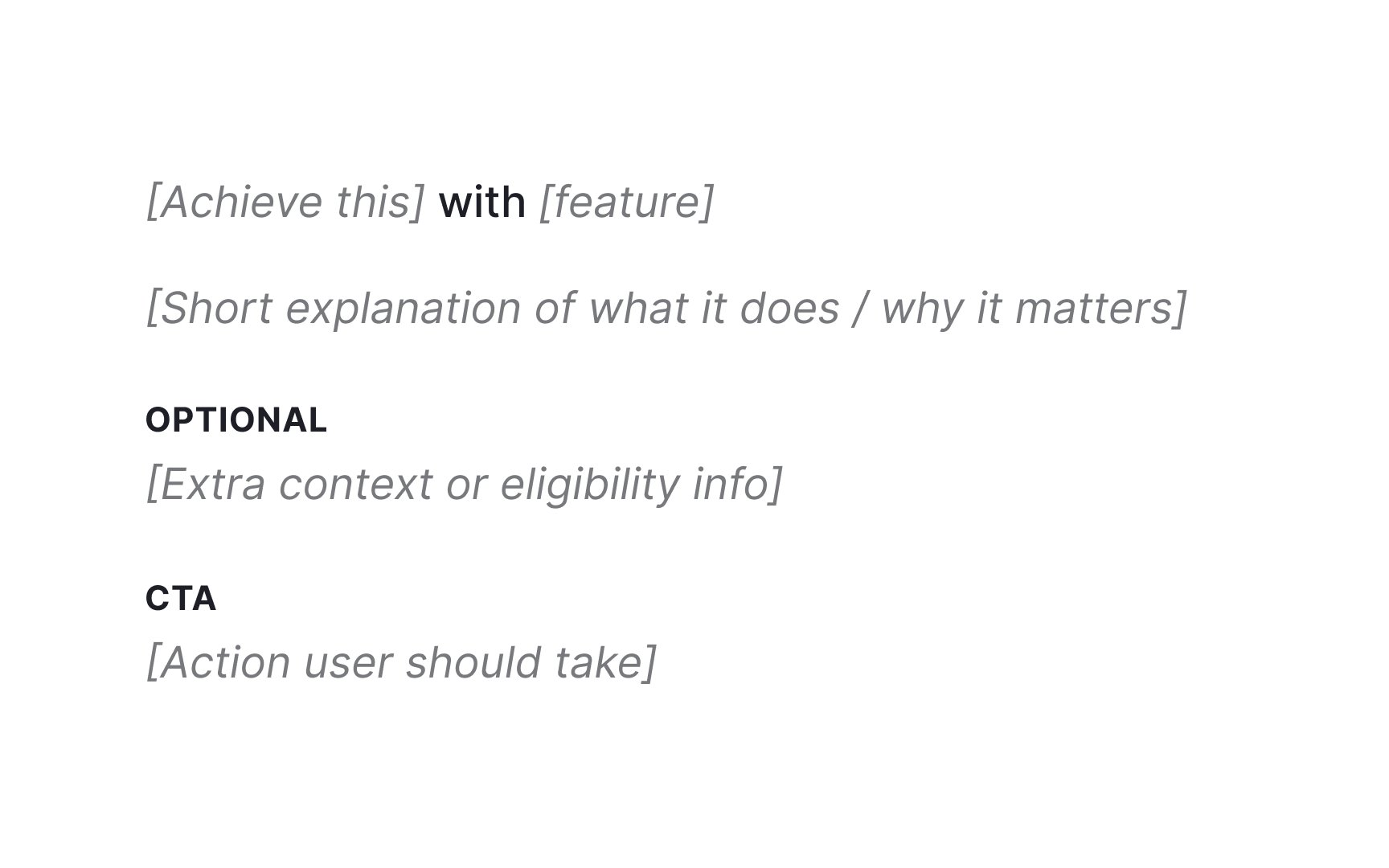
Reusable templates and examples transform content principles into practical tools teams can apply immediately. Instead of starting from scratch, content designers can adapt proven structures for common scenarios like empty states, modals, cards, or transactional emails. Templates ensure consistency while saving time and reducing cognitive load.
Strong template libraries include:
- Complete examples with defined content hierarchy, not just placeholder content
- Variations for different contexts
- Annotation explaining the rationale behind content decisions
- Flexibility markers showing what can be customized vs. what stays fixed
- Success metrics from tested versions
Templates gain value through active use and iteration. Track which templates teams use most, gather feedback, and update them based on performance data. Build templates directly into the design system file where possible (like templates for different kinds of modals or badges). Create quick-start guides showing how to adapt templates for specific needs. Regular reviews can ensure that templates evolve with product changes and user expectations.