Design Workshop Plan: FinTrack App

Project Overview
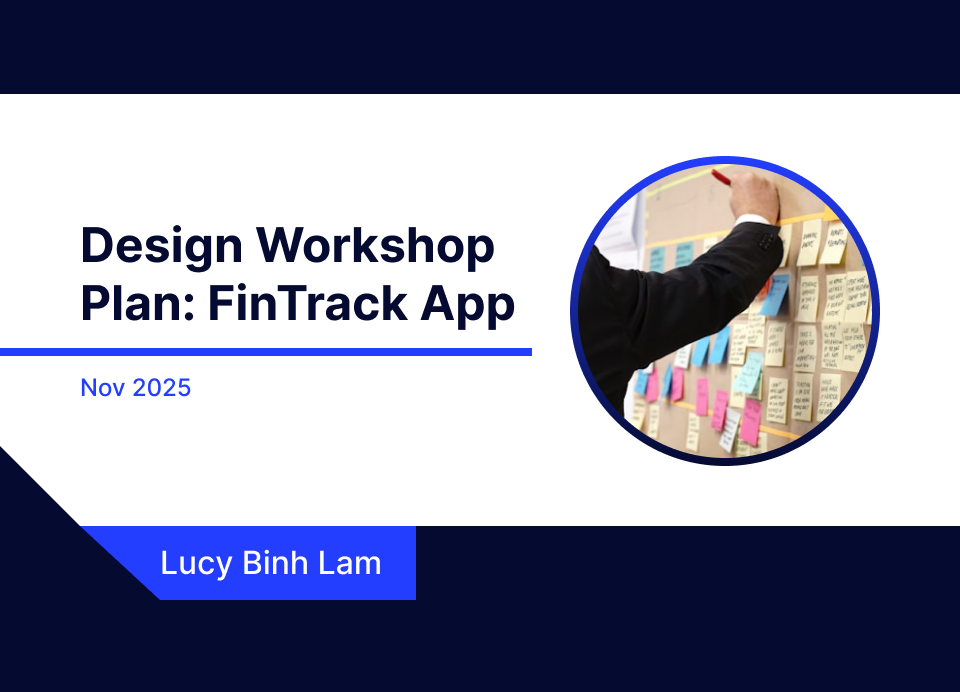
This project outlines a strategic, 3.5-hour design workshop for "FinTrack," a mobile expense tracking app. The goal is to guide the design team from open-ended brainstorming to a concrete, prioritized roadmap for the next product release.
Key Methodology
The workshop follows a structured "Diverge & Converge" framework to ensure creativity is balanced with feasibility:
- Ideation: Utilizing Crazy 8s to rapidly generate over 40+ feature concepts focused on automation and user retention.
- Strategy: Applying the Impact vs. Effort Matrix to collaboratively filter ideas and identify "Quick Wins" versus "Strategic Bets."
- Alignment: Concluding with Story Mapping to define clear user journeys for the top 3 selected features.
Outcome
The result is a clear transition from a backlog of ideas to an actionable implementation plan, ensuring the design team focuses on high-impact features that align with business goals.
Tools used
From brief
Topics
Share
Reviews
3 reviews

Great work!!

Hello Lucy,
Your project offers a strong, detailed plan for a feature prioritization workshop. The use of the Diverge & Converge framework and standard design methodologies makes the process highly effective and structured.
What's Good:
The plan is well-aligned with the project brief and displays strong methodology.
- The goals—Idea Generation, Prioritised Roadmap, and Strategic Alignment—are clear and directly address the need to transform FinTrack from a simple tracker to a proactive tool.
- The agenda is logical, well-timed (3.5 hours), and detailed, with specific activities like Crazy 8s and Impact vs. Effort Matrix clearly defined. This ensures high Scannability and quality Content.
- Final outputs, including the Prioritised Idea Matrix and Concept Outlines (Story Maps), are clearly defined, ensuring the workshop yields tangible, actionable results.
Areas for Improvement:
To maximize the workshop's effectiveness and reliability, focus on pre-planning and execution management.
- The plan needs an explicit pre-reading step. Participants, especially cross-functional members, should receive a brief context document (e.g., key user pain points, competitor feature gaps) before the workshop. This ensures all voices in the "Problem Framing" phase are informed.
- The "Detail & Storyboard" activity needs more structure. Specify the required components of the Story Map (e.g., three panels covering User Action, System Response, and Success State) to ensure consistent and high-quality concept outlines for the next design sprint.
- The tight 3.5-hour schedule lacks a plan for delays. Mandate a Time box Management strategy where the facilitator is instructed to limit discussion time per idea (e.g., 5 minutes) during the Prioritisation and Curation phases to maintain the schedule and improve Feasibility.
- While ownership is mentioned, the final step should explicitly document the commitment. The "Workshop Summary Document" must clearly record the Top 3 Features, the Assigned Owner (Designer/PM), and the Deadline for the next step (e.g., Prototyping Kick-off) to ensure clear accountability.
Happy Designing!

Good start Lucy, the goals are clear and the deliverables actionable.
Some things to think about:
- Principles/rules slide to set expectations and help everyone feels comfortable.
- Add the activities and to-dos pre-workshop for everyone to arrive ready to go.
- Include buffer time between activities in case of surprises along the way.
- The agenda's Activity section is very cluttered.
The workshop plan works but these small improvements would improve it.
You might also like

PLANTIST


Lumen

NORTHSIDE - Coworking space Customer Journey Map


Accessible Signup Form for Monkey Survey


Crave Corner - Bakery App Design


Wealthsimple 404 Page

Design Leadership Courses

UX Design Foundations


Introduction to Figma
Introduction to Design Systems