When to debrief
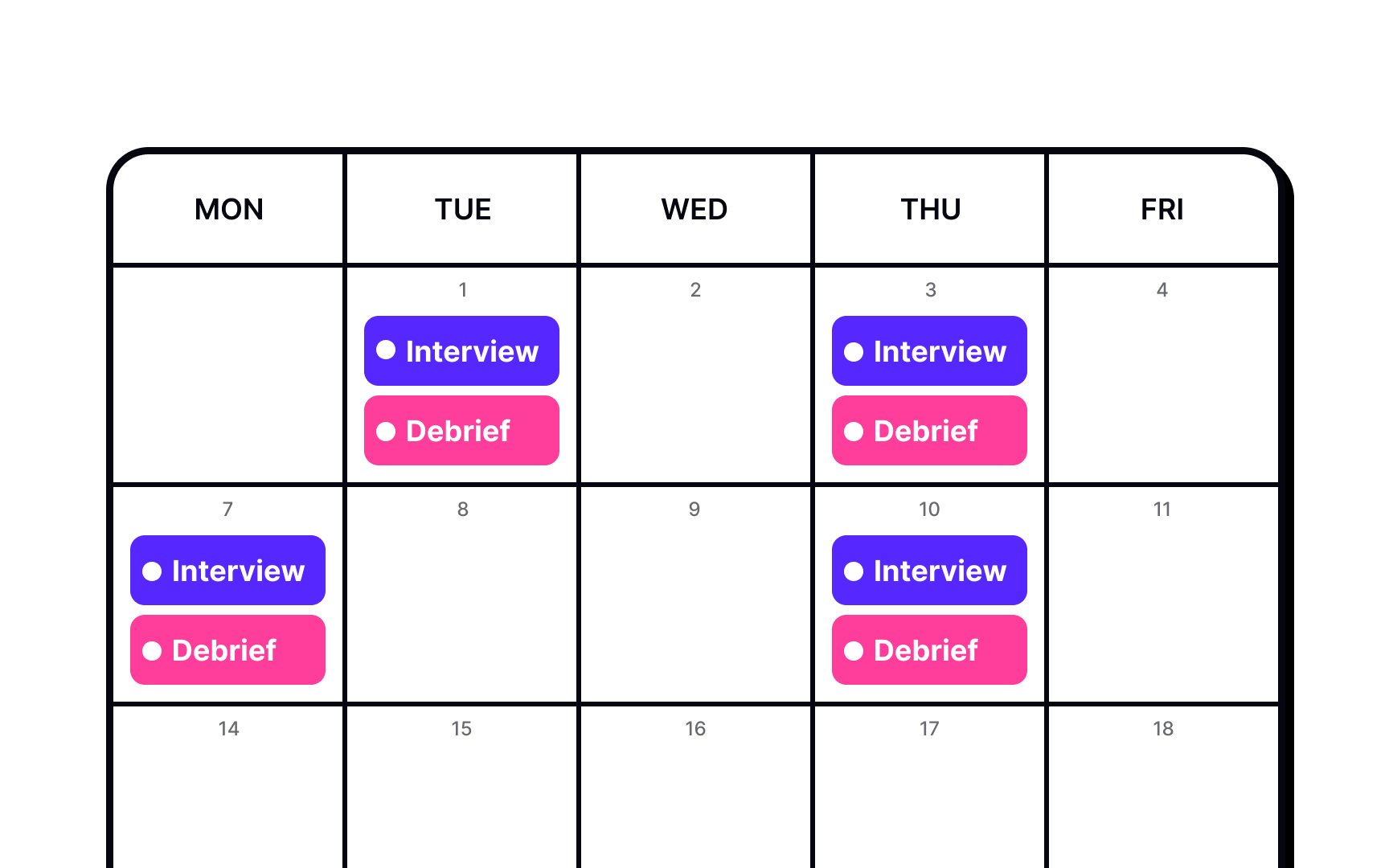
Memory fades fast. The observations that feel vivid right after a session start blurring within hours, and details that seemed impossible to forget have a way of disappearing by the next morning. This is why debriefs work best when they happen immediately after research, while everything is still fresh.
A practical way to make this happen is to build the debrief into the calendar invite from the start. If an interview runs 60 minutes, schedule a 90-minute block — the extra 15 minutes is your debrief. That way, there's no negotiating for time after the fact, and the conversation happens while observations are still sharp.
Debriefs also serve a bigger purpose in the research process. When you run short debrief sessions after each research session, the final synthesis meeting at the end of a study becomes much more manageable. Instead of trying to make sense of everything at once, your team arrives with a shared understanding already forming. The synthesis focuses on decisions, not on catching up.[1]
Pro Tip: Even a 15-minute debrief beats none at all. A quick conversation right after the session captures more than a detailed write-up done the following day.
Top contributors