What Is Product Strategy?
Learn what product strategy is and why it matters for building successful products
Every successful product needs clear direction. Product strategy provides that direction by defining where to compete, who to serve, and how to differentiate from alternatives. It transforms abstract vision into actionable decisions that guide teams daily. Without strategy, teams often build features reactively, chase every opportunity, or copy competitors without understanding why.
Strategy creates focus by making explicit choices about what to pursue and what to ignore. It serves as the critical link between high-level business goals and tactical execution plans. Strong strategy answers fundamental questions about target markets, value creation, and competitive positioning. It helps organizations allocate resources effectively and maintain consistency across teams. Strategy isn't a static document but a living framework that guides decision-making while adapting to new learnings. Understanding strategy fundamentals helps product teams move from scattered efforts to coordinated action. It provides the reasoning behind priorities and creates alignment on what success looks like.
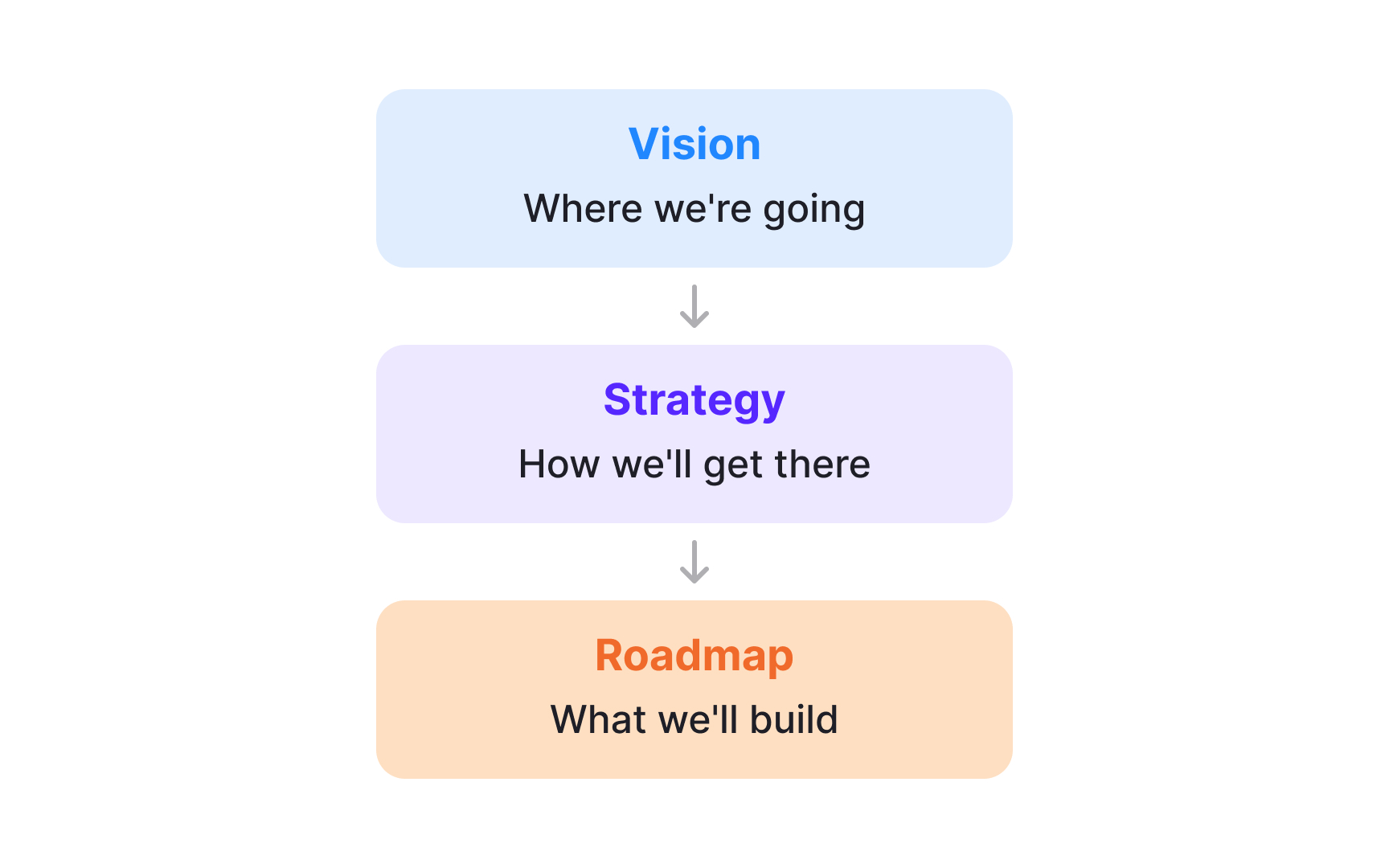
Product strategy defines the specific approach your product takes to achieve business objectives and create value for users. It articulates which customer segments to target, what problems to solve for them, and how your product will differentiate from alternatives. Strategy sits between vision (the aspirational future state) and roadmap (the tactical execution plan).
A clear product strategy answers 3 essential questions:
- Where will we play? This defines your target market, customer segments, and the specific problems you'll solve. It's about choosing which opportunities to pursue and which to pass on.
- How will we win? This explains your competitive advantage and unique value proposition. It articulates what makes your product different and why customers should choose you over alternatives.
- What capabilities must we build? This identifies the key competencies, resources, and systems needed to execute your strategy. It connects your strategic choices to organizational investment decisions.
These choices create boundaries that guide daily decisions about features, partnerships, and resource allocation. Without strategy, teams build reactively, responding to every customer request or competitive move without coherent direction.
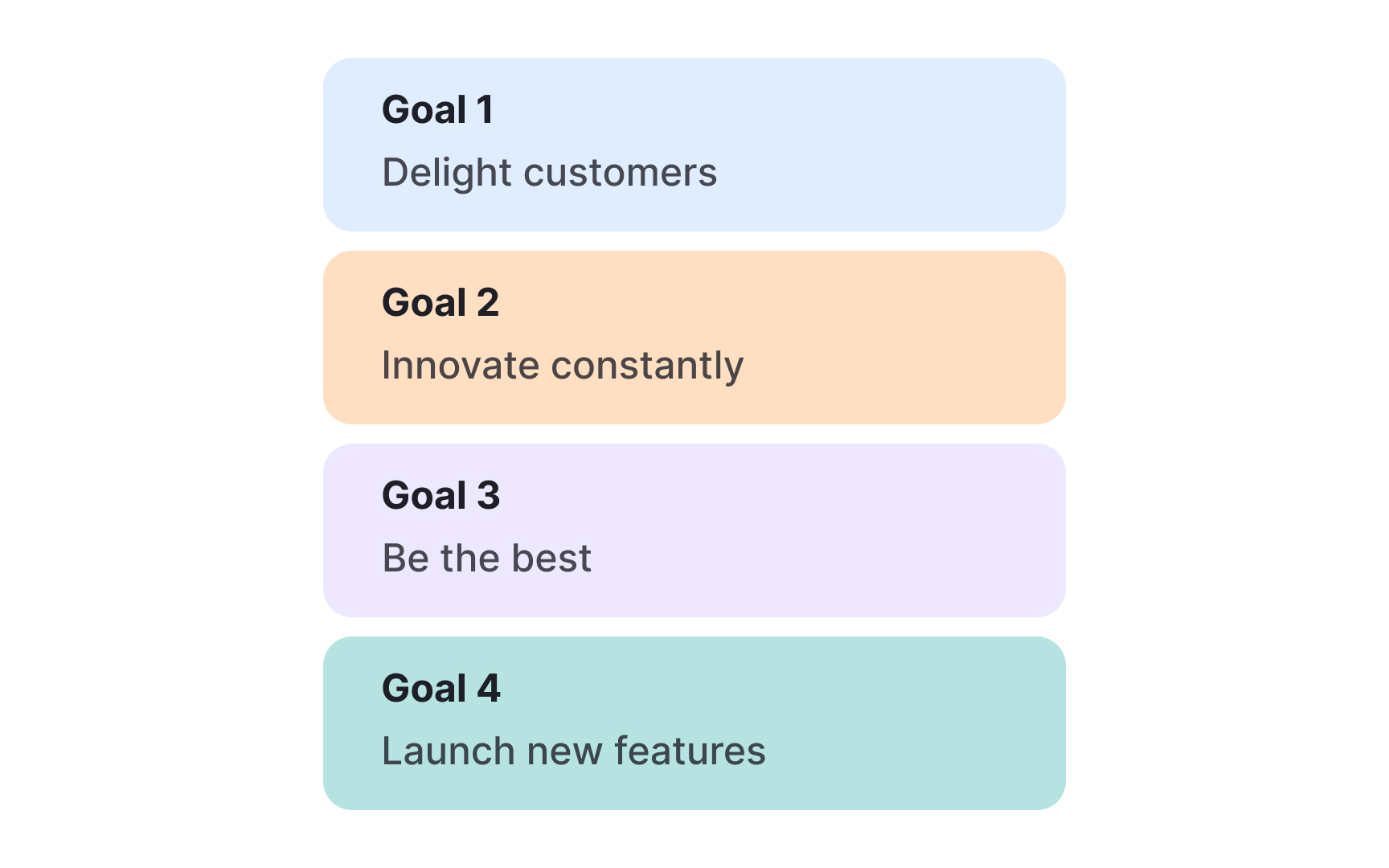
Product strategy is often confused with adjacent documents and concepts. It's not a vision statement, which describes an aspirational future without explaining how to achieve it. Strategy requires making hard choices about focus areas, while vision intentionally stays broad and inspirational. Similarly, strategy differs from a roadmap, which details specific features and timelines for execution.
Strategy is also not a list of goals or objectives. Goals define success metrics but don't explain the approach for achieving them. A target to "increase user engagement by 30%" is a goal, not a strategy. The strategy would explain which user segments you'll target and what unique
Many teams mistake tactics for strategy. Launching a mobile app, implementing AI features, or expanding to new geographies are tactical moves. Strategy explains why these moves matter and how they connect to competitive advantage. Strategy provides the reasoning that makes tactics coherent rather than random.
Organizations create multiple strategic documents that serve different purposes and operate at different levels. Company strategy defines overall business direction, including which markets to enter, acquisition targets, and revenue models. Product strategy sits underneath, translating business strategy into specific product approach. A company might pursue a growth strategy while individual products execute different strategies to support that growth.
Business model describes how the company captures value, including pricing, distribution channels, and cost structure. Product strategy must align with the business model but focuses specifically on product positioning and capabilities. Marketing strategy defines how to communicate value and acquire customers, while product strategy defines what value to create and for whom.
Go-to-market strategy outlines how products reach customers, including sales channels, pricing tiers, and launch plans. Product strategy informs go-to-market decisions but addresses different questions about product-market fit and differentiation. These documents should reinforce each other, with product strategy serving as the bridge between high-level business objectives and tactical execution plans.
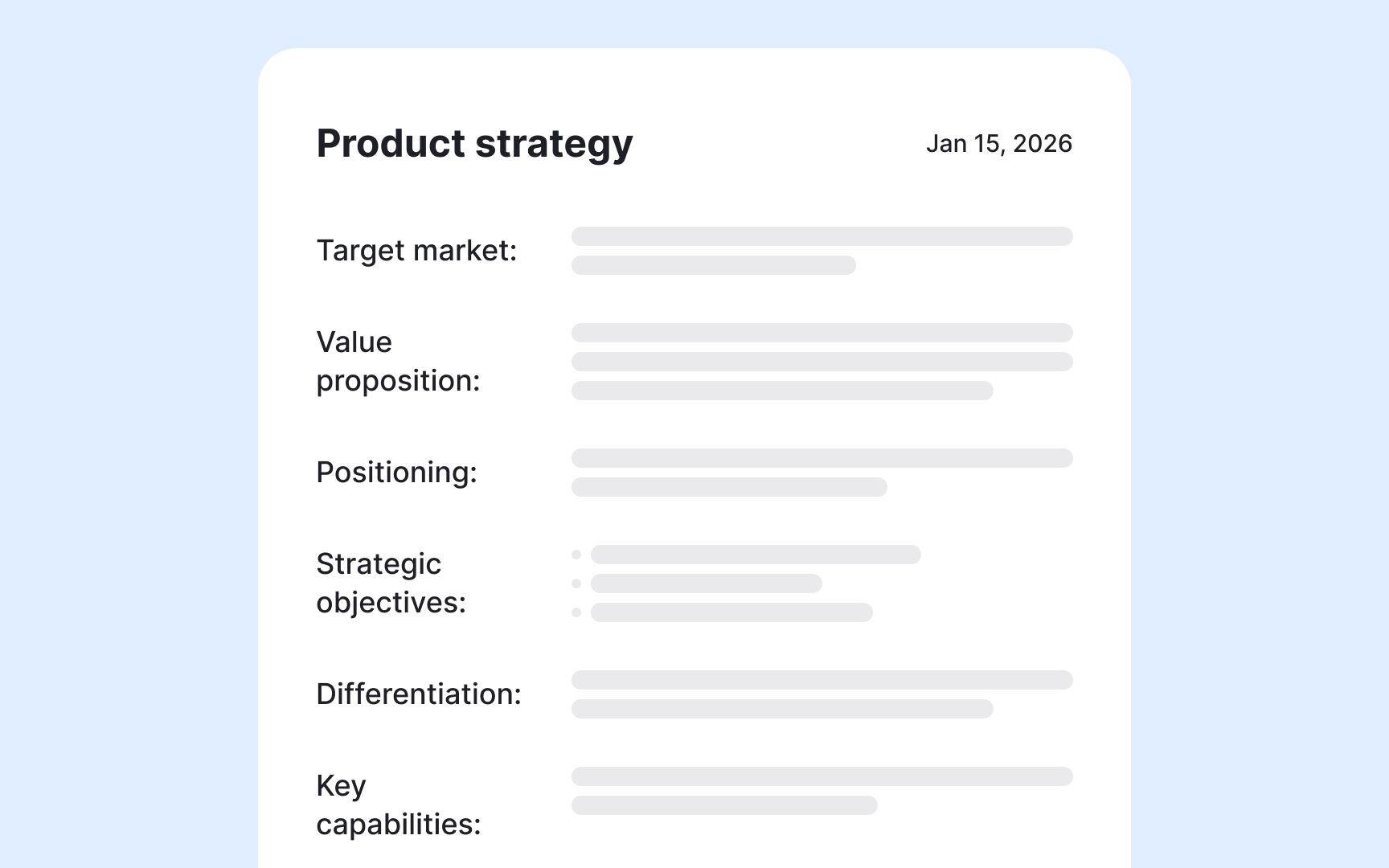
Product strategy typically includes several core components:
- Target market definition identifies which customer segments you'll serve, often including demographic, psychographic, and behavioral characteristics. This component requires choosing who not to serve, creating focus that enables deeper value creation for chosen segments.
Value proposition articulates the specific benefits customers receive and why they'd choose your product over alternatives. This goes beyond feature lists to explain the outcomes and experiences you deliver.- Positioning statement captures how you want customers to perceive your product relative to competitive alternatives.
- Strategic objectives define measurable outcomes you're pursuing, often including market share,
revenue , or user engagement targets. - Differentiation strategy explains your competitive advantage and how you'll defend it over time.
- Some strategies include key capabilities you need to build or acquire and major strategic initiatives that will drive progress.
Together, these components create a coherent picture of product direction.
Effective strategy requires making explicit trade-offs about where to focus limited resources. Every choice to pursue one direction is implicitly a choice not to pursue others. Strong strategies articulate both what you will do and what you will not do, creating clarity that guides daily decisions. Refusing to make choices results in diffused efforts that fail to create competitive advantage.
Strategic choices operate at multiple levels. Market choices determine which customer segments and geographic regions to prioritize. Product choices define which problems to solve and which adjacent opportunities to ignore. Capability choices identify which competencies to build internally versus partner for or acquire. Each choice should connect to your differentiation strategy.
The most difficult strategic choices involve saying no to good opportunities that don't align with your core strategy. A successful enterprise software company might choose not to pursue consumer markets despite large potential. A mobile-first product might choose not to build web versions despite customer requests. These deliberate constraints create focus that enables excellence in chosen areas rather than mediocrity across many.
Product strategy ownership varies by organization size and structure, but typically falls to product leadership. In smaller companies, founders or CEO often own strategy, working closely with product leads to define direction. As organizations scale, Chief Product Officers or VPs of Product typically own strategy while collaborating with executive team on alignment with business objectives.
For individual product lines within larger portfolios, product directors or senior product managers usually own strategy for their domain. However, ownership doesn't mean working in isolation. Effective strategy development requires input from engineering on feasibility, design on user needs,
The strategy owner is accountable for creating, communicating, and maintaining the strategic direction. They ensure the strategy evolves based on market feedback and changing conditions. They also resolve conflicts when tactical decisions don't align with strategic direction. Clear ownership prevents strategy from becoming a committee document that tries to satisfy everyone but provides little actual guidance.
New products need strategy defined early, ideally before significant development begins. Strategy should exist before building your first MVP to ensure you're solving the right problem for the right audience. However, very early-stage startups often iterate on product-market fit before solidifying long-term strategy. The key is having enough strategic clarity to make consistent decisions even while learning.
Established products need strategy refresh when entering new markets, facing new competitors, or experiencing significant market shifts. Major pivots require rethinking strategy from the ground up. Product acquisitions or mergers also necessitate strategic redefinition to integrate into the broader product portfolio.
Signs you need to define or redefine strategy include: teams disagreeing on priorities, saying yes to conflicting opportunities, or lacking clear differentiation from competitors. If customer feedback pulls you in multiple directions without clear decision criteria, you likely need stronger strategic foundation. Strategy should precede major resource commitments and guide them rather than justify them after the fact.
Many organizations copy competitor strategies without understanding their own unique strengths and market position. What works for a market leader often fails for challengers who need different approaches. Some teams also create overly complex strategies that are impossible to remember or communicate, reducing their practical value for guiding decisions.
Another mistake is treating strategy as a one-time exercise rather than a living document. Markets evolve, competitors adapt, and customer needs shift. Strategy must evolve too, but many organizations write strategy documents that gather dust. Finally, some teams avoid making hard choices, creating strategies that say yes to everything. This diffuses focus and prevents building meaningful competitive advantage in any area.



Similar lessons

Continuous Discovery Mindset

Business Outcomes vs. Product Outcomes