Storyboard vision approach
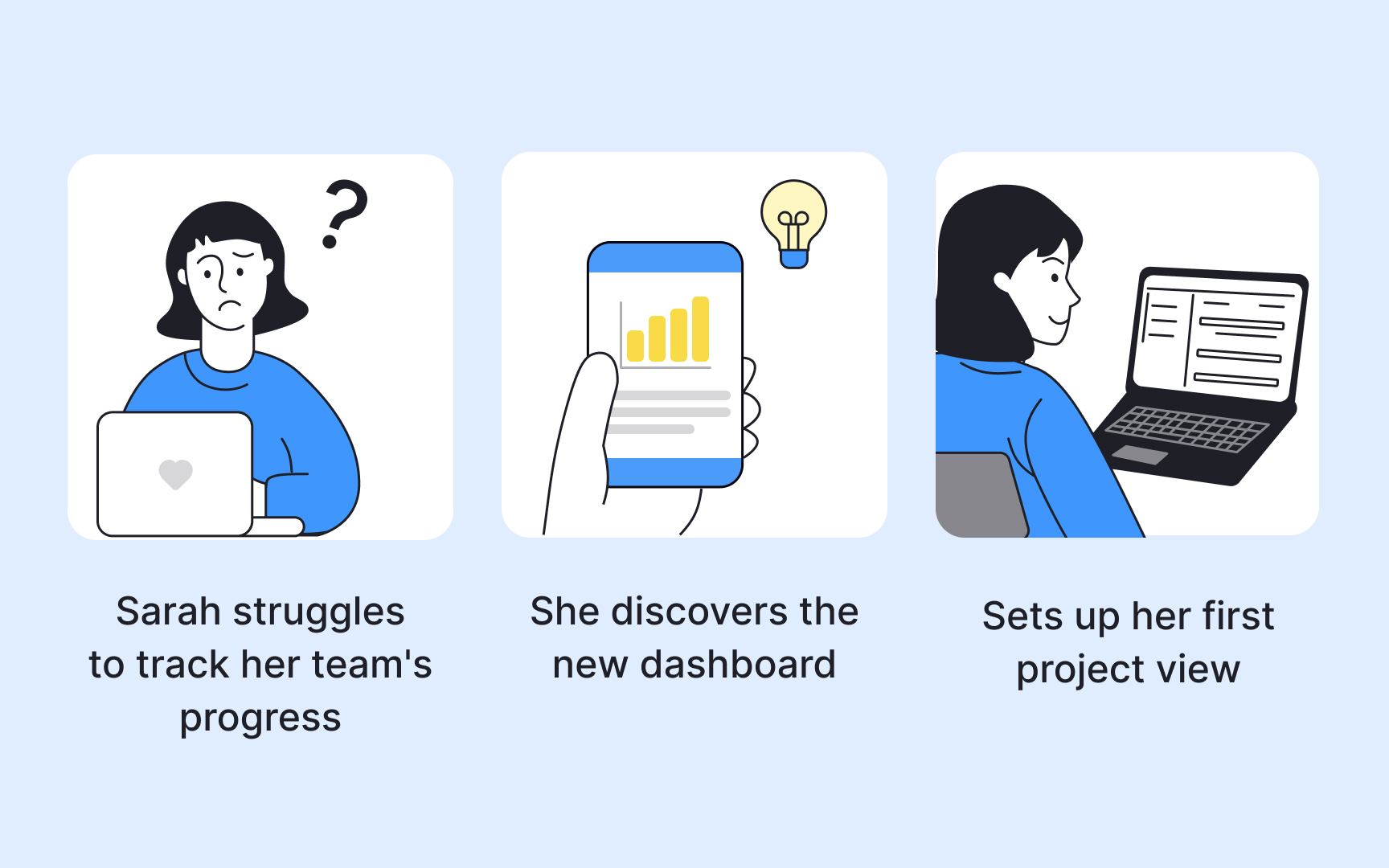
Storyboards visualize vision through sequential illustrations that show how users will experience your product's future. Storyboarding forces you to think concretely about user context, emotions, and interactions. Unlike written descriptions, storyboards make vision tangible by depicting real scenarios frame by frame.
Creating storyboards starts with identifying your protagonist and their situation that leads to using your product. Map the journey through key moments — problem recognition, discovery, first use, transformation. Each frame should advance the narrative and reveal something about the envisioned experience. Include environmental details, facial expressions, and key interface elements, but avoid overwhelming detail. The goal is communication, not artistic perfection.
Storyboards excel at revealing gaps in vision logic. When you try to illustrate how someone moves from problem to solution, missing steps become obvious. They also facilitate team discussion because everyone can point to specific frames and suggest improvements. Use rough sketches for internal iteration, then create higher fidelity versions for stakeholder presentations. Tools range from paper and pencil to digital drawing apps. Today, teams can also use AI tools to create visuals, either by making single images for each frame or by using AI storyboard tools that build full sequences. Choose the right tool based on your timeline and audience.