Translating user pain points into product promises
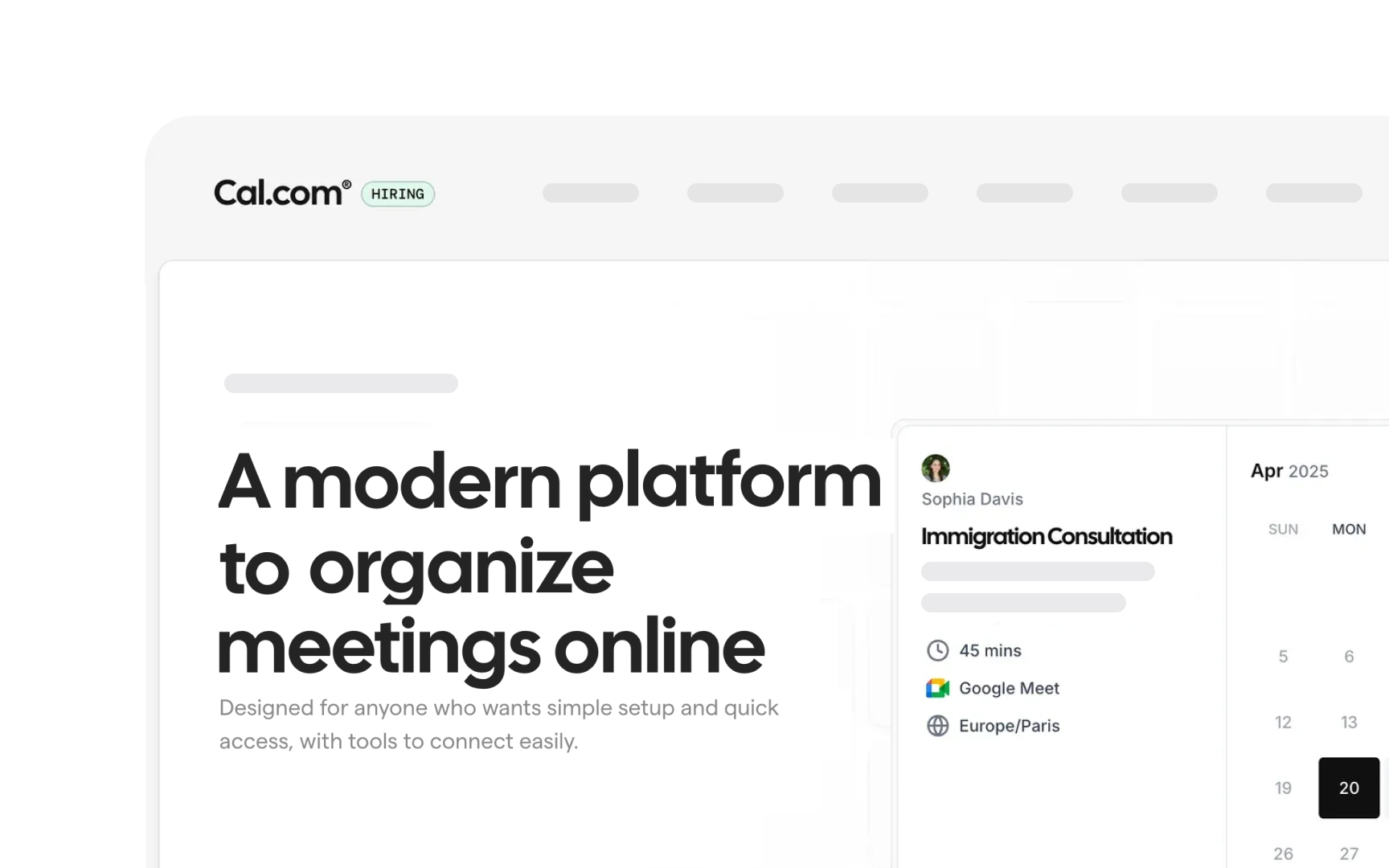
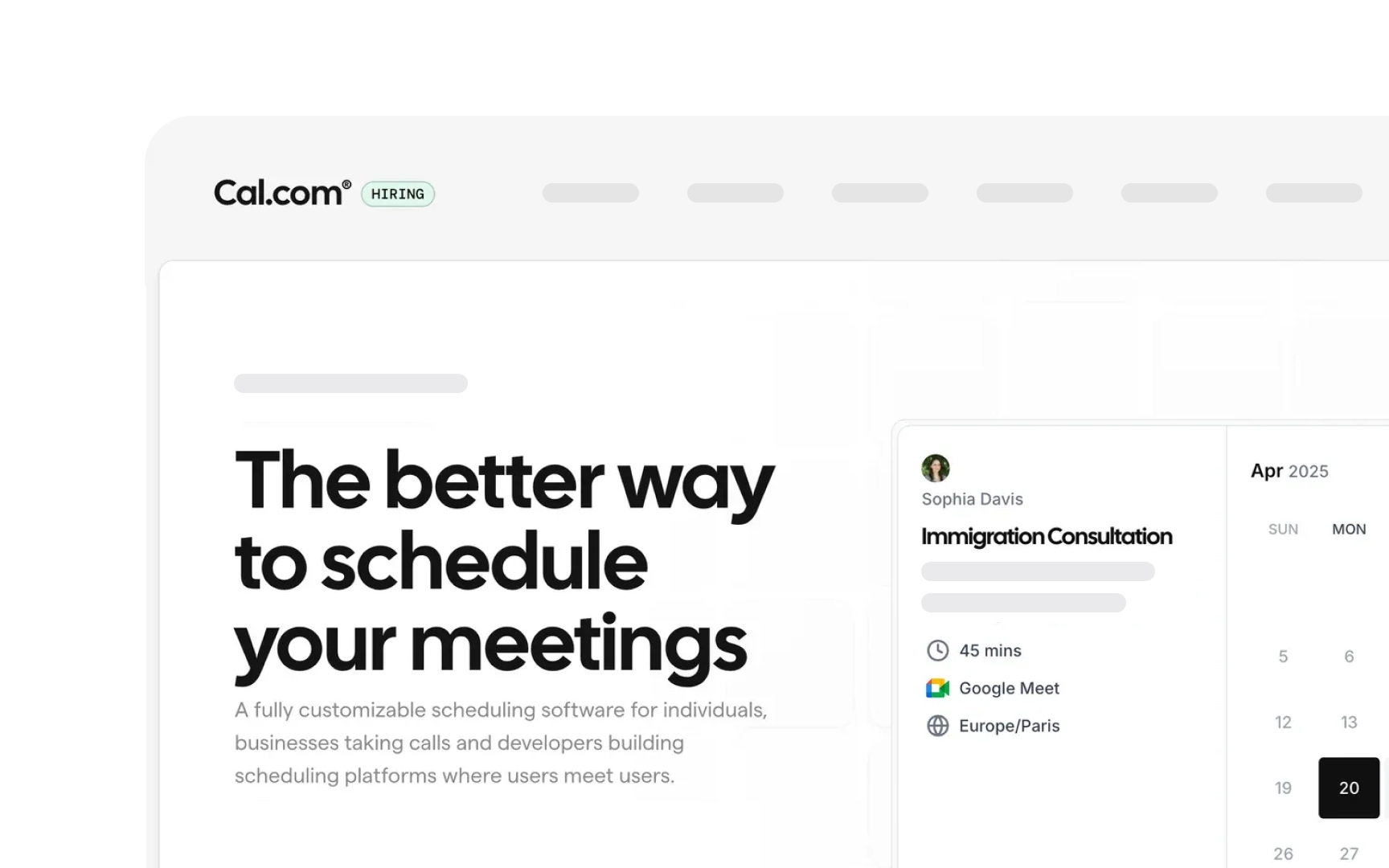
A strong value proposition starts by identifying the pain points users face and then turning those into promises the product can deliver. Pain points may be inefficiencies, frustrations, or unmet needs that regularly disrupt workflows. By addressing them, a product shows clear relevance.
For example, scheduling meetings across teams often creates confusion and wasted time because people use different calendars, time zones, and tools, leading to endless back-and-forth messages. Cal.com translates this pain into a promise by positioning itself as a customizable scheduling platform that makes coordination easier for individuals, businesses, and developers. The benefit is not just another tool but a better, more flexible way to manage appointments.
Teams take the captured user pain points they gathered in the Discovery and Validation phase and then create a table with 2 columns: one for the specific pain and one for the product’s promise in response. This structured translation ensures that the value proposition is not abstract but directly linked to the problems users most want solved.
Pro Tip: Ask users to rank their top 3 pains and solve the one that appears most often first.