The logic of MoSCoW categories
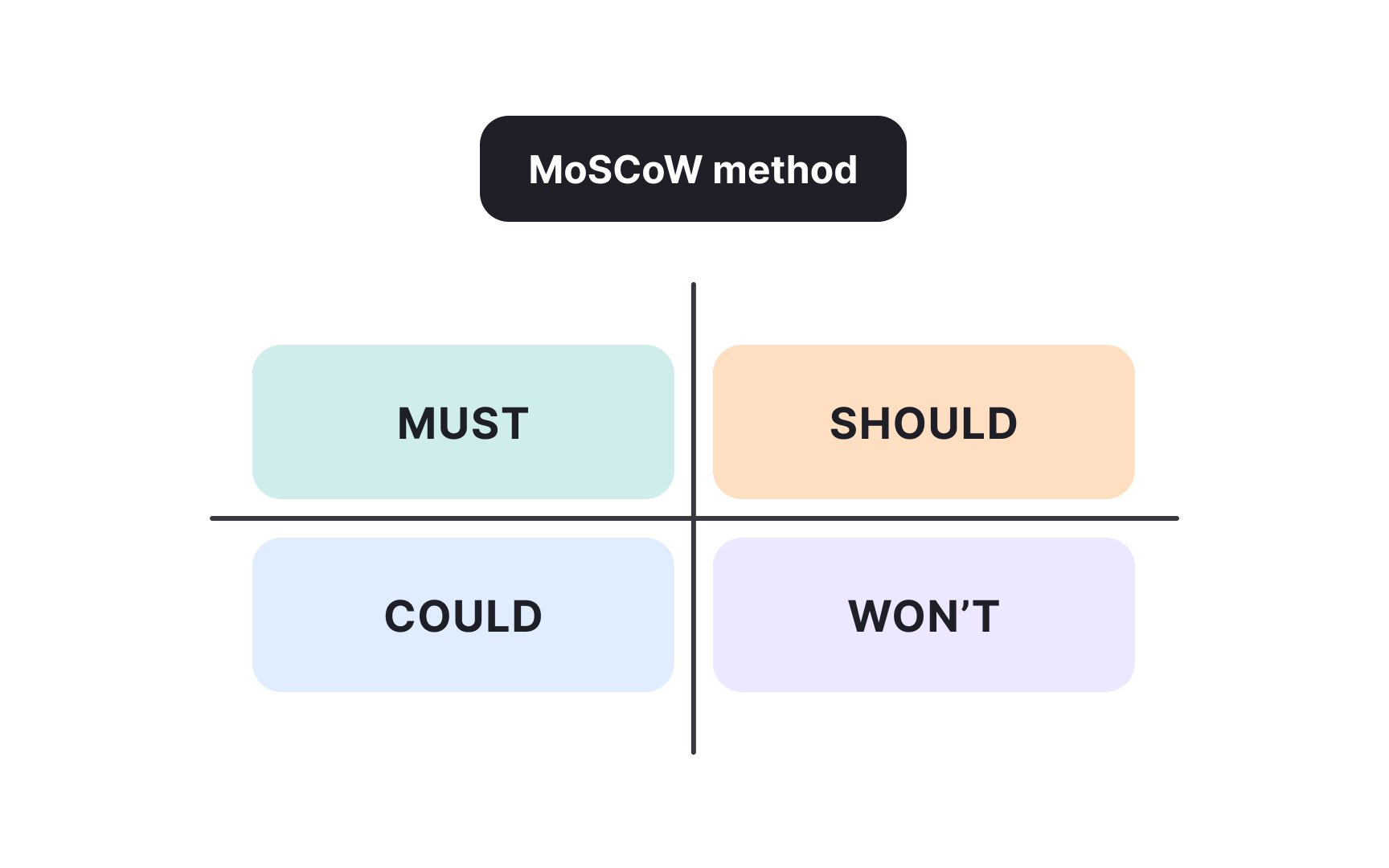
The MoSCoW method organizes requirements into 4 groups that help teams separate essentials from nice-to-haves:
- Must Have items are critical and define the foundation of the project. Without them, the product cannot succeed or even function.
- Should Have items are important but not indispensable. They may improve usability or efficiency, yet the release can move forward without them.
- Could Have items are optional additions. They might enhance user experience or create small advantages, but their absence will not damage the outcome.
- Won’t Have items are those explicitly excluded from the current scope, either because they are not feasible now or do not align with current objectives.
This clear categorization helps teams deal with limited time and resources. It forces alignment around what is truly necessary while still recognizing future possibilities. Another benefit is expectation management. By listing what will not be delivered, teams avoid misunderstandings with stakeholders.
The model’s simplicity, however, means it does not rank priorities within each category, which sometimes leads to further negotiation. Still, its ability to make scope explicit makes it a useful framework in projects where clarity and speed of decision-making are essential.[1]