Kano model and customer delight
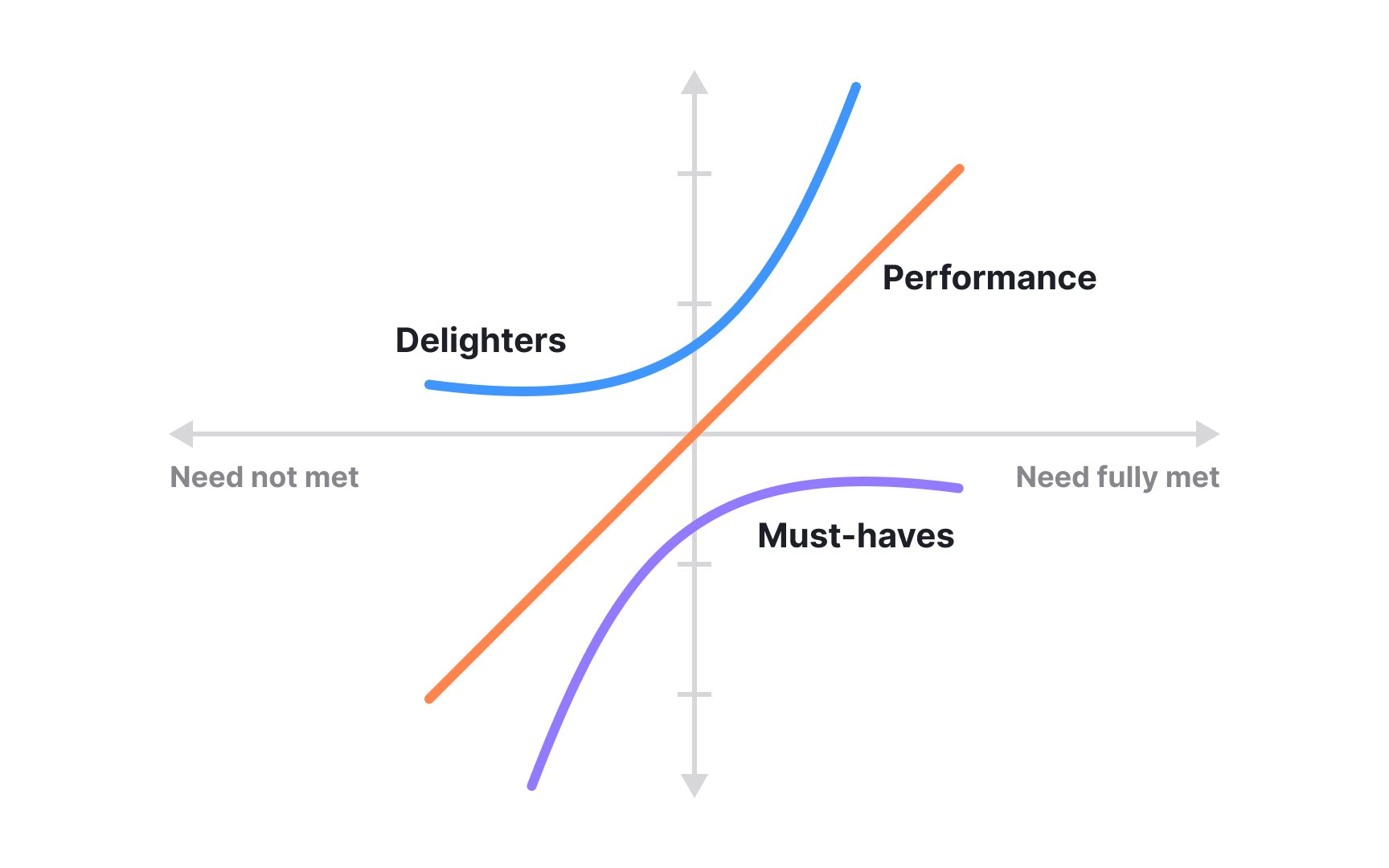
The Kano Model introduces a perspective focused on customer satisfaction. It divides features into 3 main types:
- Basic features (must-haves) are expected by users and, if absent, cause frustration. For example, in a messaging app, the ability to send text messages is a basic expectation.
- Performance features directly influence satisfaction in proportion to how well they are delivered. Faster load times or clearer video quality usually fit into this group.
- Delighters are unexpected extras that surprise users and create strong positive reactions, such as playful animations or creative personalization options.
Understanding this distinction prevents teams from overinvesting in features that add little perceived value while neglecting essentials. It also highlights the power of delight. A small but thoughtful addition can create lasting goodwill, even though its absence would not cause complaints. The challenge is that Kano analysis requires structured research, often through surveys that measure user reactions with and without certain features. Although time-intensive, this approach grounds prioritization in what customers actually value rather than what teams assume.