Communicating trade-offs
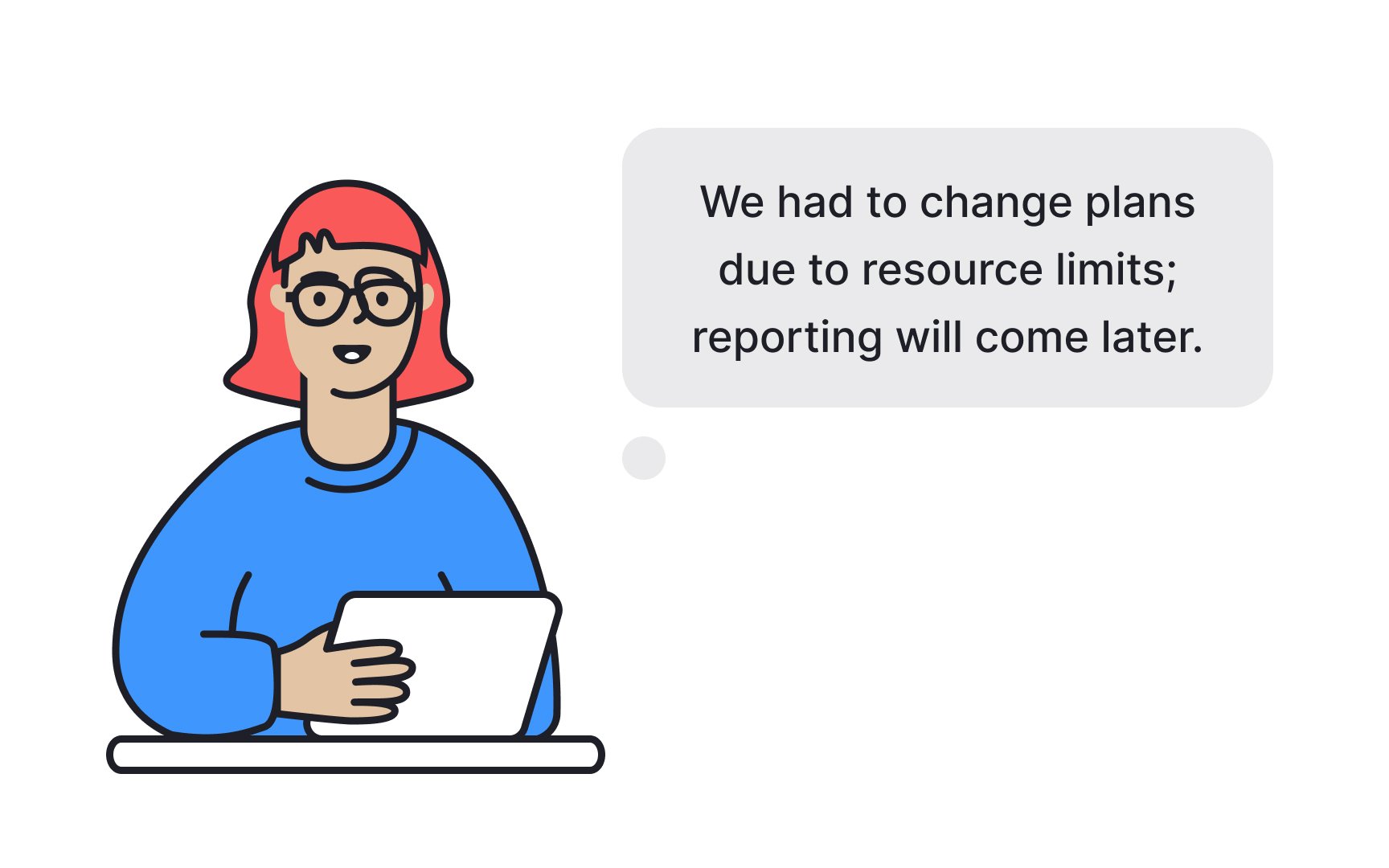

Prioritization always involves trade-offs. Saying “yes” to one initiative means saying “not now” to another. Communicating these trade-offs openly prevents confusion and frustration. For instance, if a team chooses to improve onboarding instead of building advanced reporting, stakeholders should understand why. Clear reasoning could be that better onboarding increases activation rates across the customer base, while reporting helps only a subset of existing users. Framing the decision this way shows that the trade-off supports broader product goals.
When trade-offs are left unexplained, stakeholders often assume decisions are political or arbitrary. This erodes trust and invites repeated challenges. Transparency changes the conversation: people may not get the feature they want immediately, but they see how the choice advances agreed objectives. Communicating trade-offs also highlights the cost of changing priorities. Adding a feature for one large customer may delay roadmap items that improve the product for thousands. Making this impact explicit strengthens alignment and reduces conflict.