Differentiating outputs from outcomes
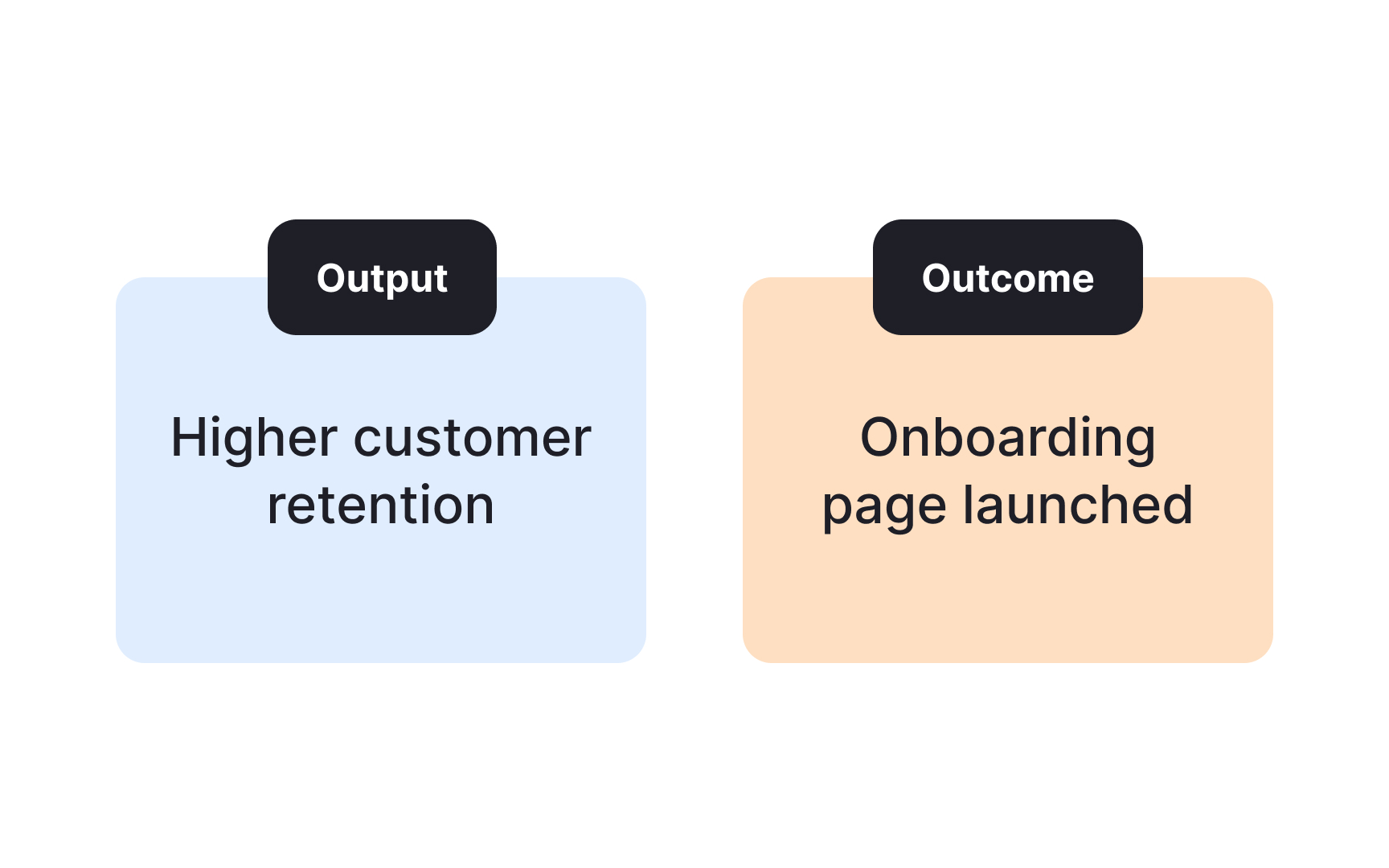
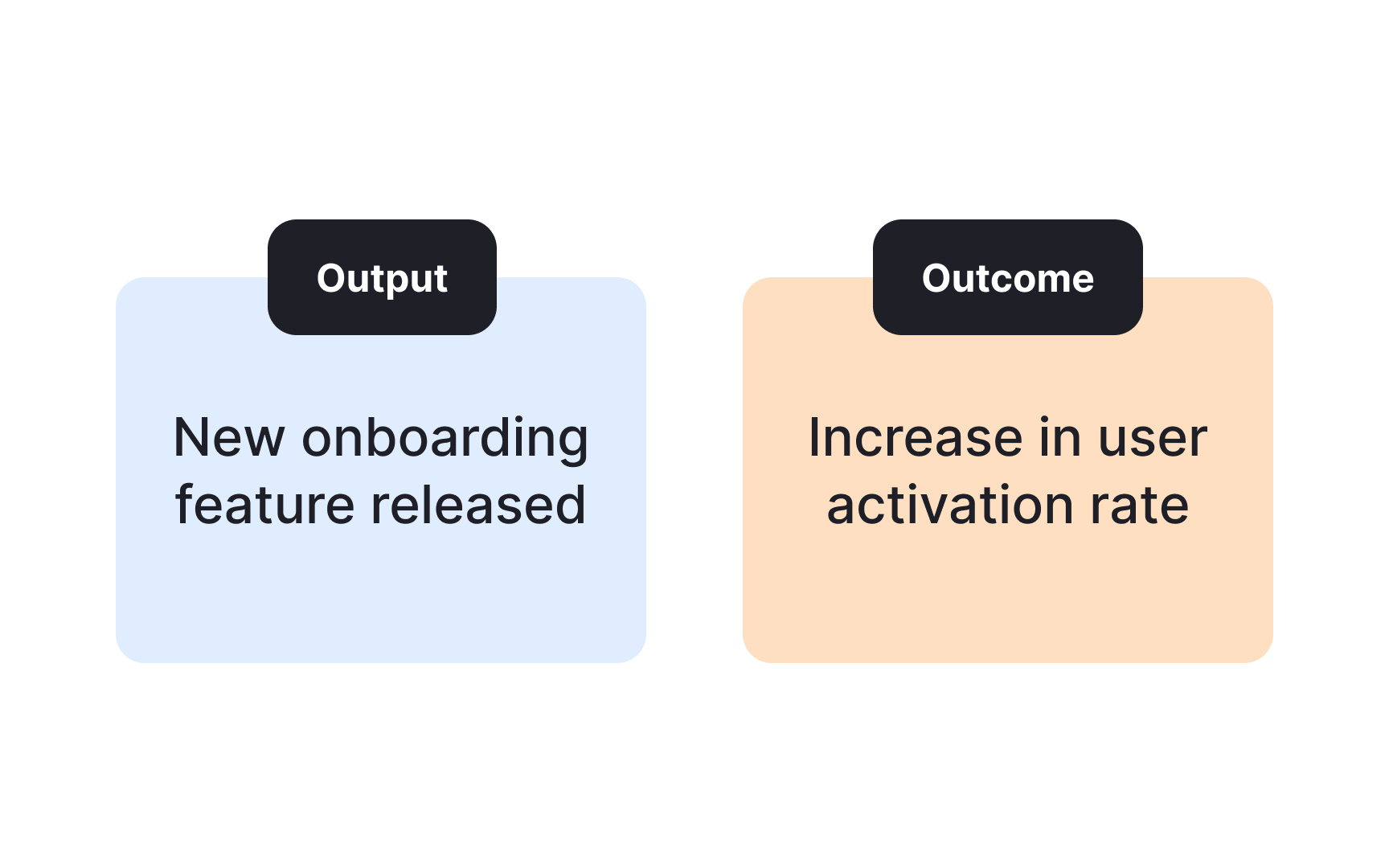
Outputs describe what a team delivers, such as a new feature or a design update. They are tangible results of development work, but they do not guarantee value. A feature released on time may still fail to solve a real user problem or support business goals. Measuring only outputs risks equating activity with success.
Outcomes, by contrast, focus on the effect that product changes have on user behavior or business performance. They answer questions such as whether churn decreased, engagement increased, or conversion improved. In this way, outcomes reveal whether the outputs created meaningful impact. Continuous discovery supports this focus by keeping product decisions connected to evolving customer needs.
Outcome-based roadmaps make this distinction explicit. Instead of mapping features on a timeline, they describe the goals the product should achieve, such as increasing retention or reducing support calls. Features are then considered only if they contribute to these goals.
Pro Tip: When planning, ask “what will this change achieve?” instead of only “what will we deliver?”