How KPIs complement OKRs
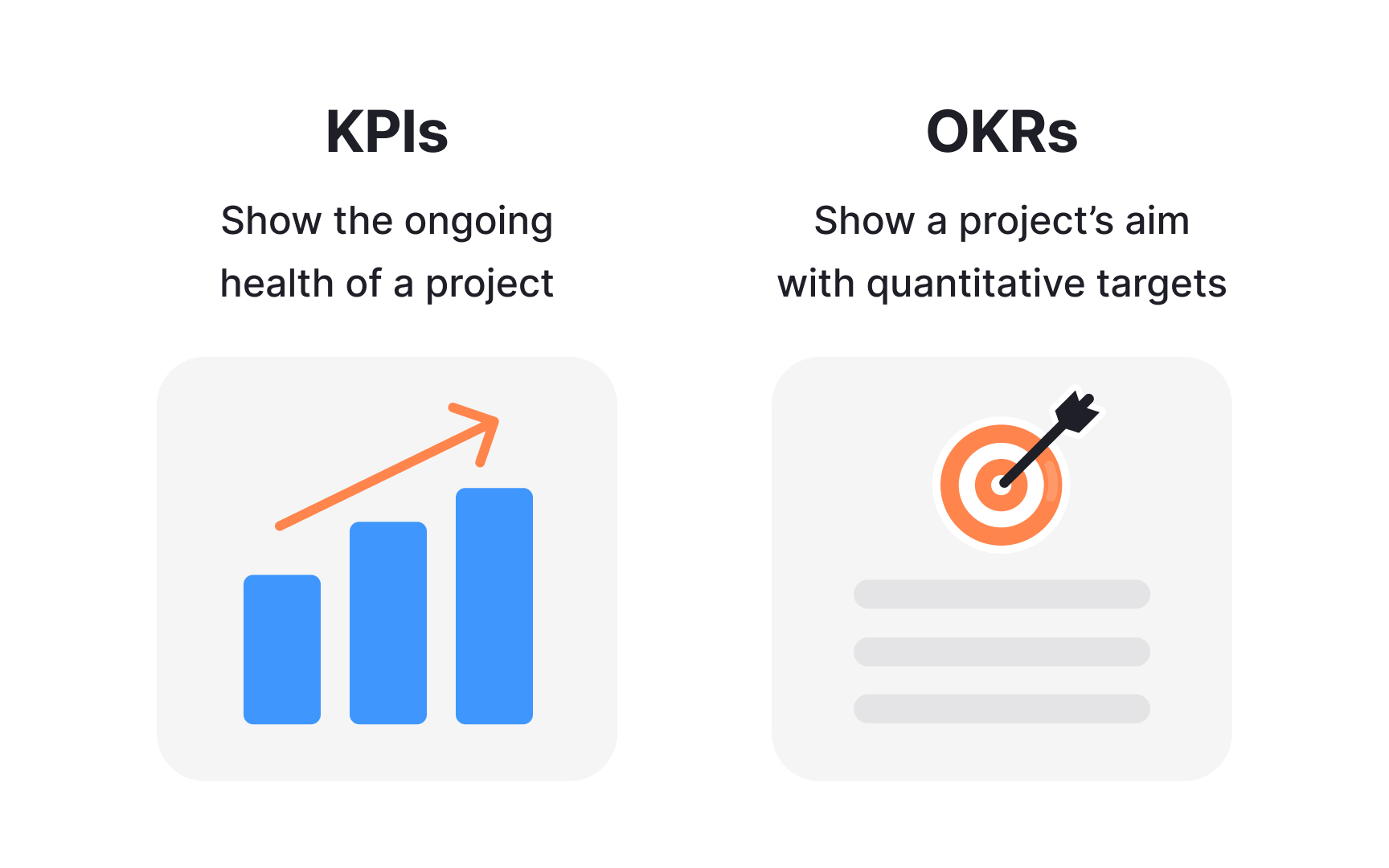
Key Performance Indicators (KPIs) are the metrics that show the ongoing health of a product or business. They act like vital signs, tracking areas such as churn rate, active users, or revenue per customer. Unlike OKRs, which are tied to specific short-term goals, KPIs remain constant signals that teams monitor over time. They help ensure the business is stable while other objectives are being pursued.
KPIs can also serve as Key Results within OKRs when linked to a particular outcome. For instance, a KPI such as session duration might become a Key Result if the objective is to boost engagement with new content. This makes KPIs and OKRs complementary rather than competing tools. KPIs provide continuity and reveal trends, while OKRs give direction for targeted change. Together, they allow teams to balance long-term health with short-term ambition and connect roadmap initiatives to meaningful results.[1]