Distinguishing leading and lagging indicators in a case study
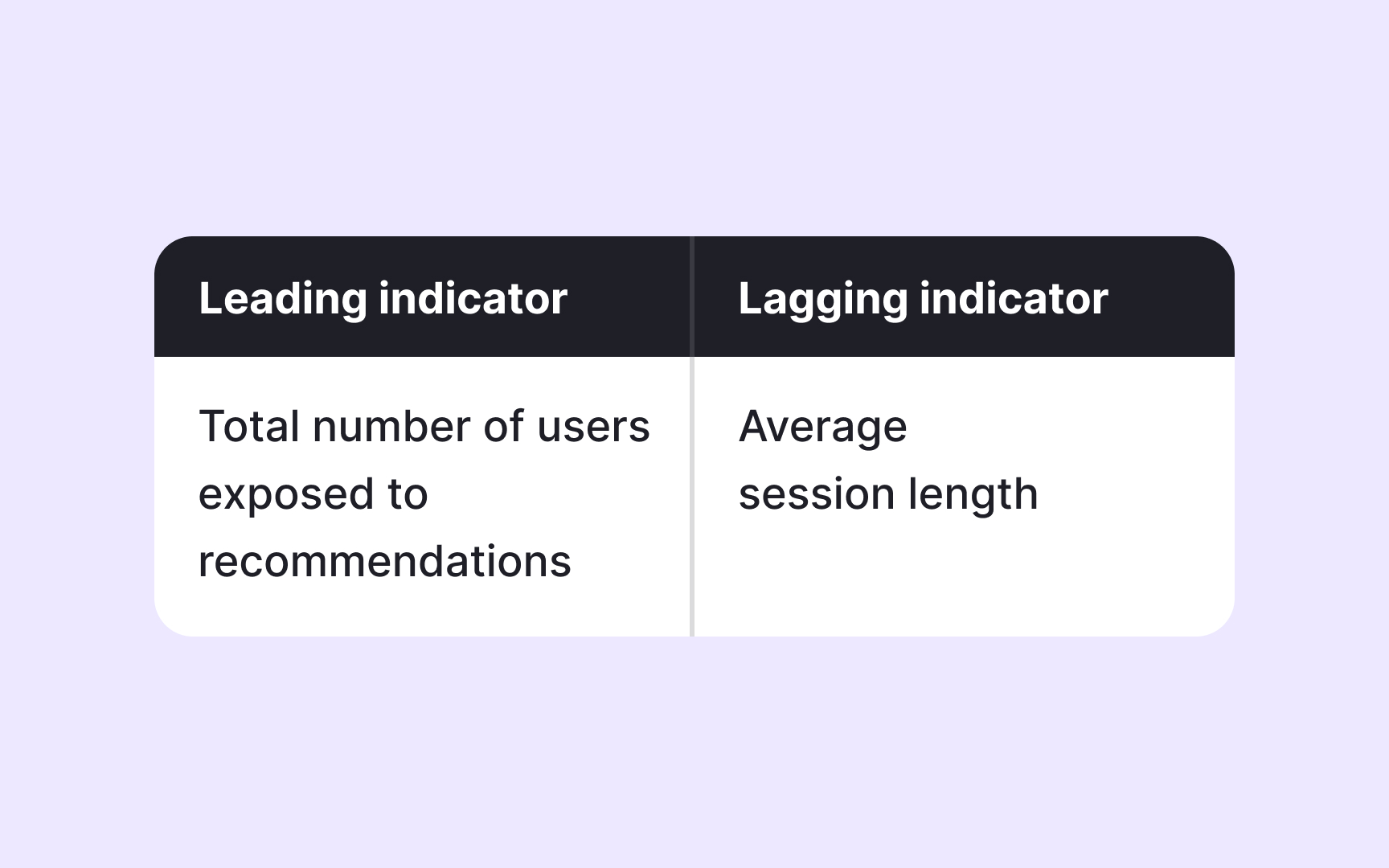
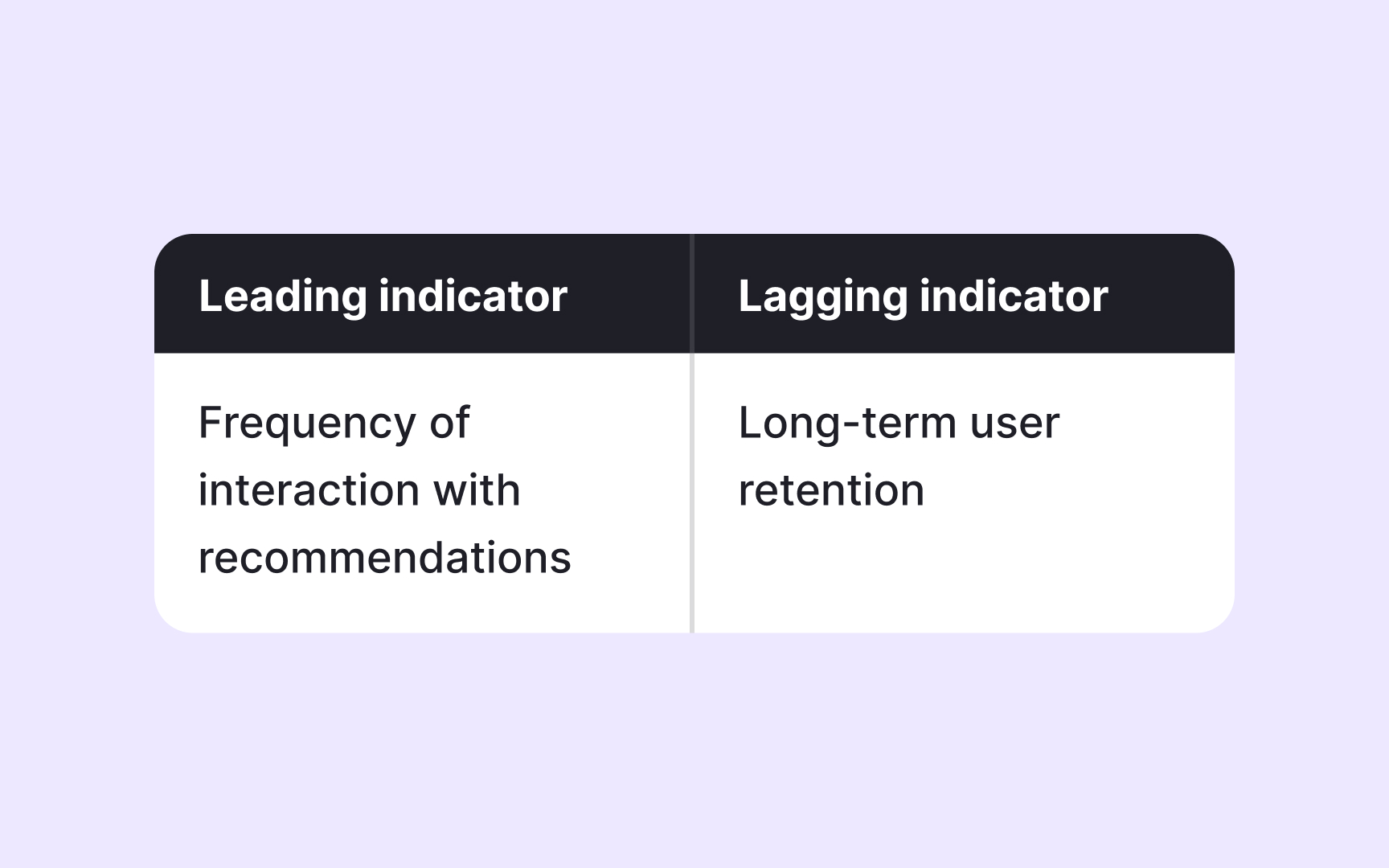
Not all metrics tell a story at the same moment. Some reflect what has already happened, while others hint at what is likely to happen next. Understanding this difference is essential in case studies, where decisions are often made before final results are visible.
Lagging indicators capture outcomes after the fact. Revenue, churn, or retention rates confirm whether a goal was reached, but they arrive too late to shape day-to-day decisions. They work well for evaluating long-term impact, but they rarely explain how a team adjusted its approach along the way.
Leading indicators appear earlier in the product journey. Engagement with a key feature, completion of an onboarding step, or repeated usage can signal whether a solution is moving in the right direction. In case studies, leading indicators help explain why a team felt confident continuing or changing course before lagging indicators caught up. Showing both types and knowing their roles adds depth to the reasoning
Pro Tip: If a metric only confirms success after launch, pair it with a signal that appears earlier.