Iterative experimentation
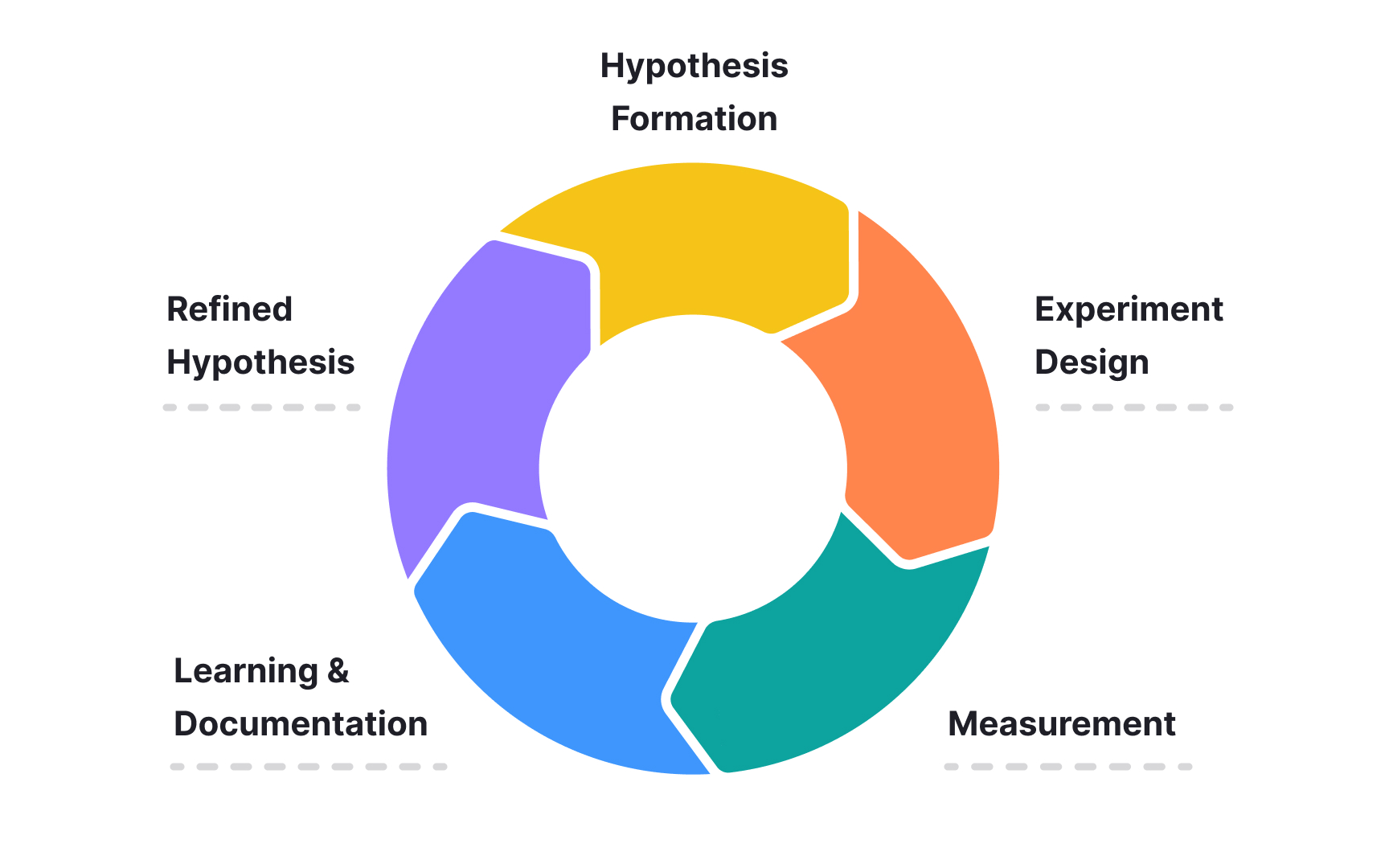
Iterative experimentation frameworks transform isolated tests into cohesive learning cycles that build upon each other. Unlike one-off experiments, iterative approaches use learnings from each experiment to inform subsequent hypotheses, creating a continuous feedback loop that drives progressive improvement. This systematic method helps teams converge on optimal solutions faster than traditional A/B testing alone.
A well-designed iterative framework follows a consistent process: formulating specific hypotheses, designing experiments to test them, measuring results using predetermined metrics, and documenting insights regardless of outcome. By maintaining this structured approach, teams can build an evidence library that reduces repeated mistakes and accelerates discovery of effective patterns. This documentation is especially valuable when team members change or when revisiting problem spaces months or years later.
The most effective iterative frameworks balance exploration and exploitation. Exploration experiments test novel ideas with high potential but uncertain outcomes, while exploitation experiments refine and optimize proven concepts. Maintaining this balance helps teams explore new approaches even after finding initial success.