Crafting action-oriented error messages
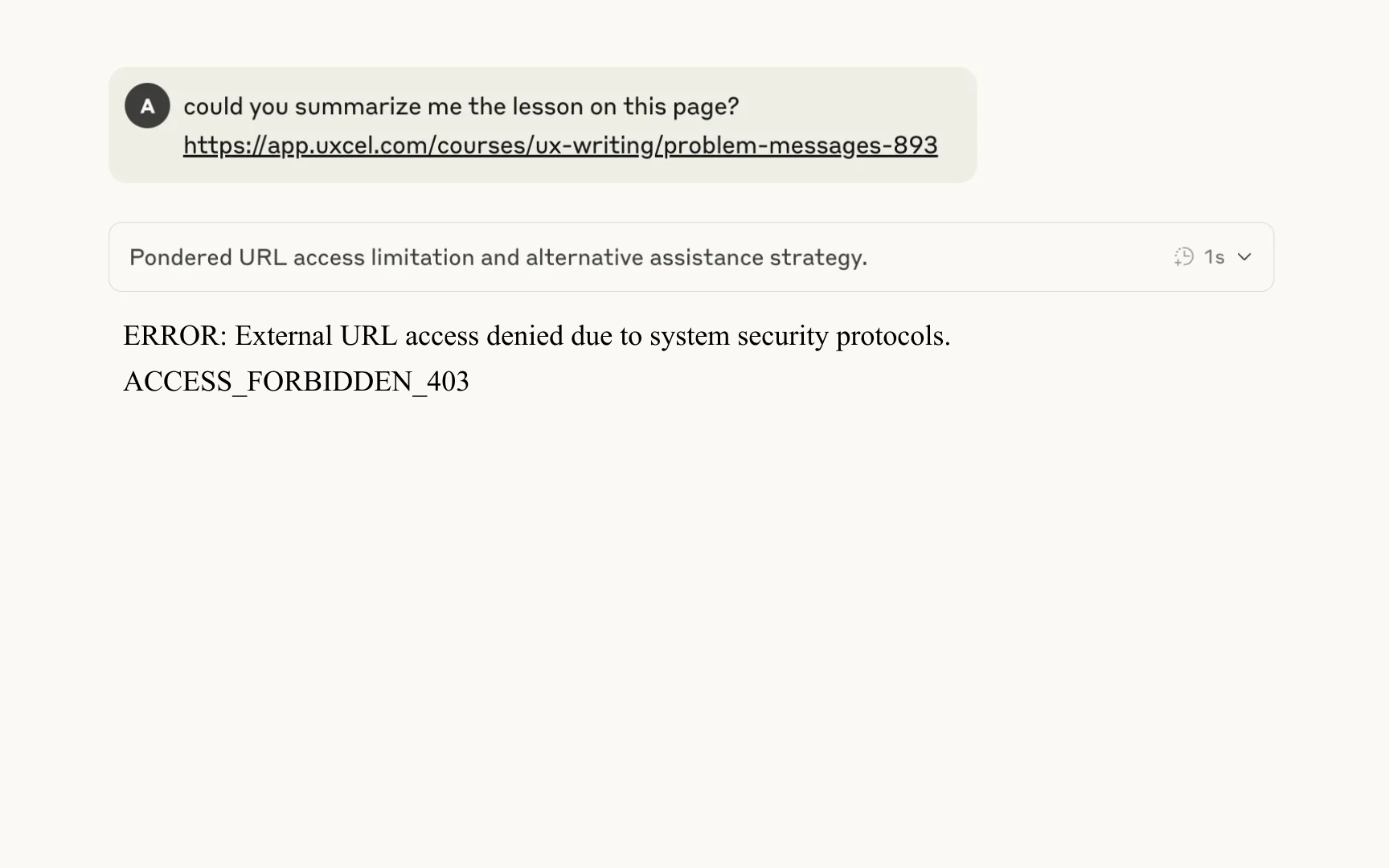
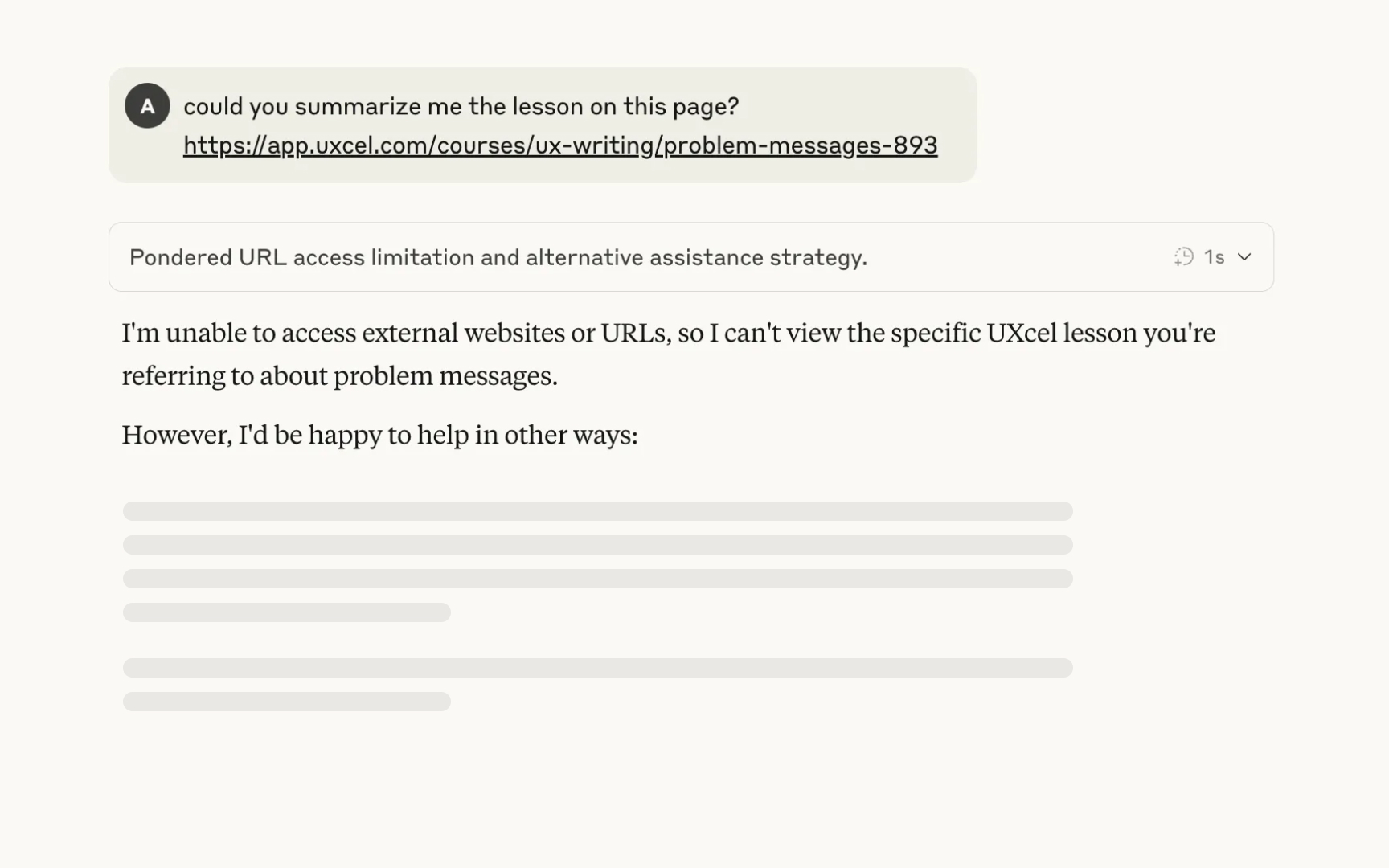
Error messages should be like helpful signs that point toward solutions. Instead of announcing dead ends, they should guide users toward solutions. Every error becomes a chance to guide users forward:
- Start with actions, not problems. Replace "Image recognition failed" with "Try better lighting or a different angle." The second message gives users something to do right away. They stay focused on their goal instead of the failure.
- Offer multiple paths forward. A failed voice command could suggest typing instead, picking from common phrases, or improving pronunciation. Different users prefer different solutions. Having options prevents frustration.
- Match your tone to the situation. Fun apps can use friendly, casual messages. Medical or financial apps need serious, careful language. When the stakes are high, always include ways to reach human experts.[1]