Step 1: Identify the target audience and the problem
Creating effective mobile wireframes starts with clarity about who you're designing for and what problem you're solving. Without this foundation, even beautifully structured layouts can miss the mark entirely.
Before sketching anything, answer these core questions:
- Who will be using this feature?
- What's the users' goal? What problem does this feature solve for them?
- What actions are users most likely to perform?
- What context will they be in when using the app (commuting, at home, multitasking)?[1]
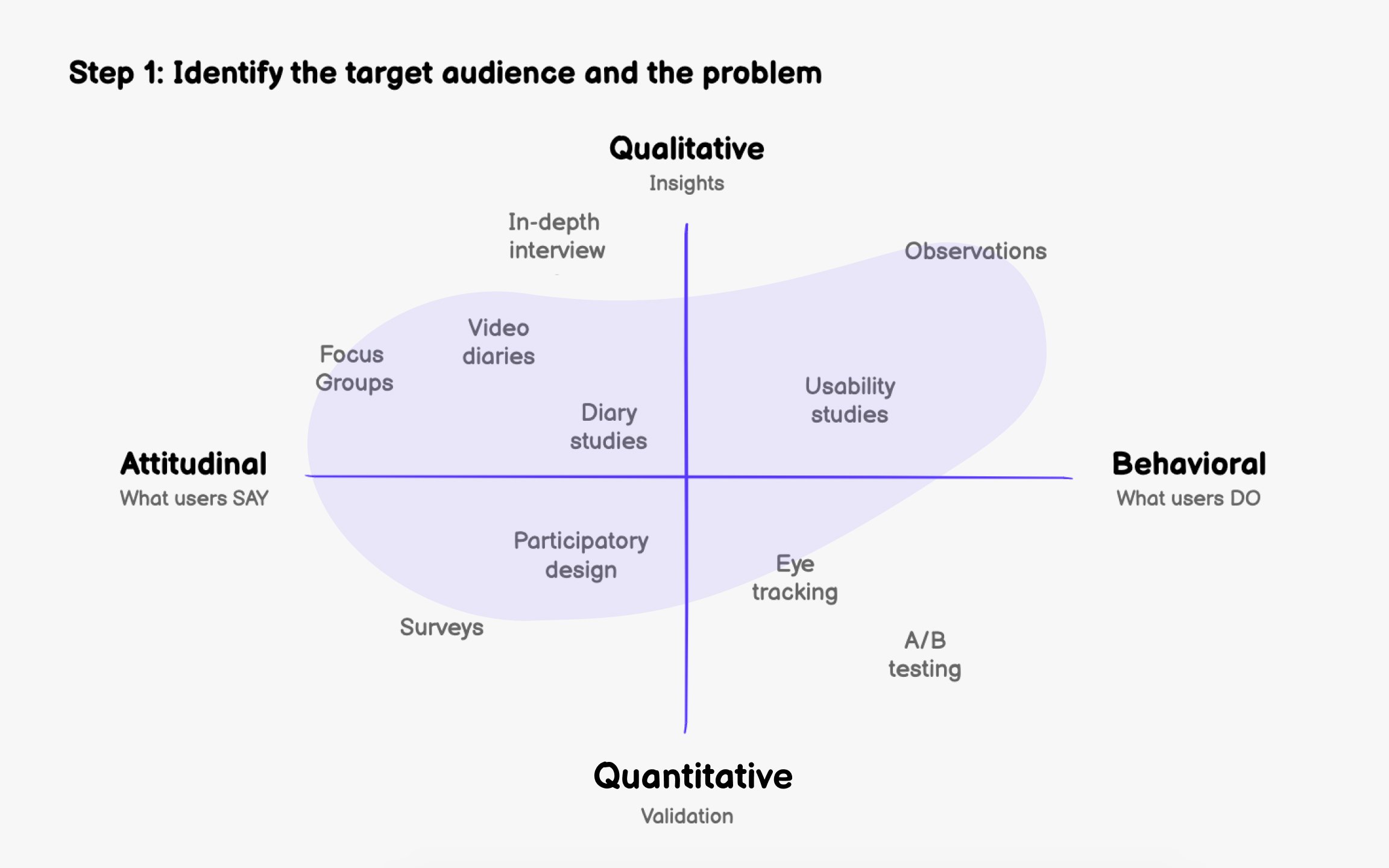
If you can't answer these confidently, you need more research. Common methods include user interviews, surveys, contextual inquiry, and analyzing competitor apps. Tools like Hotjar or FullStory can reveal how users currently behave in similar products, while platforms like Maze help gather feedback at scale.
Modern research also means understanding device preferences. Check your analytics to see which screen sizes dominate your user base, as this shapes your wireframe dimensions from the start.