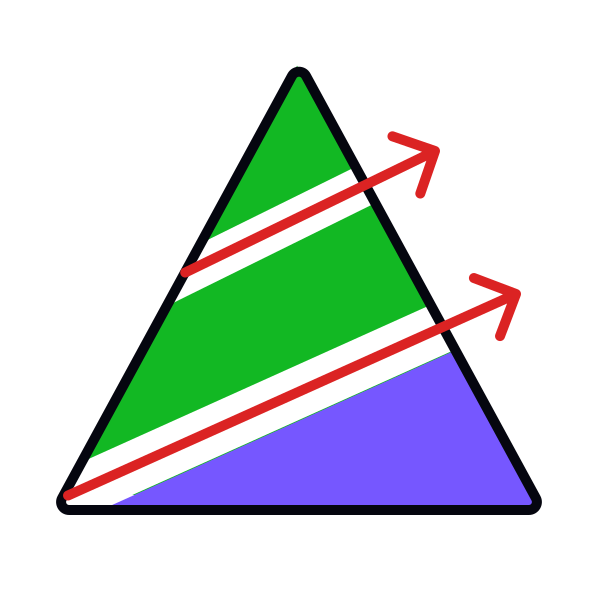
Eye movement
When studying an object, particularly one that’s very visual and not heavy on text, our eye movement follows a certain pattern. Usually, we start in the upper-left corner, slide across to the upper-right, and then pass through the center to the lower-left corner (generally referred to as a Z-pattern).[1] After that, the gaze becomes less focused and repeats the same trajectory, moving more chaotically and discerning more details each time.
Knowing this likely pattern allows designers to place the most important parts of a design along this path, making them more likely to be seen. Of course, in regions where the writing system is right-to-left, mirror this eye movement pattern for the same results.
References
- Visual Hierarchy: Organizing content to follow natural eye movement patterns | The Interaction Design Foundation