Journey mapping
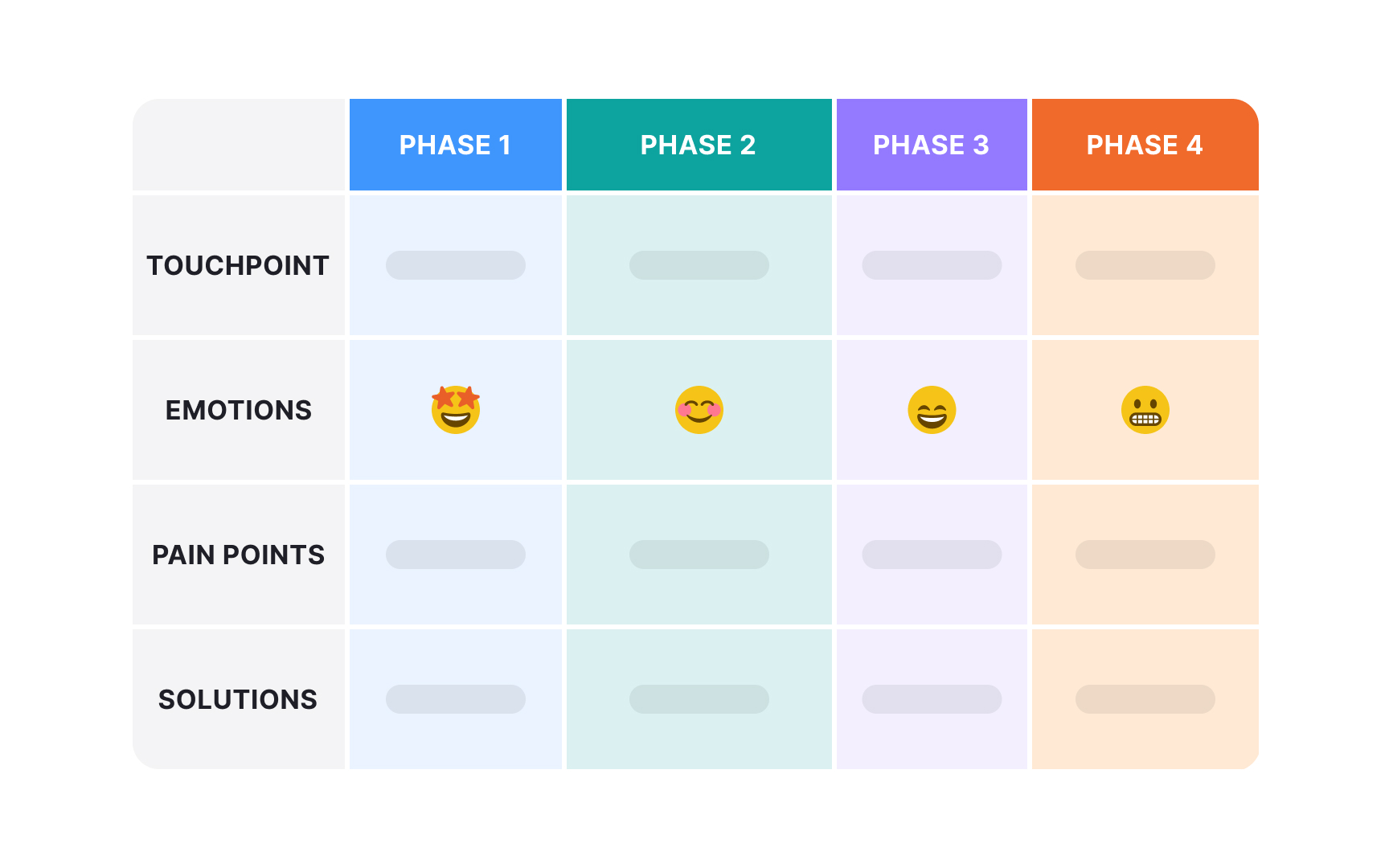
A journey map visualizes every step a user takes while interacting with your product or service over time. Think of it as a storyline that captures what users do, think, and feel throughout their experience — from discovering your product to achieving their goals. Each interaction point, emotional response, and potential obstacle gets documented on a timeline, creating a comprehensive view of the user experience.[1]
Journey mapping can be used to show how each team's work impacts the overall user experience. For example, designers track interface interactions and user emotions, developers monitor system responses and performance metrics, while product managers measure business outcomes at each stage. This shared visualization exposes where different team responsibilities intersect and impact each other.
Teams should also leverage journey maps to identify improvement opportunities together. For instance, a slow-loading feature might connect to infrastructure limitations, poor conversion rates might stem from confusing interfaces, or support tickets might reveal gaps in feature discoverability. By mapping these connections, teams can move from fixing isolated issues to solving root causes that span multiple departments.
Pro Tip: Start journey mapping with real user stories from customer support or user interviews — this grounds the exercise in actual experiences.