Implementing the Hook model - trigger and action
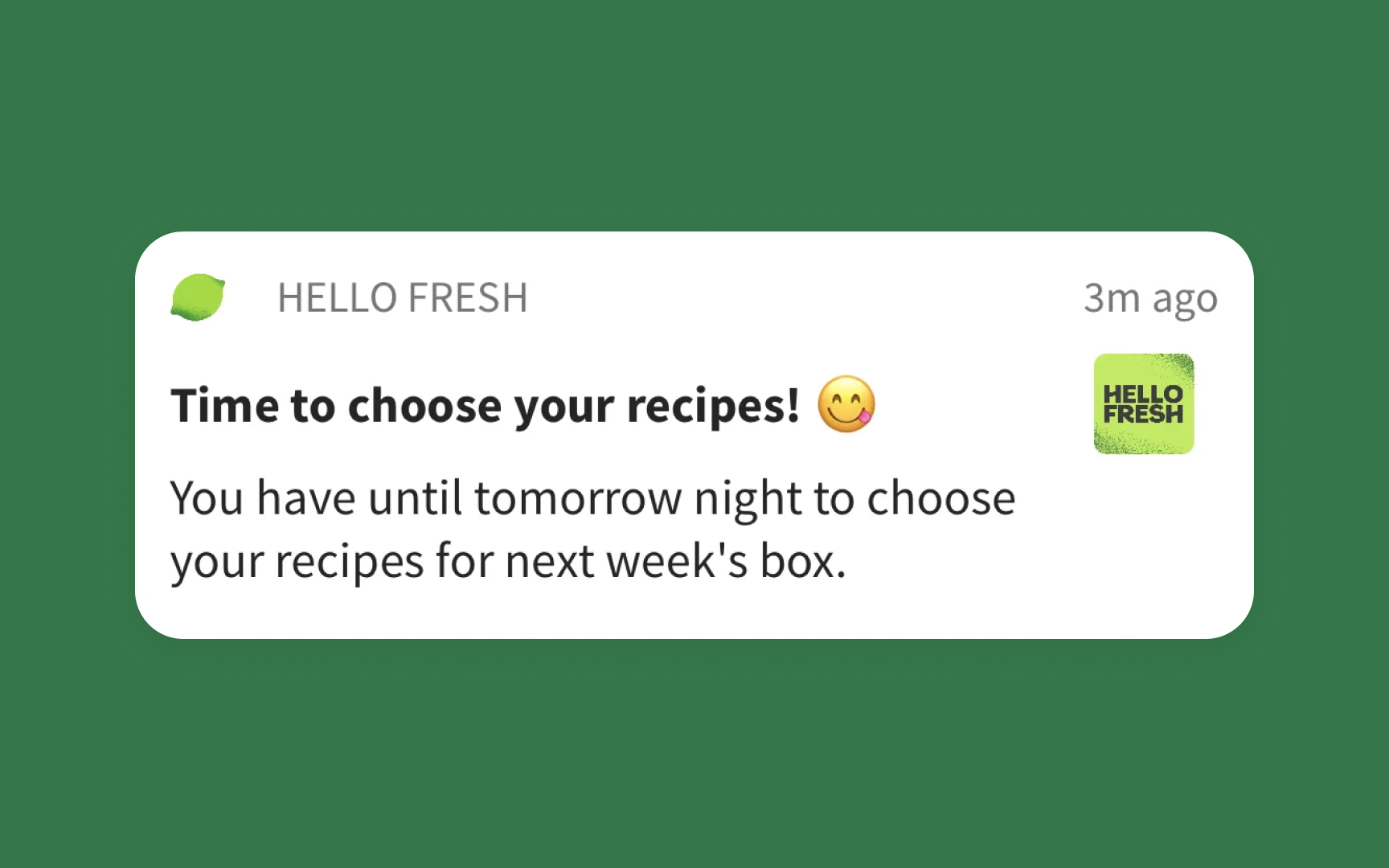
Implementing the first 2 stages of the Hook Model involves designing effective triggers and simplifying actions. Let's explore these stages in more detail:
Trigger is the actuator of behavior. There are 2 types:
- External triggers: Design clear calls-to-action in users' environment (e.g., push notifications, email reminders).
- Internal triggers: Associate your product with existing habits or emotions (e.g., boredom, desire for social connection).
Key considerations of an action stage:
- Simplify the desired action as much as possible. Use clear design, minimize steps, and reduce cognitive load.
- Consider Fogg's Behavior Model: Ensure users have sufficient motivation and ability to perform the action.
HelloFresh effectively uses push notifications as external triggers by sending timely reminders about recipe selection deadlines. The notification combines urgency ("until tomorrow night") with a clear, simple action ("choose your recipes"), making it easy for users to understand and act on the prompt.
Pro Tip: When designing triggers, consider the context in which users will encounter them. Timing and relevance are crucial for effectiveness.
Top contributors