Onboarding
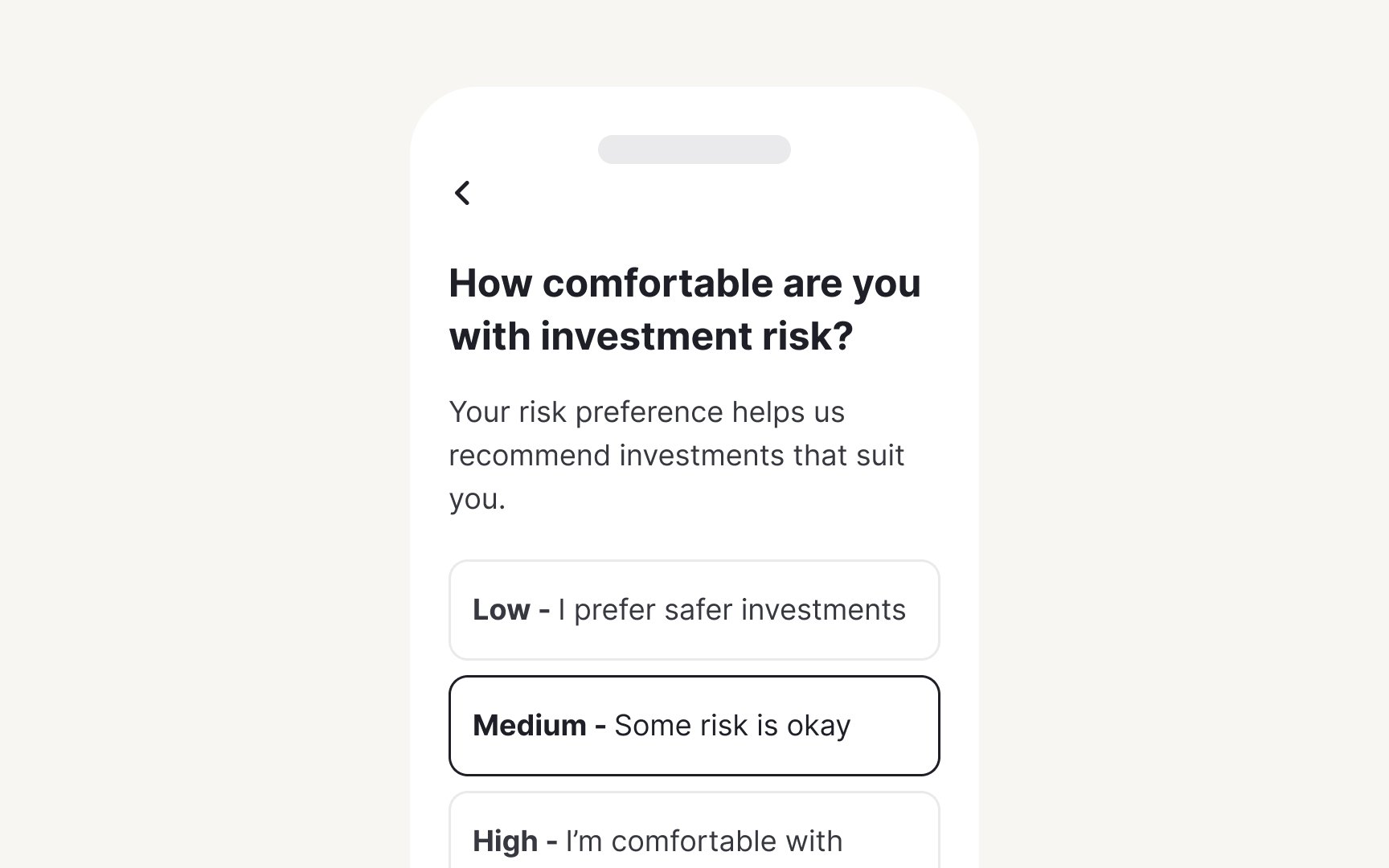
Onboarding content helps new users feel confident, turning first impressions into lasting engagement. Build onboarding templates around user goals, not feature lists. Create progressive disclosure formulas: "Welcome! {Value statement}. Let's {first valuable action}." Follow with contextual guidance: "Great! Now you can {benefit achieved}. Next, try {natural next step}." If building onboarding templates around user goals through personalization questions, start with: "What brings you to {Product}?" offering clear goal options like "{Primary use case}", "{Secondary use case}", or "{Tertiary use case}". For example, in banking onboarding, personalization might include a risk assessment: "How comfortable are you with investment risk?" with options like "Low — I prefer safer investments", "Medium — Some risk is okay", or "High — I'm comfortable with bigger swings for higher returns". Based on their selection, respond with targeted guidance: "Perfect! Let's start with {relevant feature}."
Focus on moments of value, not comprehensive tours. Users learn by doing, not reading. Map your onboarding flow to user milestones. First session: core value. First week: key habits. First month: advanced features. Define when to educate (during relevant actions) versus when to stay quiet (when users are flowing). Document character limits for tooltips and progress indicators.