Specific users, scenarios, and goals
Journey maps reflect the experience of users fulfilling their goals when using your product, service, or brand. Unlike experience maps, journey maps focus on who experiences the journey, what goal they have, what steps they take to accomplish these goals, and what expectations, emotions, and thoughts they experience along the way.
There are 3 critical elements of a journey map:
- Actor: This is the persona/user who experiences the journey.
- Scenario and expectations: A scenario describes the situation that occurs when an actor takes certain actions to achieve their goal and has certain thoughts and expectations about it. The scenario can be real (for existing products or services) or anticipated (for products or services at the design stage).
- Journey phases: Journey phases are the different high-level stages in the user journey.
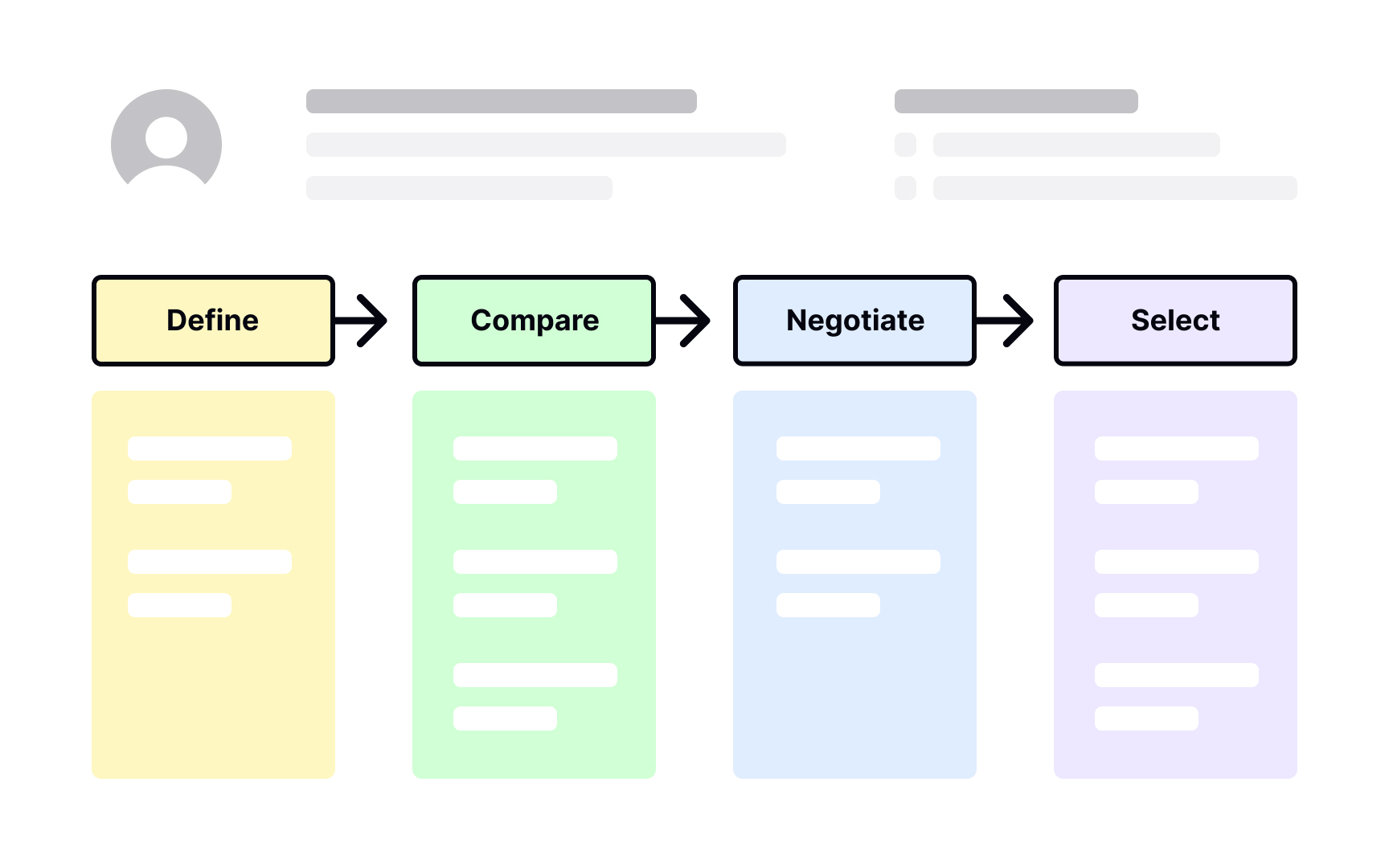
Journey phases help organize thoughts, mindsets, and feelings in the journey map. Each scenario usually has different journey phases. For example, the phases for a scenario about changing a mobile plan could be: define, compare, negotiate, and select. A scenario of ordering a takeaway from a restaurant could include phases of: awareness, consideration, conversation, customer service, and loyalty.