Using a whiteboard for debriefing
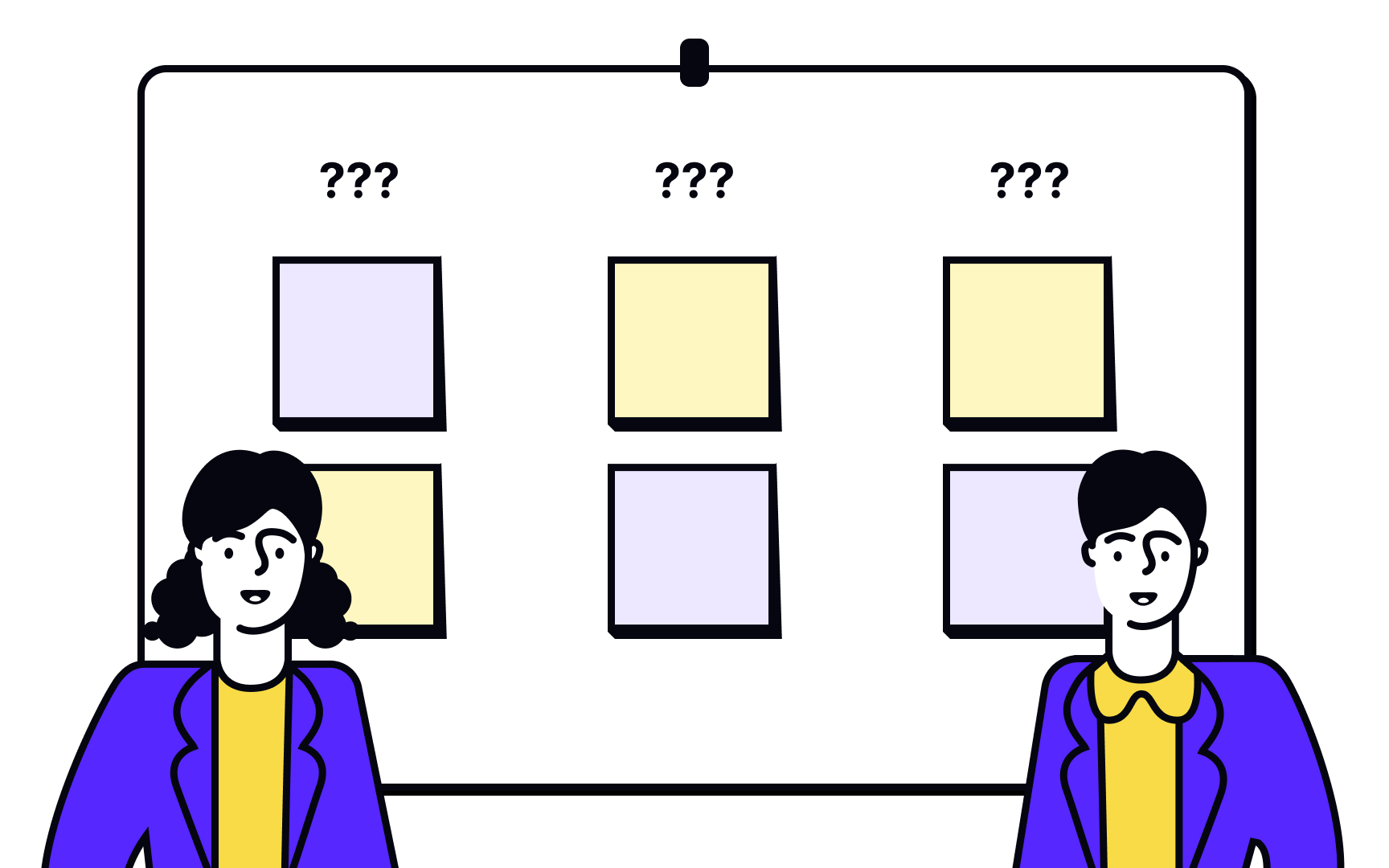
When several people observe a session together, as in usability testing or focus groups, a shared board and sticky notes can make the debrief more focused. Without a light structure, the first observation shared tends to pull everyone's attention, and other notes never make it into the conversation.
The board method solves this by separating the writing phase from the discussion phase. Everyone captures observations independently first, then shares them at the same time. This gives quieter contributors the same weight as more vocal ones before anyone has a chance to influence anyone else.
The method works the same way whether you're in person with a physical whiteboard and post-its, or remote with a tool like Miro or FigJam:
- Set up the board. Divide it into sections matching your session prompts, for example: key takeaways, surprises, needs, and open questions.
- Write silently. Go through each section one at a time. Everyone adds their observations independently, one idea per note, without talking.
- Post notes at the same time. Once everyone is done with a section, add notes to the board together, still without discussion.
- Then open the floor. Group similar ideas, spot patterns, and if useful, reshuffle notes by issue severity or ease of addressing.
For a two-person debrief, a shared board can also be a good idea to add notes and talk through them together.[1]
Pro Tip: Keep notes short and specific. One clear observation per note is more useful during grouping than a long sentence that covers several things at once.