Applying an influence–impact matrix
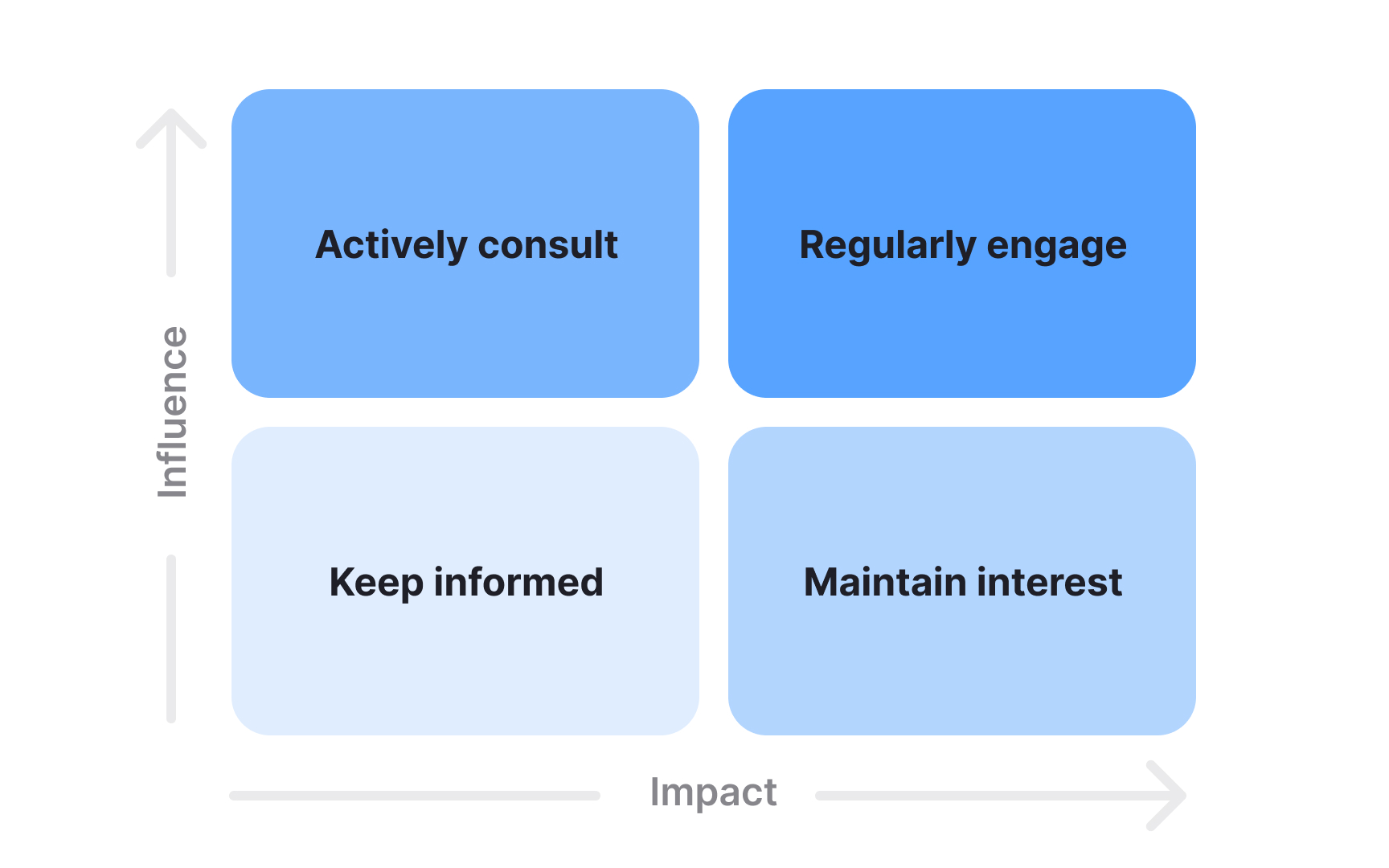
The influence–impact matrix expands stakeholder analysis by adding a third dimension to what the power–interest grid shows. It highlights not only who can shape outcomes but also who is most affected by them. Mapping stakeholders by their degree of influence and level of impact helps teams recognize where authority and exposure meet. This creates a more complete picture of project dynamics, especially in initiatives that have significant social, environmental, or organizational consequences.
Each quadrant of the matrix suggests a different engagement approach:
- Stakeholders with high influence and high impact often require regular engagement
- Stakeholders with high influence but with lower impact are best consulted on key decisions
- Stakeholders with a strong impact but limited influence should be kept informed
- Stakeholders with lower scores on both dimensions can be maintained through occasional updates.
The matrix often reveals groups that deserve more attention than their formal role suggests. For example, users or community members might have little influence but experience strong effects from decisions. Including them in discussions early can prevent resistance and strengthen long-term support.
Pro Tip: High-impact but low-influence stakeholders often hold critical insights. Include them early to surface risks and unmet needs.