Understanding why role clarity matters
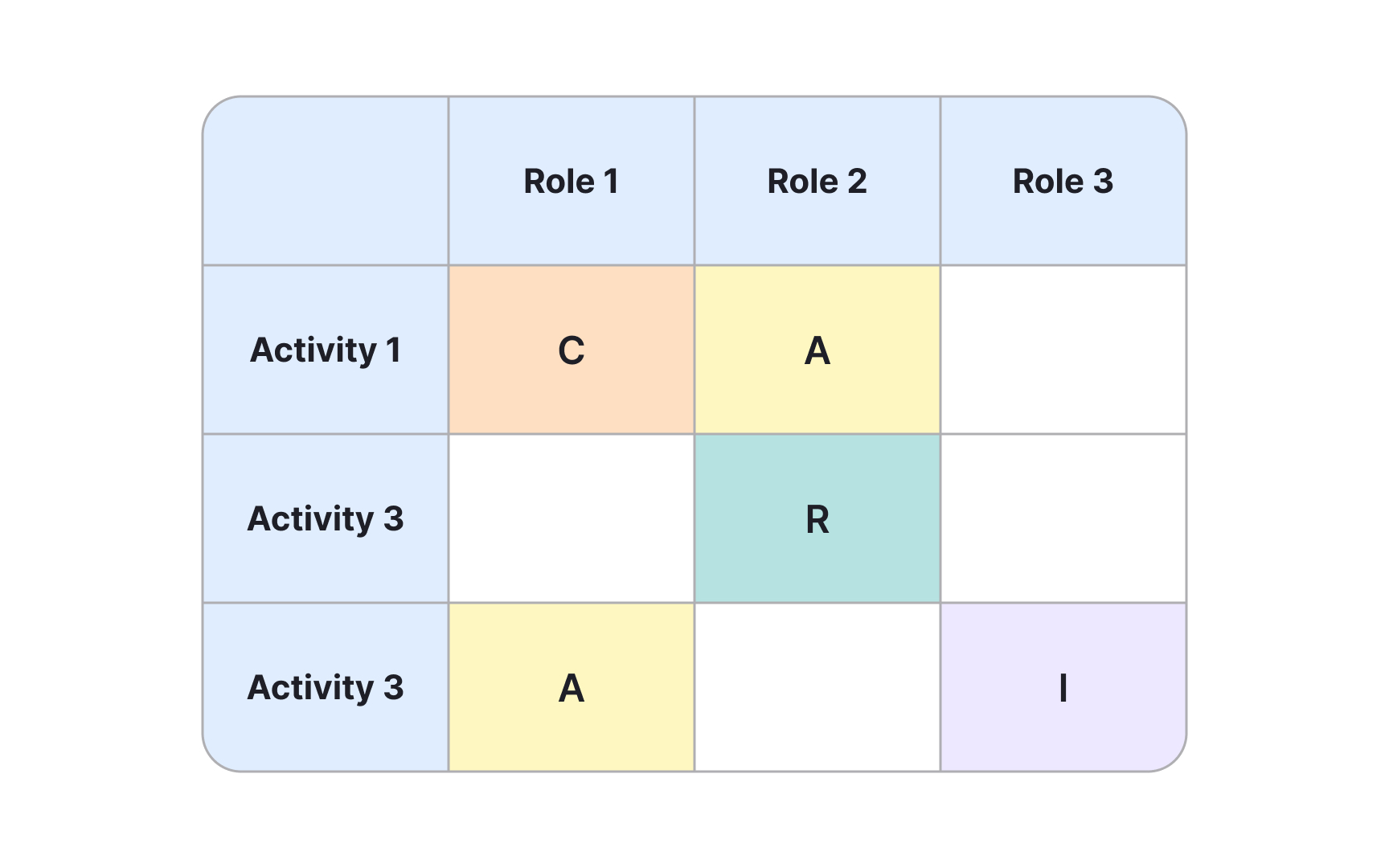
Projects often fail not because of poor ideas but because people are unsure about their responsibilities. When roles overlap or remain undefined, communication breaks down and tasks get delayed. Stakeholders may assume that someone else is handling an activity or that their input is not needed. This confusion leads to frustration, slows decisions, and weakens trust between teams.
The RACI model helps prevent this by turning role clarity into a shared structure for managing stakeholders. It shows how every person fits into the process: who is Responsible for the work, who is Accountable for the outcome, who is Consulted for advice, and who is Informed about progress. By making these roles visible, teams and stakeholders understand what kind of participation is expected from each of them. This reduces overlap, improves communication, and builds accountability across the project.
When people know their role and how it connects with others, collaboration becomes easier and more transparent. Everyone can focus on their part of the work while staying aligned with the larger goal, which leads to stronger engagement and smoother delivery.[1]