Connecting the north star and supporting metrics
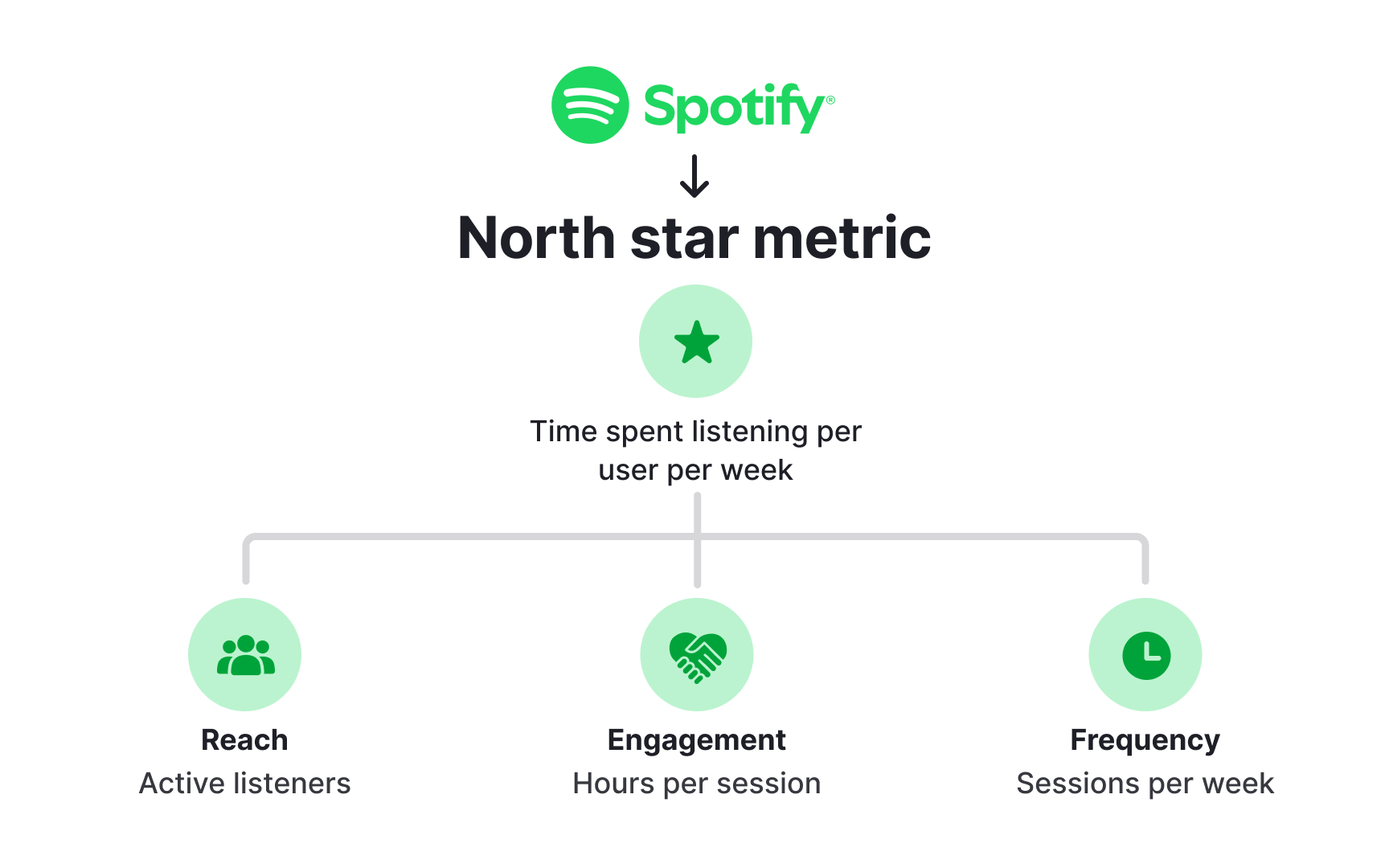
While the north star metric captures the product’s overall value, it cannot work in isolation. Supporting metrics make it actionable by showing what drives or slows progress toward that main goal. These usually fall into two levels:
- Primary metrics (L1) directly influence the north star and help teams understand which levers matter most. For example, if Spotify’s north star is time spent listening per user per week, an L1 metric could be hours per session because it reflects how engaged listeners are during each visit.
- Supporting metrics (L2) track earlier signals and help spot issues before they escalate. In Spotify’s case, L2 metrics might include playlist saves or session starts per week, since both hint at future engagement.
When these smaller metrics move, they eventually affect the north star. Mapping this connection helps teams see how their daily work contributes to shared outcomes and keeps specifications tied to measurable progress.