Balancing dependencies, constraints, and assumptions in one view
Dependencies, constraints, and assumptions rarely exist in isolation. Together, they form the system that defines whether a product specification remains realistic over time. A change in one often affects the others. For instance, a new dependency on an external vendor can introduce a timeline constraint, while an untested assumption may later challenge both cost and scope.
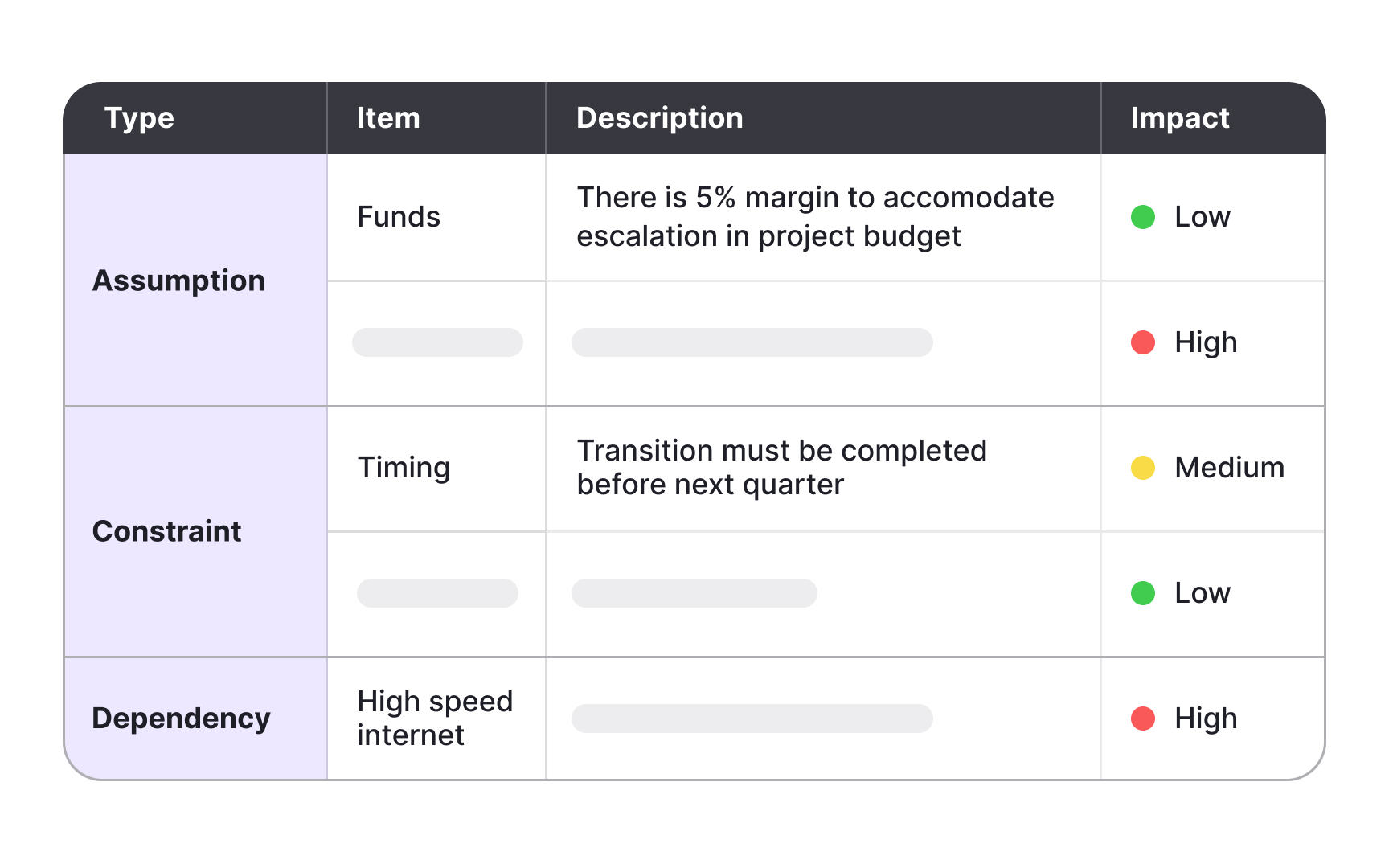
To manage this interconnection effectively, product managers can integrate DCA tracking directly into the specification. A simple structure can include a table listing dependencies with their owners, constraints with mitigation plans, and assumptions with validation status. Linking each item to related features or risks helps updates happen automatically when plans change. Regularly revisiting this section during team reviews ensures the document stays aligned with current priorities.
This approach turns the specification into a living reference rather than a static plan. It helps everyone see how each factor influences delivery and encourages more informed discussions around trade-offs and decisions.