Collecting meaningful user feedback
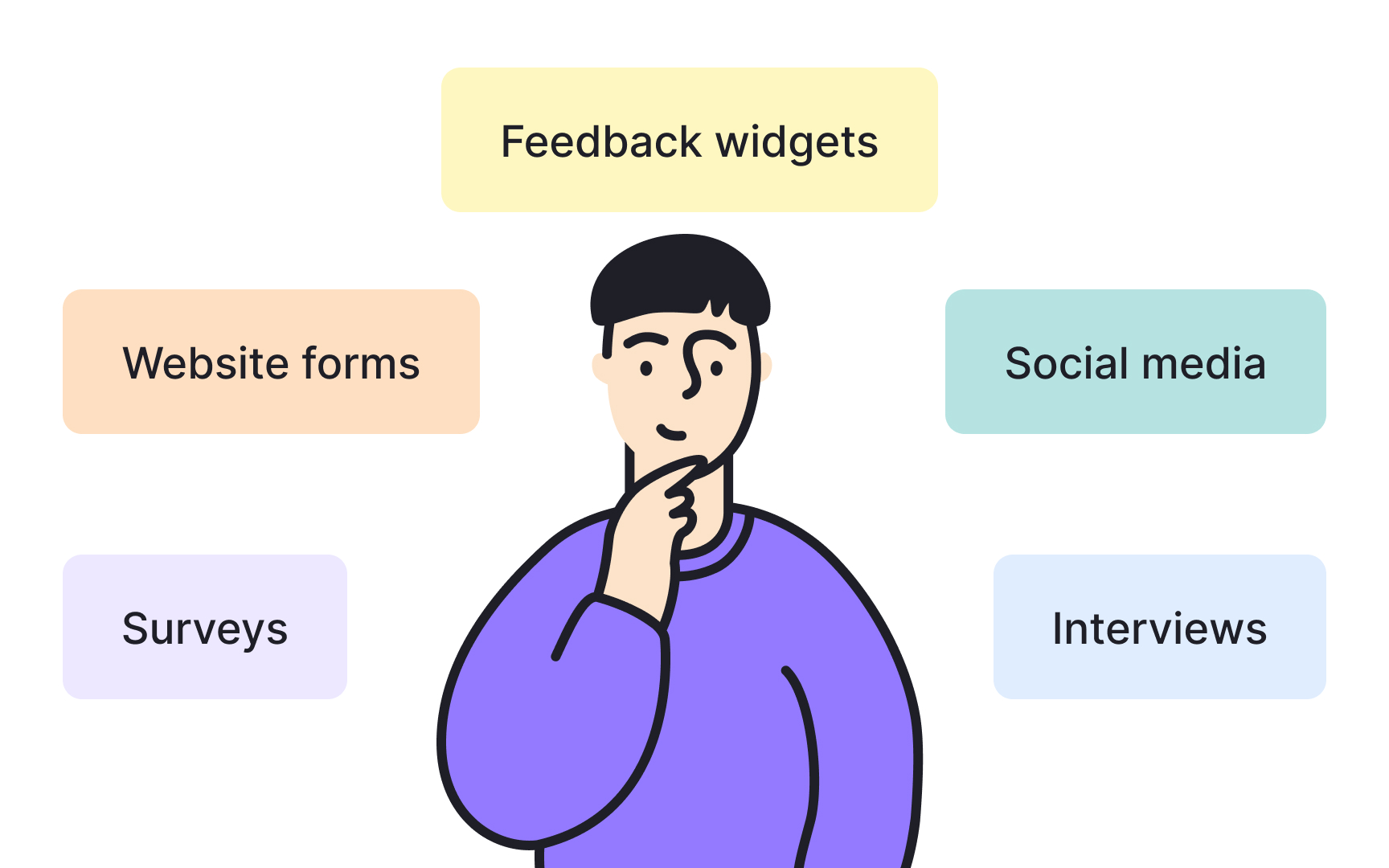
After the problem is defined, it needs to be verified through user feedback. Feedback confirms whether the issue described in the problem statement reflects real experiences. It can come from surveys, interviews, website forms, social media, or feedback widgets that let users leave comments directly within the product. Collecting these inputs in one structured place allows the team to identify patterns and confirm whether the defined problem matches what users actually face.
Organizing feedback systematically helps separate valuable insights from general opinions. Grouping responses by urgency, topic, or customer segment highlights which problems have the strongest impact and should be prioritized in the specification. This process ensures that the spec does not rely on internal assumptions but on evidence drawn from real user data. When the feedback confirms the problem’s importance, it strengthens the foundation for all following sections of the specification.[1]
Pro Tip: Store user feedback in one shared workspace and look for repeating patterns before finalizing the problem in the spec.