Breaking down the components of a problem statement
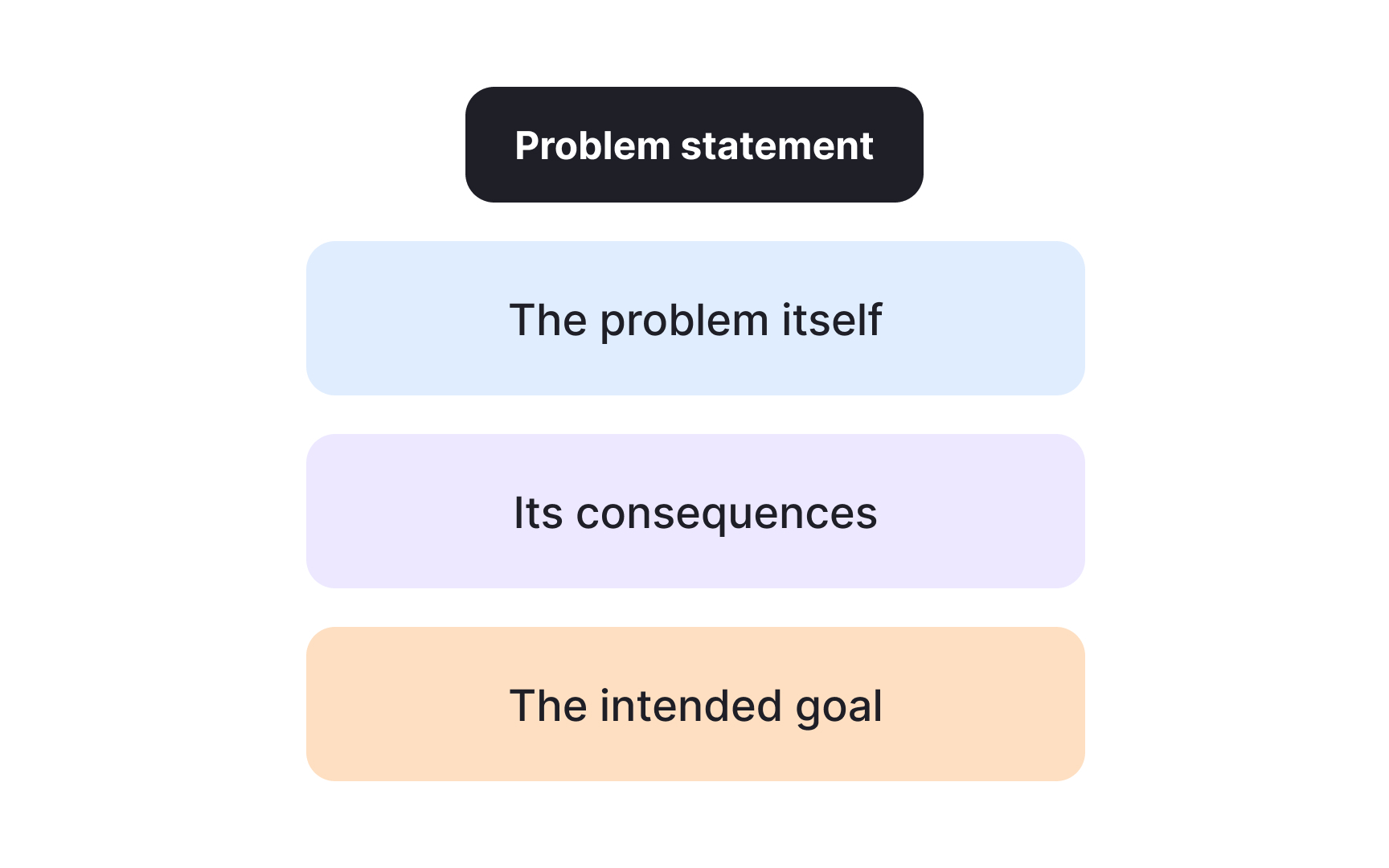
Every specification needs a solid starting point: a structured problem statement. It usually includes 3 essential parts:
- The problem itself
- Its consequences
- The intended goal
The problem defines what is happening and where the gap exists between the current and desired state. The consequences describe the negative outcomes this issue creates for users or the business. The goal sets the direction by outlining the improvement to be achieved, not the exact solution.
This structure helps teams translate observations into a clear framework for specs. For instance, when defining a feature request, the spec should link each requirement to one of these three components. Doing so keeps technical and design decisions tied to verified needs and measurable results. A structured statement also helps prevent bias by separating the problem from the solution, allowing later stages of the spec to focus on how to achieve that goal effectively.[1]
Pro Tip: Keep each part short and factual. Describe the problem, its effect, and the target outcome before discussing solutions.